
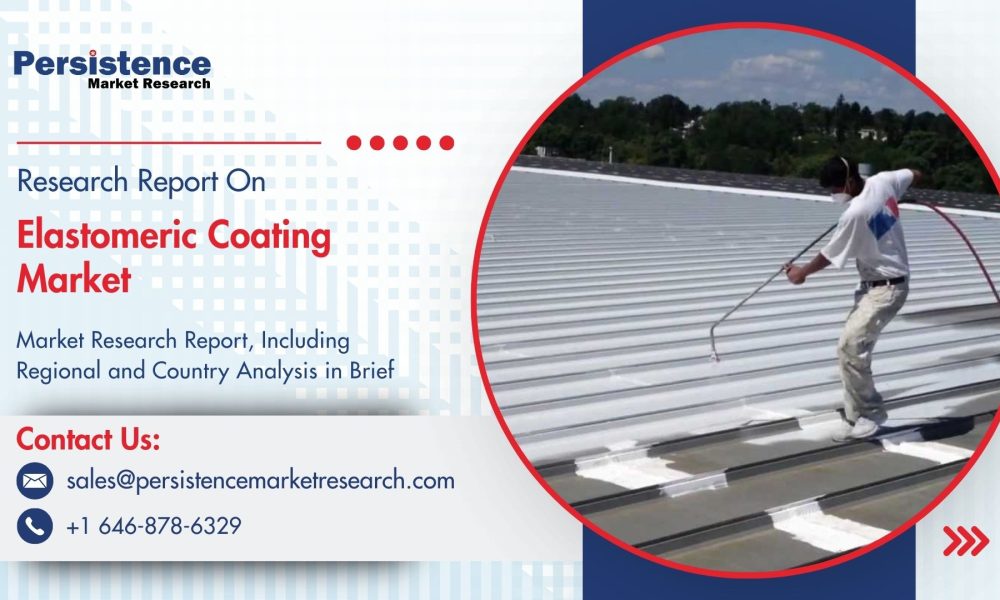
The Elastomeric Coating Market is experiencing significant growth due to increasing demand for durable, waterproof, and energy-efficient protective coatings across construction and infrastructure sectors. Elastomeric coatings are high-performance coatings designed to expand and contract with substrate movement while maintaining their protective properties. These coatings are widely used on roofs, walls, and exterior surfaces to prevent water infiltration, improve thermal insulation, and extend the lifespan of structures.
According to industry analysis, the global elastomeric coating market is projected to reach US$ 27.3 billion by 2026 and is expected to grow to approximately US$ 47.1 billion by 2033, expanding at a CAGR of about 8.1% during 2026–2033. The increasing focus on sustainable construction, stricter VOC regulations, and rising demand for reflective roof coatings are key factors driving market expansion.
Get Your FREE Sample Report Instantly – Click Now: https://www.persistencemarketresearch.com/samples/34640
Market Overview
Elastomeric coatings are specialized coatings formulated with elastic polymers that provide superior flexibility and crack-bridging capabilities. Unlike conventional paints, these coatings can stretch and return to their original shape without cracking, making them ideal for surfaces exposed to temperature fluctuations, structural movement, and harsh weather conditions.
The coatings are widely applied on substrates such as concrete, masonry, stucco, and metal surfaces. Their excellent waterproofing and UV resistance properties make them essential for protecting buildings from environmental damage.
The growing demand for energy-efficient buildings and reflective roofing systems is accelerating the adoption of elastomeric coatings. These coatings can reflect solar radiation, helping reduce heat absorption and lowering energy consumption in buildings located in hot climates.
Key Market Drivers
Rising Demand from Building and Construction Industry
The building and construction sector is the largest consumer of elastomeric coatings. These coatings are extensively used for roof waterproofing, wall protection, and façade insulation.
Elastomeric coatings provide multiple benefits such as:
- Crack bridging capability
- Long-term waterproofing
- UV resistance
- Improved structural durability
With increasing urbanization and infrastructure development worldwide, the demand for protective coatings for buildings continues to grow. Government initiatives for housing development, renovation of aging infrastructure, and smart city projects are further supporting the adoption of elastomeric coatings.
Additionally, elastomeric coatings offer a cost-effective alternative to roof replacement by extending the lifespan of existing structures.
Increasing Focus on Energy-Efficient Buildings
Energy efficiency has become a major focus in modern construction. Elastomeric coatings play an important role in cool roof technology, which helps reflect sunlight and reduce building heat absorption.
Reflective elastomeric coatings can significantly lower indoor temperatures and reduce air-conditioning energy consumption. As a result, these coatings are widely adopted in commercial buildings, warehouses, and residential structures located in warm climates.
Government regulations promoting sustainable construction practices and green building certifications such as LEED are encouraging the use of low-VOC, energy-efficient coating systems.
Growth in Infrastructure Rehabilitation and Maintenance
A large portion of the global infrastructure, particularly in developed countries, requires repair and maintenance. Elastomeric coatings are increasingly used in infrastructure rehabilitation projects due to their durability and protective performance.
These coatings are commonly applied on:
- Bridges
- Tunnels
- Parking structures
- Industrial facilities
Their ability to resist water penetration and protect concrete surfaces from corrosion and chemical exposure makes them ideal for long-term infrastructure protection.
The increasing investments in infrastructure maintenance and renovation projects are expected to create strong demand for elastomeric coatings in the coming years.
Market Restraints
High Cost Compared to Conventional Coatings
Despite their advantages, elastomeric coatings are generally more expensive than traditional paints and coatings. This cost factor may discourage adoption in price-sensitive markets, especially in developing regions.
In addition, fluctuations in raw material prices, particularly polymer resins and additives, can affect the overall production cost of elastomeric coatings.
Manufacturers must focus on improving cost efficiency and product performance to maintain market competitiveness.
Product Type Insights
Elastomeric coatings are available in several product types, including acrylic, silicone, polyurethane, and epoxy coatings.
Acrylic Elastomeric Coatings
Acrylic coatings represent the largest segment in the elastomeric coating market, accounting for approximately 36% of total demand. Their popularity is attributed to their affordability, UV resistance, and compatibility with water-borne formulations.
These coatings provide excellent adhesion to various substrates such as concrete, stucco, and masonry, making them widely used for exterior walls and roofing applications.
Silicone and Polyurethane Coatings
Silicone coatings are gaining popularity due to their superior moisture resistance and long-term durability. Polyurethane coatings offer excellent chemical resistance and are commonly used in industrial applications.
Although these coatings occupy smaller market shares compared to acrylic coatings, their performance advantages make them suitable for specialized applications.
Technology Insights
Elastomeric coatings are primarily available in two technologies:
- Water-borne coatings
- Solvent-borne coatings
Water-borne elastomeric coatings dominate the market, accounting for approximately 60–65% of total consumption. These coatings are favored due to their low VOC emissions, environmental compliance, and safer application processes.
With increasing environmental regulations and sustainability goals, water-based formulations are expected to continue gaining market share in the coming years.
Application Insights
Elastomeric coatings are used in several industries, but the building and construction sector remains the largest application segment.
Major Application Areas
- Roof coatings
- Wall coatings
- Bridge and infrastructure coatings
- Industrial protective coatings
- Automotive and transportation coatings
The building and construction segment accounts for around 45% of global demand, driven by the need for waterproofing, durability, and energy efficiency in modern structures.
Regional Analysis
Asia Pacific
Asia Pacific is the largest and fastest-growing region in the elastomeric coating market. Rapid urbanization, population growth, and large-scale infrastructure development in countries such as China, India, and Southeast Asia are driving demand.
The region’s hot climate also increases the demand for reflective roof coatings that improve building energy efficiency.
North America
North America represents a mature but technologically advanced market. Strong demand for cool roof coatings, green building materials, and infrastructure rehabilitation projects is supporting market growth.
The presence of leading coating manufacturers and advanced construction technologies further strengthens the regional market.
Europe
Europe is witnessing increasing adoption of eco-friendly coatings due to strict environmental regulations and sustainability initiatives.
Green building standards and the renovation of aging infrastructure are key factors driving demand for elastomeric coatings in the region.
Get a Customized Market View in One Click: https://www.persistencemarketresearch.com/request-customization/34640
Competitive Landscape
The elastomeric coating market is moderately fragmented, with several global chemical and coatings companies competing in the industry.
Key Market Players
Major companies operating in the market include:
- BASF SE
- Sherwin-Williams Company
- Dow
- Huntsman Corporation
- Covestro AG
- PPG Industries
- Akzo Nobel N.V.
- Nippon Paint Holdings
- Pidilite Industries Ltd.
- Asian Paints Limited
These companies focus on product innovation, sustainable coating solutions, and strategic partnerships to strengthen their market presence.
Future Opportunities
The elastomeric coating market offers several growth opportunities, particularly in the areas of cool roof technology, sustainable construction, and infrastructure renovation.
The development of advanced polymer technologies is improving coating durability, flexibility, and weather resistance. Additionally, the growing adoption of green building standards and energy-efficient materials is expected to further increase the demand for elastomeric coatings.
With ongoing urbanization and rising global construction activities, elastomeric coatings are expected to remain a crucial component in modern building protection systems.
About Persistence Market Research:
Persistence Market Research delivers strategic research solutions that drive business growth. Founded in 2012 and registered in England and Wales in 2023 as Persistence Research & Consultancy Services Ltd., we have completed 3,600+ custom and syndicated studies and supported 2,700+ projects for leading research firms. Combining traditional methodologies with modern tools, we provide actionable insights to multinational corporations, consultants, investors, and government bodies, earning strong trust through long-term client relationships.
Contact Us:
Persistence Market Research
Second Floor, 150 Fleet Street,
London, EC4A 2DQ, United Kingdom
USA Phone: +1 646-878-6329
UK Phone: +44 203-837-5656
Email: [email protected]
Web: https://www.persistencemarketresearch.com




