
A direct mail retargeting strategy sits at an intersection most marketers don’t think to explore — the point where a website visitor’s digital behavior triggers a physical response that lands in their mailbox rather than their banner ad feed. It sounds counterintuitive in an era where every marketing conversation is dominated by digital channels, but the data behind it is consistent enough that businesses willing to look past the conventional wisdom are finding meaningful results in a channel their competitors have largely abandoned.
The Attention Problem Digital Retargeting Has
Digital retargeting operates on the premise that showing an ad to someone who’s already shown interest will bring them back to convert. In theory that’s sound. In practice it runs into a fundamental problem that’s gotten steadily worse over the past several years — most people have developed an almost reflexive ability to ignore digital ads entirely.
Banner blindness isn’t a metaphor. Eye-tracking research consistently shows that trained internet users’ gaze patterns actively avoid the areas of a page where ads typically appear. The click-through rates on display retargeting reflect this — they’ve declined significantly from already-low baselines as audiences have grown more ad-saturated. Add to this the ongoing erosion of cookie-based targeting from iOS privacy changes and third-party cookie deprecation, and the reach and accuracy of digital retargeting have both declined materially.
A direct mail retargeting strategy doesn’t have either of those problems. Physical mail gets picked up. It gets looked at. It sits on a kitchen counter for days in a way that a dismissed banner ad never does.
How the Targeting Actually Works
The mechanism behind a direct mail retargeting strategy is more sophisticated than most people expect. When a visitor lands on a website and browses without converting, their device data gets matched to a postal address through a combination of IP matching and third-party data partnerships. That match triggers automatic fulfillment of a physical mailer — typically a postcard — that arrives at their home within 48 to 72 hours of the visit.
The timing is the critical element. A prospect who spent time on a services page on Monday and receives a postcard by Wednesday is still in active consideration mode. They haven’t made a decision yet. The physical touchpoint arrives at exactly the right moment to reinforce the brand impression from the website visit and provide a specific reason to act — an offer, a phone number, a QR code — while the memory is still fresh.
Pairing this with a strong SEO services foundation means the visitors being retargeted arrived with genuine search intent in the first place, which makes them significantly more valuable targets than audiences assembled through interest-based digital targeting.
What the Physical Piece Needs to Accomplish
The effectiveness of a direct mail retargeting strategy depends heavily on what the mailer itself actually does. A generic, cluttered postcard with an unclear call to action underperforms regardless of how well the audience targeting was executed. The piece has about three seconds of attention before someone decides whether to engage with it or discard it.
The strongest performing mailers do three things cleanly. They reference the category of interest in language that feels relevant without feeling invasive — “still thinking about X” rather than anything that signals surveillance. They include a single, specific reason to act now rather than a list of features. And they make the next step completely obvious — one phone number, one QR code, one URL that leads to a relevant landing page rather than a homepage.
That landing page should be informed by the same content marketing strategy that drives the rest of the site — optimized to convert the warm prospect the mailer delivered rather than just providing general information.
Fitting It Into a Broader Channel Strategy
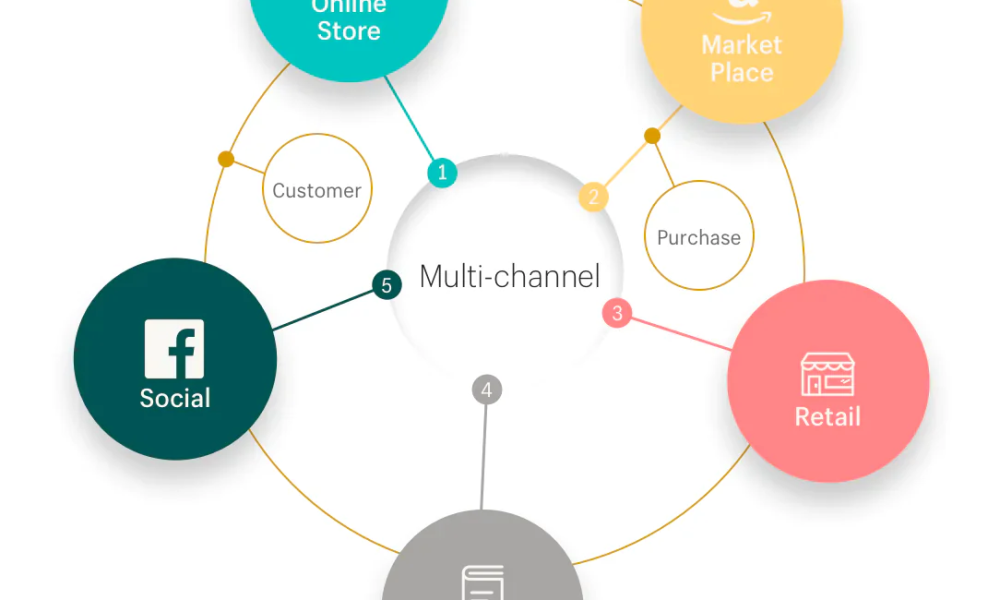
A direct mail retargeting strategy works best as a complement to existing digital efforts rather than a replacement for them. A prospect who finds a business through organic search, visits the site, receives a postcard, and then encounters a social media ad has experienced three distinct touchpoints across two channels — and that multi-touch exposure builds the kind of brand familiarity that single-channel approaches consistently struggle to create.
Coordinating the timing of mail drops with email marketing sequences for prospects already in the CRM creates layered coverage that addresses different segments of the consideration journey simultaneously. The channels reinforce each other in ways that are difficult to replicate through any single medium regardless of budget.
Measuring What the Channel Delivers
One of the genuine advances in modern direct mail retargeting is accountability. Because campaigns are triggered by specific website visits and tied to identifiable mail pieces, response rates can be tracked, conversions attributed to specific mail drops, and a real cost per acquisition calculated. That measurability makes it possible to optimize the channel over time and to build a straightforward business case for scaling based on what the numbers actually show rather than intuition about what’s working.




