
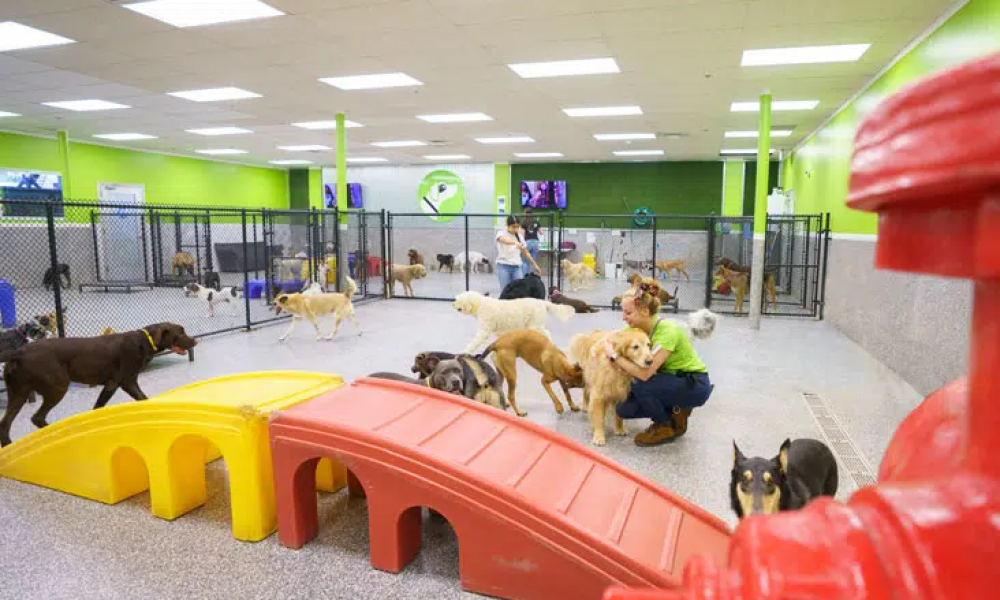
Dog boarding grooming daycare services delivered under one roof produce better outcomes for dogs than the same services pieced together across multiple providers — and the reason is simpler than most people expect. Familiarity. A dog that returns to the same facility repeatedly for different types of care builds a relationship with the staff and a positive association with the space that carries across every experience there. That familiarity is genuinely protective — it’s what determines whether a dog approaches a grooming appointment calmly or anxiously, whether a boarding stay is restful or stressful, and whether daycare is something the dog actively enjoys or merely tolerates.
What Gets Lost When Care Is Fragmented
Most dog owners don’t start out intending to fragment their dog’s care across multiple providers — it tends to happen gradually. The vet recommends a groomer. A neighbor mentions a daycare. A boarding facility gets booked for a trip because it was the first one that had availability. Before long the dog is bouncing between three or four different environments, none of which know the animal particularly well.
The practical cost of that fragmentation is inconsistency. Staff at each location encounter the dog without context — no knowledge of how that animal responds to specific handling, what triggers anxiety in this particular dog, or what the groomer flagged at the last appointment that the boarding staff should know about. Every visit starts from zero, which means every visit carries more potential for the dog to be handled in ways that don’t suit it.
A dog whose dog boarding staff, groomer, and daycare team all know each other and see the same animal regularly isn’t experiencing that repeated reset. The people handling the dog have genuine, accumulated knowledge of it — and that knowledge shows up in the quality of care the dog actually receives.
Training as the Foundation Everything Else Builds On
Professional dog training doesn’t just teach commands — it builds the fundamental calm and responsiveness that makes grooming, boarding, and daycare experiences go more smoothly across the board. A dog that has been trained to accept handling calmly, respond to redirection, and stay settled in an unfamiliar environment is a categorically different animal to groom and board than one without that foundation.
This compounds significantly for puppies. The behavioral patterns established in the first year tend to persist, which means early investment in training pays dividends across years of subsequent care. A puppy that learns to accept grooming handling as a normal, non-threatening experience during its first several visits is a dog that will be easy to groom for the rest of its life. One that develops anxiety around it early is a dog that requires more care, more patience, and more time at every subsequent appointment.
The value of training coordinated with the same facility handling grooming and daycare is that the behavioral goals established in training sessions can inform how the same staff handles that dog across every other context.
What Regular Grooming Monitors Beyond Appearance
Consistent dog grooming provides health monitoring that most owners don’t fully appreciate until something gets caught. A groomer who sees a dog every six to eight weeks and has seen that animal consistently for years develops a detailed baseline sense of what’s normal for it — coat texture, skin condition, ear presentation, nail health, body condition. Anything that deviates from that baseline gets noticed.
That kind of longitudinal health observation is difficult to replicate at a facility that sees a dog for the first time every appointment. The groomer who knows your dog well is the one most likely to notice the new lump, the early ear condition, the subtle skin change — and to flag it before the problem has time to develop into something that requires more significant treatment.
What a First Boarding Stay Establishes
The first time a dog boards at a facility sets a template for every subsequent stay. A first experience that’s confusing, understimulating, or handled by staff who don’t read the dog’s signals well creates an anxiety association that’s difficult to undo. A first experience that’s calm, appropriately enriching, and handled by staff who understand how to help a new dog settle in establishes a positive association that makes every future stay easier.
This is why the relationship a dog has with a facility across grooming appointments and daycare visits before its first boarding stay matters so much. A dog that already knows the staff and the environment from regular daycare visits is arriving at boarding as a familiar place rather than an unknown one — which changes the entire character of that first overnight experience.




