
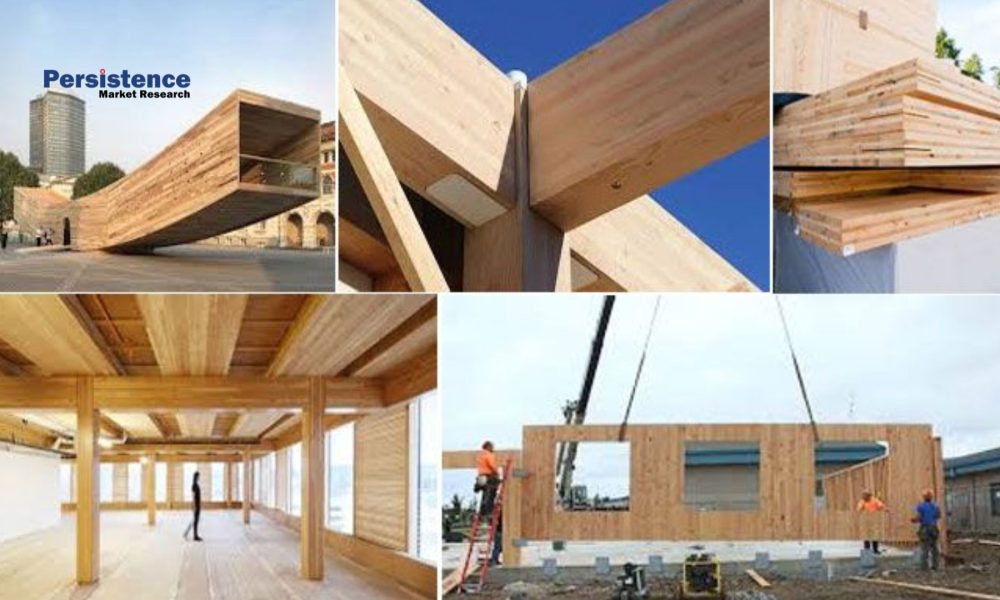
Cross Laminated Timber (CLT) Market: A Comprehensive Industry Overview
The Cross Laminated Timber (CLT) market is rapidly emerging as a transformative force in the global construction industry, driven by sustainability trends, technological innovations, and evolving building codes that support eco-friendly infrastructure. CLT — a prefabricated engineered wood product made by stacking layers of lumber in perpendicular orientations and bonding them with adhesives — offers an appealing alternative to traditional building materials such as steel and concrete due to its lower embodied carbon, faster construction timelines, and excellent structural performance. According to a Persistence Market Research analysis, the global CLT market was valued at approximately US $1.6 billion in 2025 and is projected to reach around US $3.8 billion by 2032 at a compound annual growth rate (CAGR) of 13.0% over the forecast period.
Get Your FREE Sample Report Instantly – Click Now: https://www.persistencemarketresearch.com/samples/25432
Sustainable Material Driving Construction Transformation
One of the most prominent drivers in the CLT market is the worldwide push toward sustainable and low-carbon construction materials. Governments, developers, and builders are increasingly seeking alternatives to steel and concrete — which are energy-intensive to produce and have a significant carbon footprint — in order to meet environmental targets and improve building lifecycle performance. Cross laminated timber sequesters carbon dioxide, storing it within building structures while avoiding large emissions associated with conventional materials. This inherent sustainability profile has positioned CLT as a material of choice in net-zero and green building projects across residential, commercial, and institutional segments.
The European Union’s regulatory ecosystem, which includes strict carbon limits and life-cycle assessment requirements under the EU Green Deal, has particularly accelerated CLT adoption in new projects. Similarly, updates to the International Building Code (IBC) in North America have authorized CLT use in mid- to high-rise timber structures, fostering innovation and driving demand across tall timber construction markets.
Market Growth and Forecasts
The current and forecasted growth trajectory for the CLT market is strong and consistent across multiple industry analyses. Persistence Market Research highlights that from 2025 to 2032, the market is expected to more than double in value, driven by adoption in core building applications and favorable policies encouraging sustainable construction.
Across independent research sources, similar trends are observed — with forecasts pointing toward continued robust growth through the 2030s. Some estimates forecast the CLT market will grow at a CAGR ranging from around 8.5% to over 16% depending on the projection model and forecast horizon. Alternative analyses suggest a potential market size between approximately US $4.2 billion to nearly US $6 billion by the early-to-mid-2030s.
This sustained expansion is largely due to rising construction activity worldwide — including mid-rise residential projects in urban centers, commercial developments seeking eco-friendly credentials, and institutional buildings that prioritize low carbon footprints and advanced performance characteristics.
Segmentation Insights: Bonding Technology and Applications
Market segmentation reveals significant insights into the dominance of certain CLT types and the applications that are propelling growth:
Bonding Technology
The adhesive-bonded CLT segment commands a large share of the market due to its superior structural attributes and ability to create large format panels suitable for mid- and high-rise construction. This product type offers enhanced dimensional stability, load-bearing capacity, and airtightness compared to mechanically fastened alternatives, which translates into broader architectural versatility.
Applications in Construction
Across diverse construction sectors, CLT is most widely adopted for walls, floors, and roof structures due to its strength and adaptability. Among end-use categories, residential construction — particularly multi-family housing and eco-friendly homes — accounts for the largest share, driven by consumer demand for sustainable living spaces and rapid build workflows.
Commercial and institutional buildings are also adopting CLT for structural frames and cladding systems, as they offer both environmental benefits and competitive performance profiles in terms of fire resistance, acoustics, and seismic resilience.
Get a Customized Market View in One Click: https://www.persistencemarketresearch.com/request-customization/25432
Regional Market Dynamics
Europe remains the most dominant regional market, capturing a significant share of global CLT usage and production due to mature manufacturing bases, harmonized building standards, and strong public and private investment in sustainable infrastructure. Countries such as Germany, Austria, and France lead in production capacity and project implementation, supported by EU-wide directives emphasizing low-carbon construction.
In North America, market expansion is underpinned by code revisions that facilitate taller timber buildings and federal sustainability incentives. Landmark timber structures — such as hybrid timber towers — demonstrate the structural viability of CLT in urban environments and inspire further adoption.
The Asia Pacific region is emerging as the fastest-growing market, driven by rapid urbanization, infrastructure investment, and government initiatives encouraging mass timber applications. Japan’s mass timber strategies and the broader interest in sustainable urban planning across China, Australia, and Southeast Asia contribute to escalating CLT demand.
Market Drivers and Opportunities
The increasing adoption of prefabrication and modular construction methods is another key driver of CLT demand. Off-site fabrication reduces construction time on site, minimizes material waste, and simplifies logistics — all of which align with efficiency and sustainability goals in modern building projects.
As governments and private sectors alike prioritize green building certifications (such as LEED and BREEAM), CLT’s renewable sourcing and carbon sequestration capabilities are further incentivizing builders to leverage this engineered wood product. Emerging technologies in adhesive formulation, digital modeling (BIM), and automated manufacturing also enhance product quality and reduce production costs.
Challenges and Constraints
Despite strong growth prospects, the CLT market faces a number of challenges. Higher initial material and manufacturing costs compared to traditional steel and concrete can deter developers, particularly in regions where CLT production is limited. These cost pressures are compounded by logistical challenges associated with transporting large format timber panels over long distances.
Additionally, technical considerations such as moisture control during production and construction, and industry skepticism around performance in humid climates, can pose adoption barriers. Although engineered CLT products are designed to meet rigorous fire and structural safety standards, education among architects and builders remains key to broader acceptance.
Competitive Landscape and Strategic Outlook
The competitive landscape of the CLT market is characterized by established global manufacturers and regional players expanding capacity to meet rising demand. Strategic investments in automated manufacturing facilities, quality control systems, and advanced adhesives are helping producers deliver consistent, high-performance products. Prominent companies have also focused on sustainability certifications and collaborative industry initiatives to highlight CLT’s role in meeting climate and construction goals.
For In-Depth Competitive Analysis, Buy Now: https://www.persistencemarketresearch.com/checkout/25432
Conclusion
The Cross Laminated Timber market is poised for sustained growth as the construction industry transitions toward more sustainable, efficient, and high-performance materials. Supported by favorable building codes, environmental policies, and technological advancements, CLT offers a compelling alternative to conventional materials and holds potential to redefine global building practices. Its integration across residential, commercial, and institutional projects reflects a broader shift toward greener infrastructure and climate-responsive construction — a trend that is likely to continue shaping the market well into the next decade.
About Persistence Market Research:
Persistence Market Research delivers strategic research solutions that drive business growth. Founded in 2012 and registered in England and Wales in 2023 as Persistence Research & Consultancy Services Ltd., we have completed 3,600+ custom and syndicated studies and supported 2,700+ projects for leading research firms. Combining traditional methodologies with modern tools, we provide actionable insights to multinational corporations, consultants, investors, and government bodies, earning strong trust through long-term client relationships.
Contact Us:
Persistence Market Research
Second Floor, 150 Fleet Street,
London, EC4A 2DQ, United Kingdom
USA Phone: +1 646-878-6329
UK Phone: +44 203-837-5656
Email: [email protected]
Web: https://www.persistencemarketresearch.com




