
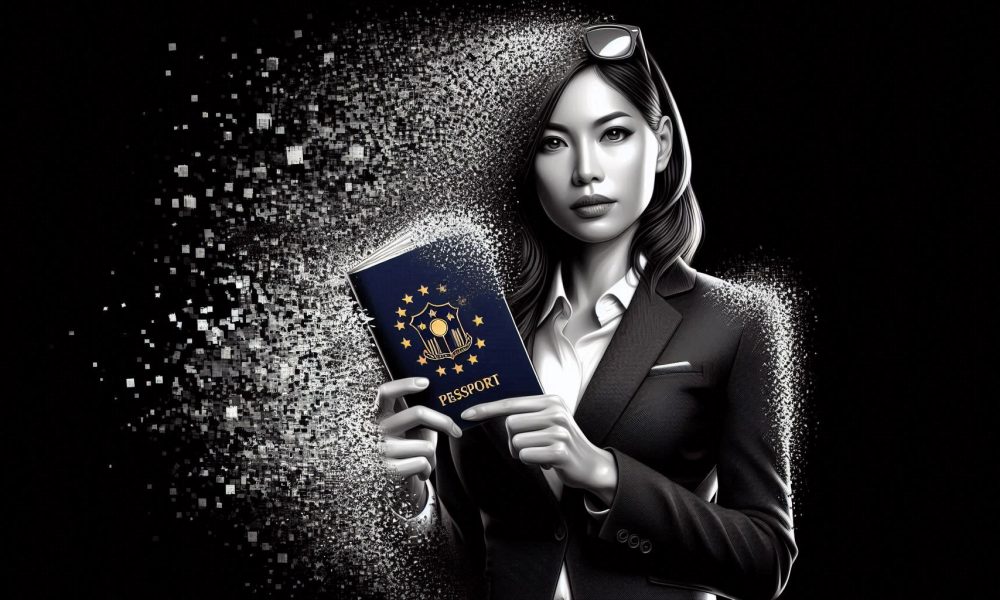
TORONTO, August 4, 2025 — In an increasingly authoritarian world, fleeing oppression often requires more than a visa or a safehouse—it demands a new identity. Political dissidents, journalists, whistleblowers, and regime critics are turning to legal identity change not only to relocate safely, but to survive. Known as crisis migration, this practice is shifting from underground escape plans to structured, lawful pathways that governments, nonprofits, and legal strategists now help facilitate.
Amicus International Consulting, a global authority on legal identity transformation, reports that demand from politically exposed individuals—especially those labeled dissidents, traitors, or enemies of the state—has surged 45% since 2022. These clients are not hiding from justice. They are escaping from state-sponsored persecution, surveillance, or targeted harassment, often for constitutionally protected speech or activism. For them, a name change isn’t cosmetic—it’s lifesaving.
What Is Crisis Migration?
Crisis migration refers to the urgent, often permanent relocation of individuals targeted by state or paramilitary actors for political reasons. Unlike economic migration, which seeks opportunity, or refugee migration, which seeks basic safety, crisis migration involves the legal erasure or transformation of an individual’s identity to prevent tracking, extradition, or retaliation.
In many cases, these individuals are unable to apply for asylum through traditional means due to the risk of exposure. Instead, they work with consultants and legal professionals to build an entirely new identity within the bounds of international law—complete with citizenship, banking access, and mobility rights.
Case Study: The Student Leader Targeted by a Military Junta
In 2023, a Burmese student activist leading protests against the military coup was arrested, tortured, and later released under surveillance. Facing the risk of re-arrest or disappearance, she fled to Thailand and contacted Amicus. Aided by advocacy groups, Amicus secured her political asylum in Argentina, helped her legally change her name and date of birth, and enrolled her in a university under a new identity. Her documents were backed by court orders and sealed by law. She now lives in Uruguay, studying law and assisting refugee organizations—her past unrevealed, her safety restored.
The Legal Frameworks Enabling Identity Change
Identity change for dissidents is not a loophole or deception; it is supported by law in many jurisdictions. Under the 1951 Refugee Convention and its 1967 Protocol, host states are obligated to protect refugees, including by issuing new documentation when return could endanger them. Several countries go further, permitting legal name and identity changes when justified by humanitarian risk.
Legal instruments supporting this include:
The 1951 Refugee Convention, which obligates protection for individuals persecuted for political opinion
The UN Human Rights Council General Comment No. 16, affirming the right to privacy and control over personal data
The European Court of Human Rights has ruled in multiple cases that name change refusal can violate Article 8 of the ECHR (right to respect for private and family life)
National laws in Argentina, Canada, New Zealand, and Iceland that allow sealed name changes without public notice
These frameworks collectively recognize that a legal identity can endanger as well as empower—and when it endangers, states must assist with transformation.
When Dissidence Becomes a Target
Political dissidents today operate in a far more dangerous world than even a decade ago. Social media has created global visibility, but also trackable footprints. Governments with access to digital surveillance tools use facial recognition, IP tracking, and biometric border controls to locate, intercept, and sometimes eliminate dissenters.
Examples include:
Saudi Arabia’s targeted operations against dissidents abroad
Belarus and Russia are issuing arrest warrants and Interpol Red Notices for political opponents
Iran’s surveillance and abduction of exiled activists
China’s Social Credit–linked tracking of Uighur and pro-democracy organizers
In these cases, individuals who speak out are forced to choose: go dark or disappear legally.
Case Study: The Exiled Journalist Who Rebuilt in Silence
A prominent Iranian journalist who fled Tehran after exposing government corruption found herself surveilled even in exile. Her original passport prevented safe travel, and online attacks intensified. Amicus orchestrated her legal identity change in Colombia, backed by sealed court records. Through a citizenship-by-residency program and legal name change, she became a Spanish-speaking media consultant working under a new identity. Her writing continues, but now under a different byline, in countries with no extradition treaty or political alignment with Iran.
The Mechanics of Legal Disappearance
Constructing a new legal identity involves multiple legal layers. It is not simple and must be done with absolute adherence to the law. Amicus typically works with clients to execute the following steps:
Legal Assessment – Determine the threat profile, existing records, and exposure points.
Jurisdiction Selection – Identify countries with sealed name change laws, strong privacy protections, and favorable refugee or residency laws.
Name and Identity Change – Apply for name and sometimes date-of-birth changes through courts or administrative agencies.
Document Reissuance – Secure new passports, driver’s licenses, tax IDs, and educational credentials.
Digital Footprint Scrubbing – Remove or bury online references to the prior identity.
Continuity Files – Maintain sealed records with legal counsel to provide future verification if required by a court or medical provider.
Every element is backed by law, notarized, and often ratified by international human rights experts or humanitarian agencies.
Case Study: The Russian Tech Whistleblower With a Bounty on His Head
A systems engineer for a Russian state enterprise leaked information about mass surveillance projects and fled to Estonia. After narrowly escaping a rendition attempt, he contacted Amicus through an encrypted referral. Working with European NGOs, Amicus helped him relocate to Latin America, change his name through court order in Argentina, and obtain Panamanian residency under an investor program. Today, he works anonymously in the DeFi space and travels under a new, fully legal passport with no trace to his previous life.
The Difference Between Legal and Fraudulent Identity Change
It is essential to distinguish between lawful identity change for safety and fraudulent identity falsification for criminal purposes. The latter involves forged documents, misrepresentation, and evasion of accountability. The former, as practiced by Amicus, uses government-sanctioned processes, court orders, and transparent legal filings to ensure compliance.
Amicus does not work with clients under investigation for violent crime, financial fraud, or terrorism. Their due diligence protocols include:
Verification of persecution claims (via press, NGO records, or affidavits)
Country-of-origin risk analysis
Documentation of legal status in previous countries
Every transformation is anchored in a lawful process, often with court documentation, embassy certification, and NGO accompaniment.
The Psychological Weight of Becoming Someone New
For many political refugees, changing identity is emotionally wrenching. It means letting go of recognition, legacy, and often community. Amicus works with trauma counselors and mental health professionals to guide clients through the emotional transitions required by legal disappearance.
Clients are taught how to manage memory, minimize the risk of accidental exposure, and navigate public life with new documentation. The aim is not to erase the self, but to protect it. Reinvention is seen not as loss, but as liberation.
Case Study: The Colombian Activist Who Started Over
After exposing narco-paramilitary links in the regional government, a human rights activist was targeted for assassination. Surviving a bombing attempt, she relocated to Ecuador but faced further exposure. Amicus facilitated her legal name change and helped her obtain Guatemalan residency through regional migration agreements. She now runs a women’s rights NGO under a different name, safe from the entities that once hunted her. The emotional toll was significant—but so was the relief.
International Cooperation for Safe Identity Rebirth
In recent years, human rights organizations, governments, and legal professionals have begun working together to formalize identity change as a legitimate form of protection. Initiatives include:
The Safe ID Network, a consortium of legal and humanitarian actors that share non-public best practices
The UNHCR’s Invisible Lives Project, which supports data protection for LGBTQ+ and dissident refugees
Legislative proposals in Canada, New Zealand, and Germany for enhanced anonymous ID issuance for survivors and whistleblowers
These programs treat identity protection not as a loophole, but as a right—part of the evolving global understanding that protection against persecution includes protection against forced exposure.
The Future: Identity as a Human Right
As governments weaponize identification systems—linking them to surveillance, travel restrictions, and economic access—identity itself becomes a battleground. For dissidents, the power to define, protect, and if necessary, change their identity must be recognized as part of the fundamental right to exist.
Amicus International Consulting continues to work at the forefront of this legal frontier, offering structured, transparent, and defensible identity change strategies for those most at risk. From digital hygiene and document reissuance to safe relocation and legal coaching, Amicus ensures that crisis migrants do not have to face annihilation by exposure.
Conclusion: When Escape Means Reinvention
For political dissidents, survival is often a matter of paperwork. The proper stamp, the right jurisdiction, and the correct legal filing can mean the difference between life and death. Crisis migration isn’t just about crossing borders—it’s about crossing thresholds of legality, recognition, and reinvention.
At Amicus, the mission is clear: to empower those who speak truth to power, not just to flee—but to live, thrive, and lead new lives unburdened by the risks they bravely faced.
Contact Information
Phone: +1 (604) 200-5402
Email: [email protected]
Website: www.amicusint.ca




