
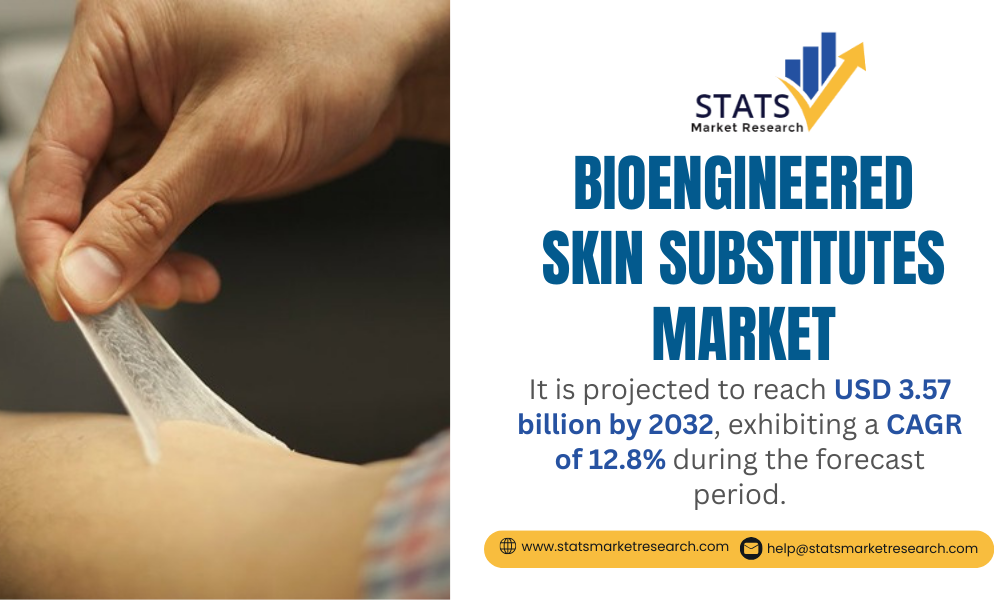
Definition
Bioengineered skin substitutes are advanced medical products designed to replace, regenerate, or repair damaged skin tissue. These substitutes combine biological components—epidermis, dermis, or both—with acellular matrices derived from human, animal, or synthetic sources. Unlike traditional skin grafts, bioengineered substitutes provide superior outcomes in terms of healing time, infection control, and tissue integration.
Key applications include chronic wound management, burn treatment, and reconstructive or cosmetic surgeries. Modern bioengineered skin substitutes utilize technologies such as 3D bioprinting, extracellular matrix (ECM) scaffolds, and stem cell integration. These innovations enable enhanced vascularization, structural stability, and faster tissue regeneration.
Common types of bioengineered skin substitutes include:
- Allogeneic acellular – ready-to-use products with low rejection risk
- Xenogeneic – derived from non-human sources
- Allogeneic cells – containing living donor cells
- Autologous – derived from the patient’s own cells
Hospitals remain the primary site of application due to the high volume of surgical procedures, burn cases, and acute wound care requirements.
Recent Developments in the Bioengineered Skin Substitutes Market
The bioengineered skin substitutes market is undergoing rapid evolution, driven by advancements in regenerative medicine and tissue engineering. A key trend is the development of more sophisticated, multi-layered substitutes that better mimic the native structure and function of human skin, including the presence of the dermis, epidermis, and even the hypodermis. Innovations are also focused on creating products with enhanced vascularization, which improves graft “take” and long-term viability. The market is also seeing a rise in the use of advanced biomaterials and cell-based approaches, including the development of fish-skin grafts that offer unique healing properties. Furthermore, technologies like 3D bioprinting are emerging as a way to create custom, patient-specific skin substitutes, promising to revolutionize treatment for severe burns and chronic wounds.
Major Distribution Channels for Bioengineered Skin Substitutes
The distribution of bioengineered skin substitutes is primarily concentrated within the healthcare sector. The major end-users are hospitals, specialty clinics, and wound care centers, which rely on these advanced products for treating complex injuries like burns, diabetic ulcers, and pressure ulcers. Consequently, the primary distribution channel is direct sales from manufacturers to these medical facilities. Key players in the market, such as Organogenesis, BD, and Integra LifeSciences, have established direct sales forces to engage with surgeons and wound care specialists. Additionally, third-party distributors and group purchasing organizations (GPOs) facilitate the procurement process for larger hospital networks. As the market grows and the use of these substitutes becomes more widespread, hospital pharmacies and, to a lesser extent, ambulatory surgical centers are also becoming significant points of distribution.
Market Size
Global bioengineered skin substitutes market was valued at USD 1.57 billion in 2023. It is projected to grow from USD 1.77 billion in 2024 to USD 3.57 billion by 2030, exhibiting a CAGR of 12.8% during the forecast period.
Download FREE Sample of this Report @ https://www.statsmarketresearch.com/download-free-sample/8059414/global-bioengineered-skin-substitutes-forecast-market
Growth is driven by multiple factors:
- Rising prevalence of chronic wounds (diabetic ulcers, pressure ulcers, venous leg ulcers)
- Increasing incidence of burn injuries globally
- Technological advancements in tissue engineering and regenerative medicine
For context, over 8 million people in the U.S. suffer from chronic wounds, incurring treatment costs exceeding USD 50 billion annually. Bioengineered skin substitutes are increasingly preferred due to their ability to promote natural tissue regeneration, minimize infection risk, and improve patient outcomes.
Allogeneic acellular products dominate the market with 80% share, driven by ready availability and reduced risk of immune rejection. The hospital segment accounts for more than 60% of applications, reflecting clinical preference for these solutions in acute care settings.
The growing adoption of skin substitutes in cosmetic and reconstructive procedures further supports market expansion. Clinical trials demonstrate up to 40% faster healing times for next-generation skin substitutes compared to first-generation products, significantly enhancing market penetration across diverse therapeutic areas.
Market Dynamics (Drivers, Restraints, Opportunities, and Challenges)
Drivers
Rising Prevalence of Chronic Wounds
- The global diabetic population is projected to reach 643 million by 2030, creating a vast addressable market.
- Bioengineered substitutes are proven to reduce infection risks and promote faster healing compared to traditional wound dressings.
Technological Advancements in Tissue Engineering
- Innovations in 3D bioprinting and ECM scaffolds enable multi-layered skin constructs with improved vascularization.
- Incorporation of growth factors and stem cells enhances graft success rates from ~65% to over 85%.
Growth in Cosmetic and Reconstructive Procedures
- Adoption in scar revision, burn rehabilitation, and anti-aging treatments is increasing.
- The global cosmetic surgery market, valued at USD 67 billion in 2023, is incorporating skin substitutes for dermal regeneration.
- Over 120 ongoing clinical trials are exploring new applications, expanding the market potential.
Restraints
High Treatment Costs and Reimbursement Challenges
- Treatment costs range from USD 1,500–6,000, significantly higher than conventional dressings (USD 50–300).
- Insurance coverage varies across regions, and prior authorization requirements delay adoption.
- In developing countries, out-of-pocket payment models restrict adoption to under 15% of eligible patients.
Stringent Regulatory Requirements
- FDA approval timelines exceed 7 years, with development costs surpassing USD 30 million per product.
- Updates to Good Manufacturing Practice (GMP) standards introduce additional compliance burdens, particularly for living cell-based products.
Opportunities
Emerging Markets in Asia Pacific and Latin America
- Healthcare expenditure projected to grow 8–12% CAGR through 2030.
- Local manufacturing initiatives in India and China reduce costs by 40–50%, improving affordability.
- Government-sponsored wound care programs create predictable demand streams.
Personalized Medicine Approaches
- Autologous cell-based solutions and genetic profiling offer patient-specific therapies.
- Pilot programs show 35% better outcomes with customized skin substitutes.
- Point-of-care biofabrication systems enable clinical on-demand production of tailored grafts.
Challenges
Supply Chain Vulnerabilities
- Dependence on human and animal-derived materials creates risk of raw material shortages.
- Temperature-sensitive logistics and long lead times impact product availability, with ~15% of shipments experiencing viability issues.
- Trend toward synthetic alternatives and localized production is emerging to mitigate risks.
Skilled Workforce Shortages
- Only 38% of wound care specialists feel adequately trained in advanced skin substitute applications.
- Biomanufacturing faces 25,000 unfilled positions globally in cell therapy production.
- Onboarding for new hires can take 6–12 months, constraining market growth, especially in emerging markets.
Regional Analysis
North America
- Largest market, driven by high prevalence of chronic wounds and advanced healthcare infrastructure.
- U.S. accounts for the majority of demand, supported by insurance coverage and hospital adoption.
Europe
- Steady growth due to aging population and government support for wound care initiatives.
- Key markets include Germany, France, and the U.K., with regulatory-compliant products leading adoption.
Asia Pacific
- Rapidly growing due to rising healthcare expenditure, diabetic population, and local manufacturing hubs.
- India and China are emerging as production and consumption centers.
Latin America
- Moderate growth supported by government-funded wound care programs and private hospital adoption.
Middle East & Africa
- Adoption remains limited due to high treatment costs and infrastructure challenges, though urban centers show gradual uptake.
Get the Complete Report & TOC @ https://www.statsmarketresearch.com/global-bioengineered-skin-substitutes-forecast-market-8059414
Competitor Analysis
The market exhibits a moderately consolidated structure with established medical technology companies and specialized biotech firms.
Key industry players include:
- Organogenesis Inc. (U.S.)
- Integra LifeSciences (U.S.)
- Smith & Nephew plc (U.K.)
- Becton, Dickinson and Company (U.S.)
- Johnson & Johnson (DePuy Synthes) (U.S.)
- AlloSource (U.S.)
- Vericel Corporation (U.S.)
- LifeNet Health (U.S.)
- Aroa Biosurgery (New Zealand)
- Cook Biotech (U.S.)
Strategic Trends:
- Product line extensions integrating epidermal and dermal layers
- Geographic expansion, particularly in Asia
- Vertical integration with tissue processing capabilities
- Adoption of combination therapies with advanced wound care technologies
Global Bioengineered Skin Substitutes: Market Segmentation Analysis
This report provides a deep insight into the global Bioengineered Skin Substitutes market, covering all its essential aspects. This ranges from a macro overview of the market to micro details of the market size, competitive landscape, development trend, niche market, key market drivers and challenges, SWOT analysis, value chain analysis, etc.
The analysis helps the reader to shape the competition within the industries and strategies for the competitive environment to enhance the potential profit. Furthermore, it provides a simple framework for evaluating and assessing the position of the business organization. The report structure also focuses on the competitive landscape of the Global Bioengineered Skin Substitutes. This report introduces in detail the market share, market performance, product situation, operation situation, etc., of the main players, which helps the readers in the industry to identify the main competitors and deeply understand the competition pattern of the market.
In a word, this report is a must-read for industry players, investors, researchers, consultants, business strategists, and all those who have any kind of stake or are planning to foray into the Bioengineered Skin Substitutes market in any manner.
Market Segmentation (by Application)
- Hospitals
- Specialty Clinics
- Wound Care Centers
- Others
Market Segmentation (by Type)
- Allogeneic Acellular
- Xenogeneic
- Allogeneic Cells
- Autologous
Key Company
- Organogenesis Inc. (U.S.)
- Integra LifeSciences (U.S.)
- Smith & Nephew plc (U.K.)
- Becton, Dickinson and Company (U.S.)
- Johnson & Johnson (DePuy Synthes) (U.S.)
- AlloSource (U.S.)
- Vericel Corporation (U.S.)
- LifeNet Health (U.S.)
- Aroa Biosurgery (New Zealand)
- Cook Biotech (U.S.)
Geographic Segmentation
- North America
- Europe
- Asia Pacific
- Latin America
- Middle East & Africa
FAQ
Q1: What is the current market size of the Bioengineered Skin Substitutes market?
A1: The market was valued at USD 1.57 billion in 2023 and is projected to reach USD 3.57 billion by 2030, growing at a CAGR of 12.8%.
Q2: Which are the key companies operating in the Bioengineered Skin Substitutes market?
A2: Key players include Organogenesis, Integra LifeSciences, Smith & Nephew, Johnson & Johnson, AlloSource, Vericel Corporation, among others.
Q3: What are the key growth drivers in the Bioengineered Skin Substitutes market?
A3: Growth is driven by rising chronic wound prevalence, technological advancements in tissue engineering, burn injury treatment demand, and cosmetic/reconstructive surgery applications.
Q4: Which regions dominate the Bioengineered Skin Substitutes market?
A4: North America is the largest market, followed by Europe and Asia Pacific, driven by healthcare infrastructure, government initiatives, and rising disease burden.
Q5: What are the emerging trends in the Bioengineered Skin Substitutes market?
A5: Emerging trends include 3D bioprinted multi-layer skin substitutes, autologous patient-specific grafts, integration with advanced wound care technologies, and regional manufacturing expansion in emerging markets.
About Us
☎️ International: +1 (332) 2424 294
📄 Website: www.statsmarketresearch.com
Join us on LinkedIn:- https://www.linkedin.com/company/statsmarketresearch




