
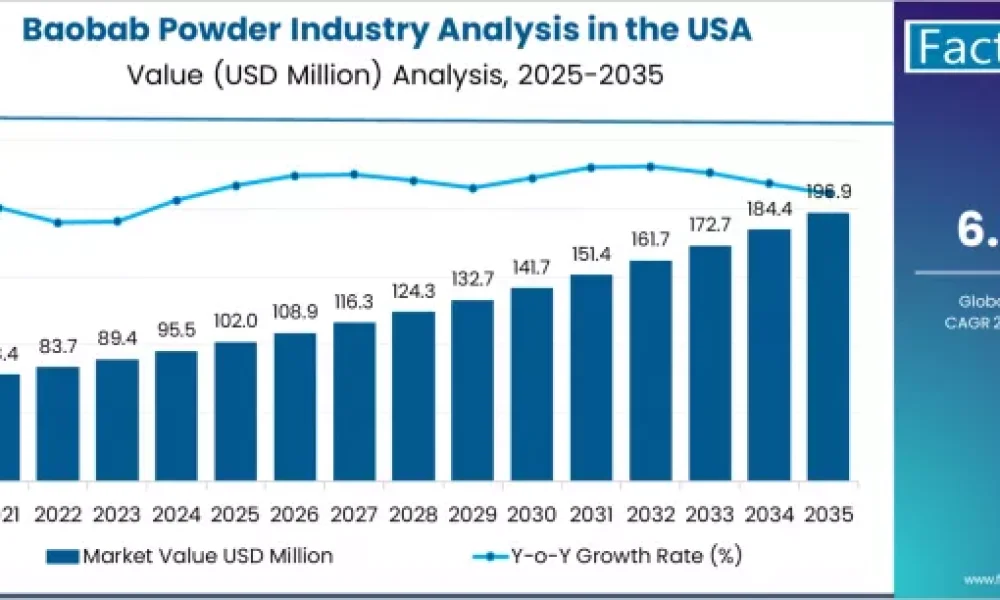
The United States baobab powder industry is set to witness significant growth, fueled by rising consumer demand for plant-based superfoods, clean-label ingredients, and functional nutrition products. According to the latest market insights, U.S. demand for baobab powder is projected to grow from USD 102.0 million in 2025 to approximately USD 197.0 million by 2035, reflecting a steady CAGR of 6.8%, and recording an absolute market expansion of USD 95.0 million over the forecast period.
Baobab powder sourced from the fruit of the revered African baobab tree—is gaining strong commercial traction across the U.S., becoming a preferred natural ingredient in wellness, beverage, dietary supplement, and beauty applications.
Key Market Drivers
Superfood & Clean-Label Demand Grows Rapidly
U.S. consumers and brands increasingly favor minimally processed, ethically sourced, and nutrient-dense ingredients. With its naturally high vitamin C, fiber, potassium, calcium, and antioxidant profile, baobab powder is emerging as a premium alternative to synthetic additives and conventional superfruit ingredients. Its tangy flavor and solubility support widespread use in smoothies, juices, protein mixes, cereals, and fortified snack bars.
To access the complete data tables and in-depth insights, request a Discount On The Report here: https://www.factmr.com/connectus/sample?flag=S&rep_id=11888
Health & Functional Nutrition Adoption Expands
Growing awareness around immune support, gut health, and metabolic wellness is accelerating product innovation built around baobab powder. Its rich prebiotic fiber content and low glycemic index make it highly relevant in formulations targeting digestive balance, blood sugar moderation, heart health, and weight-conscious nutrition. The ingredient is also gaining popularity in sports nutrition and energy-focused product lines due to its electrolyte mineral advantages.
Natural Beauty and Nutraceutical Innovation Rise
Baobab powder is attracting strong interest beyond food and beverage markets, extending into supplement capsules, powdered nutraceutical blends, and beauty formulations. Increasing demand for ingestible beauty, collagen-boosting blends, and radiance-focused nutraceuticals enhances its appeal with manufacturers in both health and cosmetic sectors.
Regional & Consumer Insights
Nationwide Market Penetration, Led by Wellness & Plant-Based Segments
The baobab category continues to expand across major retail and e-commerce health food channels in the U.S., supported by:
- Growing plant-based and vegan consumer communities
- Increased usage by premium smoothie chains, boutique cafés, and functional drink brands
- Rising preference for whole-food immune boosters over synthetic vitamin C fortifiers
While African baobab harvest regions remain the production core, U.S. brands are driving global demand through scalable commercialization, product education campaigns, and functional ingredient imports.
Market Segmentation Overview
By Product Type
- Organic Baobab Powder – Increasing share among clean-label, wellness, and specialty health brands
- Conventional Baobab Powder – Dominant for high-volume functional beverage and supplement usage
By End Use
- Beverages – Smoothies, herbal wellness drinks, immune tonics, cold-pressed juices
- Nutraceuticals & Dietary Supplements – Capsules, gut-health blends, immunity mixtures
- Snacks & RTE Foods – Energy bars, granola mixes, fortified cereals, protein blends
- Cosmetic & Personal Care – Face masks, topical antioxidant blends, hair and beauty formulations
- Foodservice & Retail Wellness – Specialty cafés, natural food chains, ethnic cuisine segments
Industry Challenges
Despite promising growth, the U.S. baobab powder sector faces key constraints:
- Raw material import dependency and logistics complexity
- Price sensitivity versus synthetic vitamin C powders
- Limited mainstream consumer familiarity
- Need for strengthened milling, purity validation, and export standardization
However, increasing brand storytelling, product sampling, and nutrition education are helping move baobab powder from emerging superfood status into wider commercial adoption.
Competitive Landscape
The baobab powder industry in the U.S. includes a mix of natural food innovators, ethically branded suppliers, and nutraceutical manufacturers emphasizing:
- Fair-trade sourcing and sustainability
- Transparent supply chain traceability
- Functional product diversification and retail expansion
Leading brand activity continues to be centered around strong product positioning and African cooperative supply partnerships.
Future Outlook: Toward Functional, Ethical, and Ingredient-First Innovation
By 2035, baobab powder is expected to evolve from an emerging natural supplement ingredient to a mainstream U.S. superfood additive and nutraceutical staple, especially in:
- Immune-support beverages
- Prebiotic wellness blends
- Fortified snack food categories
- Natural beauty & ingestible cosmetic applications
Companies prioritizing ethical sourcing, consumer education, supply chain modernization, and product innovation will be best positioned to lead U.S. market expansion in the next decade.
Have a specific Requirements and Need Assistant on Report Pricing or Limited Budget please contact us – [email protected]
About Fact.MR
Fact.MR is a global market research and consulting firm, trusted by Fortune 500 companies and emerging businesses for reliable insights and strategic intelligence. With a presence across the U.S., UK, India, and Dubai, we deliver data-driven research and tailored consulting solutions across 30+ industries and 1,000+ markets. Backed by deep expertise and advanced analytics, Fact.MR helps organizations uncover opportunities, reduce risks, and make informed decisions for sustainable growth.



