
Why biometrics are becoming the ultimate deterrent for fugitives, document fraud networks, and anyone still relying on paper-era identity tricks
WASHINGTON, DC, April 30, 2026,
The forged passport was once the classic tool of fugitives, smugglers, impostors, and high-risk travelers trying to move through borders under another name, but biometric screening is turning that old strategy into a dangerous relic.
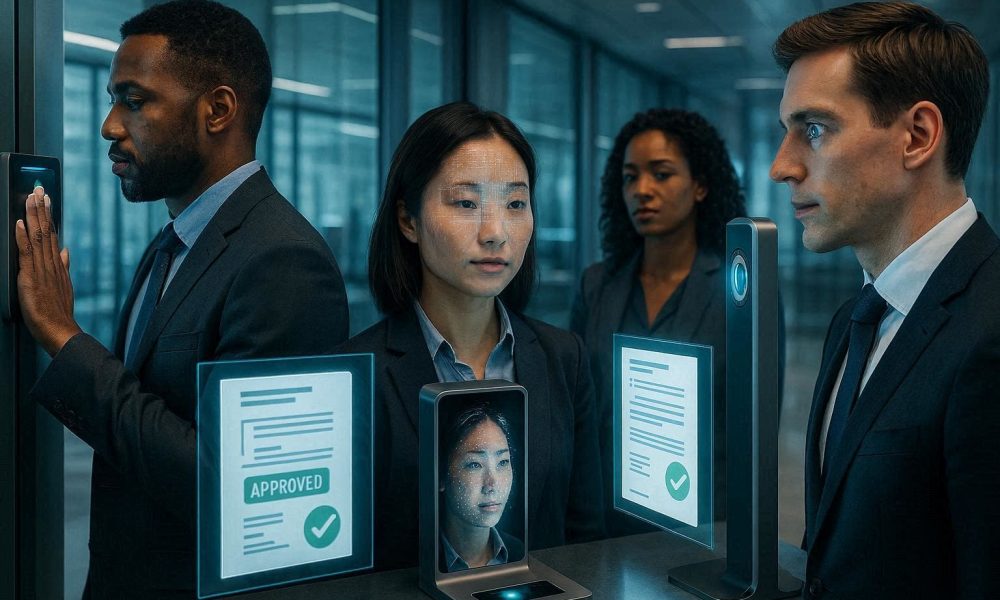
The modern border no longer asks only whether a passport appears authentic, because facial verification, fingerprint records, digital entry files, and shared watchlists increasingly ask whether the physical person matches the identity being presented.
That distinction is transforming global mobility because forged documents were designed to fool the eye, while biometric systems are designed to compare a person against stored identity signals that paper alone cannot explain away.
For lawful travelers, this shift can lead to faster processing and stronger protection against impostors, but for fugitives and document-fraud users, it creates a border environment in which false paperwork can become evidence rather than protection.
The passport is no longer the only identity being inspected.
Traditional document fraud relied on the assumption that a border officer would examine a passport booklet, compare a photograph, ask several questions, and make a quick decision in a crowded inspection environment.
That model left room for high-quality forgeries, look-alike passports, altered photographs, weak supporting documents, and identity stories that survived because officers had limited time and fragmented access to foreign records.
Europe’s Entry and Exit System changes that calculation because the official EES framework registers non-EU short-stay travelers through travel document data, entry and exit records, facial images, and fingerprints.
The system does not merely look at the passport; it creates a digital relationship among the person, the document, the crossing, and the biometric identifiers recorded during the border process.
That matters because a forged document may bear a false name, but the person presenting it still has a face, fingerprints, behavioral patterns, and a prior movement history that may already exist in another record.
Biometrics makes identity fraud harder to compartmentalize.
Identity fraud works best when separate records remain separate, because one person can appear under one name in one system and under another name somewhere else without those identities being connected.
Biometrics attacks that separation because fingerprints and facial images can reveal that two documents, two names, or two travel histories may belong to the same physical person.
This is why the new border environment is so damaging to forged-document networks: the fraud no longer needs to be detected by handwriting, paper quality, or an officer’s suspicion alone.
The system can identify a contradiction by comparing the body against previous records, meaning the traveler’s physical identifiers may expose what the document attempts to conceal.
A person using another identity may pass a casual visual inspection, but that person faces far greater risk when the inspection includes biometric comparison against earlier refusals, watchlists, or immigration records.
A genuine passport under a false identity can still fail.
One of the most dangerous myths in the underground identity market is that a genuine passport obtained under a false name is automatically safer than a counterfeit passport.
That belief misunderstands modern verification because the
If a passport was obtained through false declarations, stolen civil records, manipulated identity files, or an invented biography, biometric comparison may still expose a connection to an earlier identity.
The document may be genuine as an object, but the identity claim can still collapse if fingerprints, facial images, prior visa records, or past refusals connect the traveler to another profile.
This is why biometric borders are such a powerful deterrent: they reduce the usefulness of high-quality paperwork when the underlying identity cannot withstand comparison with the person standing at the kiosk.
The paper-era fugitive is losing the advantage of time.
In the past, a fugitive using forged papers often relied on speed, confidence, language gaps, officer fatigue, and the practical difficulty of checking foreign records in real time.
A border officer might suspect something, but the traveler could sometimes move through the checkpoint before deeper verification became possible, especially at busy crossings or under pressure from long queues.
Biometric systems reduce that advantage because the identity check can occur instantly or near instantly, creating an alert before the traveler has the opportunity to disappear into the destination country.
The result is not that every border is perfect or every criminal is caught, but that the old margin for error has narrowed dramatically for people relying on forged or look-alike documents.
The forged passport was once a tool for buying time, but the biometric border is designed to remove that time by comparing identity claims before the traveler can move onward.
The face and fingerprints now become part of the border record.
The most important change is that the person is no longer separable from the document, because biometric capture links the traveler to a digital record that can be checked during future crossings.
A person can replace a passport, change a hairstyle, alter clothing, vary a route, or present a different supporting story, but the face and fingerprints remain harder to separate from prior encounters.
That is why the phrase “permanent digital file” is often used in public discussion, even though official retention periods and data protection rules determine how long particular records are stored.
The practical point remains powerful because the border record becomes more durable than an ink stamp, and it can be compared with future crossings more consistently than paper pages.
For fugitives and fraud users, this creates a long-term identity risk because a single biometric enrollment can connect multiple attempts, documents, refusals, or aliases over time.
The end of forged documents does not mean the end of privacy.
Privacy advocates are right to question biometric border systems because faces and fingerprints are sensitive identifiers that cannot be easily changed after misuse, breaches, or improper sharing.
The debate over retention, safeguards, false matches, oversight, and appeal rights is serious because ordinary travelers may face delays or concerns even when they have done nothing wrong.
Yet those privacy concerns do not make forged documents safer, lawful, or defensible, because the use of false paperwork creates risks that biometric systems are specifically designed to expose.
A traveler with legitimate privacy concerns should not respond by seeking counterfeit documents, because that choice can lead to detention, refusal, and a risk of prosecution, and cause long-term damage to future mobility.
The responsible response is lawful planning, accurate records, secure communications, limited public exposure and professional guidance before travel becomes urgent or complicated.
Look-alike passports are failing because the camera never gets tired.
Look-alike passport fraud relied on the hope that a traveler resembled the passport holder closely enough to satisfy a human officer during a short visual comparison.
That method was always risky, but biometric facial comparison makes it more dangerous because the camera does not rely on casual resemblance, lighting impressions, or a hurried glance.
Facial verification systems compare biometric features in ways that can reveal differences that may not be obvious during a quick manual inspection under pressure.
The traveler may look similar to the rightful passport holder, but the system is designed to verify that the live image matches the document image or the stored identity record.
This does not mean facial recognition is infallible, because technology can produce errors, but it does mean the old reliance on resemblance is no longer a dependable tactic for criminal investigation.
Border systems now punish contradictions more than appearances.
The modern border does not simply ask whether a traveler looks nervous or whether a passport page appears clean, because the deeper question is whether all identity signals align.
A coherent traveler presents a valid document, consistent biographical data, a lawful purpose of travel, accurate prior records, and biometric identifiers that do not create unexpected conflicts.
A fraudulent traveler may present a polished document while still creating contradictions through fingerprints, facial data, travel history, visa records, prior refusals, or watchlist information.
That is why forged documents are becoming less useful, because the inspection target has expanded from the document itself to the entire identity structure surrounding the person.
The strongest protection for a lawful traveler is therefore not secrecy, but coherence, meaning the document, person, story, records and purpose can all withstand ordinary review.
EES and ETIAS create a layered screening environment.
The EES operates at the border by registering entries, exits, refusals, and biometric identifiers, while ETIAS is designed to pre-screen visa-exempt travelers before they arrive.
Together, these systems reduce the old dependence on one inspection moment, because screening can occur before departure, at the checkpoint, and during later reviews of travel history.
Reuters has described the EES rollout as a major shift toward biometric registration, digital entry records, and automated detection of overstays, identity fraud, and risks of irregular migration through the Schengen border system.
That layered model matters because a forged identity may fail at several points, not only when the traveler hands over a passport.
A weak identity story that survives one form can still encounter trouble when checked against biometric records, travel authorization data, watchlists, or prior movement history.
Forgery networks now face stronger investigative trails.
When a forged document fails at a biometric checkpoint, the consequences may extend beyond the traveler because investigators can examine who supplied the document, how it was paid for, and where it was used.
A single detection can expose repeated routes, document templates, courier networks, payment channels, phone records, recruitment patterns, and supporting identity materials tied to broader fraud operations.
This is another reason biometrics are becoming a deterrent: failed attempts can generate evidence that extends into the traveler’s supply chain.
The underground seller may promise invisibility, but the buyer may become the point of exposure that helps authorities identify the wider network.
For anyone considering fake documents, the risk is not only being refused entry but also becoming part of a criminal investigation that grows larger after the first border failure.
Legal identity planning is different from document fraud.
A lawful second identity or second citizenship is fundamentally different from a forged document because it must be issued by a competent authority, supported by records, and used consistently with legal obligations.
This distinction is central to Amicus International Consulting’s legal new identity services, where legitimate privacy planning is positioned around lawful documentation, eligibility review, and compliant identity restructuring.
The purpose is not to defeat biometric checkpoints or mislead border officers, because any privacy plan built on deception becomes fragile the moment real verification begins.
The purpose is to help qualified clients reduce unnecessary public exposure, improve mobility, protect family security, and create lawful continuity between identity records and future movement.
A legitimate identity structure should be boring in the best possible way, because it can be explained to banks, lawyers, border officers, and advisers when lawful disclosure is required.
A second passport is valuable only when it is real.
A legally acquired second passport can be one of the most important mobility assets in a regulated world because it can provide options during political instability, banking disruption, or personal security threats.
Through Amicus International Consulting’s second passport services, qualified clients can explore lawful documentation pathways that support resilience without relying on counterfeit papers or unverifiable identity claims.
A second passport should never be treated as a costume because biometric systems may still link the traveler to earlier records, travel history, or other identifying information.
The passport’s value comes from lawful status, not from concealment, because a valid second citizenship can support mobility when the traveler’s documentation and records remain coherent.
If the underlying identity cannot be verified or the passport cannot be renewed, the document is not a Plan B, but a border liability waiting to be discovered.
The real deterrent is not technology alone, but connected memory.
Biometrics matter because they create a stronger connection between the person and the record, but the deeper transformation is the border’s growing memory across time and jurisdictions.
A manual stamp could be missed, misread, or ignored, while a digital record can preserve entries, exits, refusals, and identity signals in a form that is easier to compare later.
That memory changes the behavior of travelers because a mistake, refusal, or false identity attempt can follow them more clearly across future crossings than it did in the paper era.
For lawful travelers, connected memory can support clearer compliance, but for fugitives, it reduces the ability to start fresh at each border with a new document and a new story.
The end of forged documents is therefore really the end of the disconnected border, because the traveler’s past encounters increasingly remain available during future inspections.
The safest privacy strategy is built before scrutiny begins.
People usually seek privacy after trouble appears, but identity planning works best before litigation, instability, reputation attacks, security threats, or border complications force rushed decisions.
A rushed person is more likely to believe unrealistic promises, send documents to unsafe brokers, buy fake papers, or accept claims that no legitimate professional would make.
A careful person can review eligibility, documentation, residence options, banking implications, digital exposure, and lawful mobility structures before the pressure of immediate travel creates mistakes.
Through Amicus International Consulting, qualified clients can explore privacy and mobility planning that focuses on controlled exposure rather than illegal concealment.
That distinction matters because controlled exposure respects lawful systems while reducing unnecessary visibility to data brokers, hostile actors, criminals, stalkers, intrusive media, and unsafe personal contacts.
Forged documents are not disappearing overnight, but their usefulness is collapsing.
Criminal networks will continue to produce false documents because demand exists, but the strategic value of those documents is declining as biometric and database comparisons become more common.
A forged passport may still deceive someone in a low-security setting, but modern international borders are increasingly built to test the person behind the document.
That shift makes forged papers more dangerous for the user, because failure can create an official record, trigger an investigation, and damage future attempts at lawful travel.
For fugitives, the message is blunt because the biometric border is designed to identify the body that paperwork tries to rename.
For lawful travelers, the message is different but equally important, because privacy must be built through real documents, accurate records, and disciplined planning rather than fantasy.
The future belongs to verifiable identity.
The border of 2026 is not fooled by the same tricks that worked in the passport-stamp era, because it sees documents, faces, fingerprints, travel histories, and security alerts together.
This does not make biometric systems perfect, and it does not remove the need for privacy protections, appeal rights, human judgment, and careful regulation of sensitive data.
It does mean that forged documents are losing their role as a practical escape tool, because the person carrying the document is now checked more deeply than the document alone.
The end of forged documents is therefore not a slogan, but a measurable shift in how borders define identity, risk, and trust.
In a world where the body increasingly confirms the record, the only sustainable privacy strategy is lawful identity planning that can survive verification, not forged paperwork that collapses when the system asks who is really standing at the border.




