
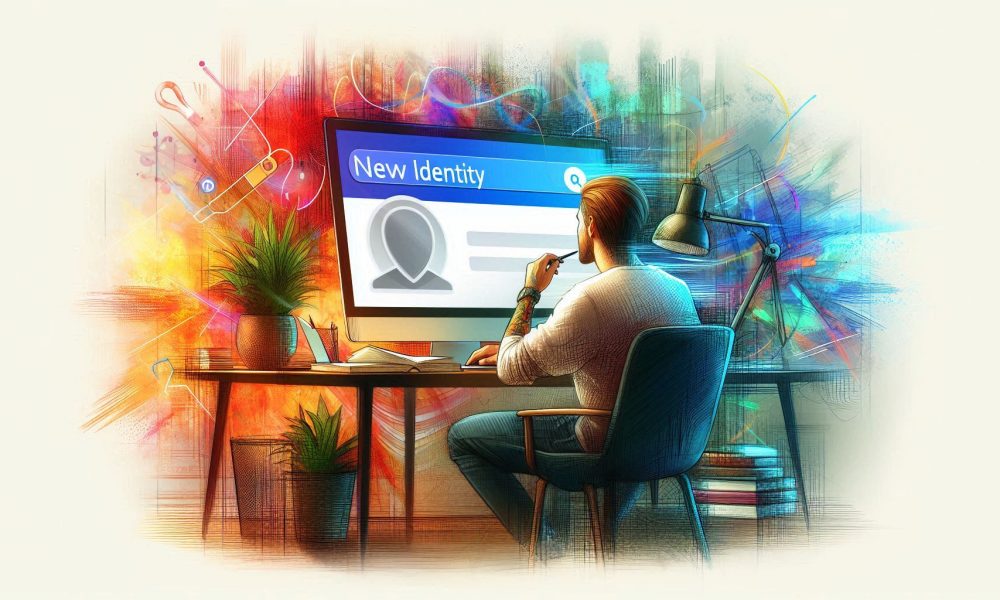
Online demand reflects growing anxiety about privacy, fraud exposure, and starting over in a tracked world.
WASHINGTON, DC, March 25, 2026.
Few search phrases say more about modern anxiety than “how to get a new identity online.” It is blunt, loaded, and often misunderstood. On its face, it sounds like a how-to query from the margins of the internet. In reality, it often reflects something broader and more mainstream, fear of fraud, exhaustion with overexposure, reputational panic, digital stalking, data broker visibility, and the growing feeling that ordinary life is becoming too searchable to control.
That is why the phrase keeps resurfacing. It compresses several very different worries into one line. Some searchers are frightened by identity theft. Some are reacting to harassment, doxxing, or a personal crisis. Some are drawn by fantasies of disappearing. Others simply want a legal reset after divorce, public embarrassment, financial trouble or a security scare. The wording may sound dramatic, but the underlying emotion is often familiar: a desire for distance from a life that feels overtracked.
The Search Trend Is Really About Pressure
People do not usually begin with a precise legal vocabulary. They search the way they feel.
That means a person looking up “how to get a new identity online” may not literally be asking for a fake passport or fabricated documents. They may be asking whether it is still possible to regain privacy. They may be asking whether their name can be changed. They may be asking how to get personal information off the internet. They may be asking whether modern systems leave any room at all for a lawful fresh start.
That is what makes the query so revealing. It lives at the intersection of privacy panic and administrative confusion. The public knows that digital life has become intrusive. What many people do not know is which parts of identity can actually be changed lawfully, and which parts cannot.
Fraud Exposure Is Fueling the Search
One driver is simple fear. Identity theft, phishing, scam texts, account takeovers, and document fraud have made identity feel less stable than it once did. When people feel their data is loose, copied, sold, or compromised, the idea of a “new identity” starts to sound less like escapism and more like self-protection.
That is why official consumer guidance matters here. The Federal Trade Commission’s identity theft guidance does not promise reinvention, but it does reflect the scale of public concern. It treats identity abuse as an ordinary consumer risk, something to be reported, documented, and mitigated. That official posture helps explain why people keep turning to dramatic search language. They are responding to a world in which personal data loss no longer feels rare.
Once fraud becomes normal enough to require routine federal advice, it is not surprising that people start wondering whether the safest move is to change the record itself.
Privacy Anxiety Is the Other Half of the Story
The search trend is not just about criminals stealing identity. It is also about legal identity becoming too visible.
Many people now live inside systems that know too much about them, travel history, purchase patterns, location behavior, old addresses, relatives, prior employers, social profiles, and archived records that can surface years later. The problem is not only that data can be stolen. It is that data can be aggregated, priced, profiled, and used to make people feel permanently exposed.
That broader mood has only intensified as more parts of daily life become measurable. In recent Reuters reporting on surveillance pricing, regulators focused on how location, browsing history, and purchase behavior can shape what consumers are shown and charged. That may seem far removed from identity change, but psychologically, it is very close. It reinforces the idea that the digital record is not passive. It is active, commercialized, and increasingly capable of defining how a person is treated.
Once people absorb that, “new identity” starts to sound like a response to exposure, not just a response to crime.
The Internet Makes Reinvention Look Easier Than the Law Does
Another reason the phrase stays hot is that the internet constantly markets reinvention as a product. Search results, videos, ads, and niche service pages make identity change sound like a downloadable solution, fast, discreet and somehow available on demand. The language is often frictionless because friction is bad for clicks.
The law is not frictionless.
A lawful identity change usually means a court process, or another recognized civil process, followed by document updates across major systems. It is normally a continuity exercise, not an erasure exercise. The person may get a new legal name. They may update records. They may change how they move through the world going forward. But they do not generally acquire a completely detached new self with no traceable bridge to the past.
That gap between internet language and legal reality is one reason the search phrase remains so powerful. The web teaches people to think in product terms. The law answers in paperwork.
Why the Phrase Has Commercial Gravity
The search trend also survives because it attracts a strange mix of consumers, scammers, and advisers. Some searchers are vulnerable. Some are impulsive. Some are simply curious. All of them create demand, and demand always pulls in intermediaries.
That is why firms in the identity-and-privacy space continue to publish around the topic. Providers such as Amicus International Consulting frame new identity questions around legal planning, document strategy, and controlled restructuring. Whether readers approach that market from curiosity or crisis, the attraction is clear. The phrase promises a way out of visibility.
But that is also where the risk begins. High-emotion search terms attract both legitimate advisory language and misleading claims. A person searching for lawful options can quickly run into fantasy-level promises, fake documents, exaggerated secrecy, and outright fraud. The query is popular because it expresses desperation. It is dangerous for the same reason.
What People Are Really Looking For
Underneath the dramatic wording, most people are usually looking for one of five things.
They want relief from identity theft.
They want relief from public exposure.
They want to know whether a legal name change can help.
They want to know whether records can be updated after a life rupture.
Or they want reassurance that a lawful fresh start still exists in some form.
Those are not identical questions, but they all funnel into the same search bar because the internet rewards urgency over precision. “How to get a new identity online” is not a technical legal query. It is a pressure query.
That is what makes it such a durable trend. It belongs to a culture in which people feel both visible and vulnerable. Their information is easy to find, easy to exploit, and hard to pull back. So they reach for the biggest phrase they can think of.
The Line Between Starting Over and Breaking the Law
The enduring popularity of the phrase also reveals how poorly the public understands the boundary between lawful identity change and unlawful identity fraud. That boundary is actually clear. Lawful change is based on valid authority, documented updates and official recognition. Unlawful change is based on fabricated records, false statements, fake documents, or invented histories.
The public often senses that line without fully understanding it. That is why so many searches have a nervous quality. People are not only asking how to start over. They are asking where the safe boundary is.
In 2026, that question feels more urgent because modern identity systems are tighter, more digital, and more interconnected than before. A false identity is harder to sustain. A lawful identity transition is still possible, but it is narrower, slower, and more traceable than the internet fantasy suggests.
That is the real story behind the trend. The phrase keeps surging because it captures a modern contradiction. People want relief from exposure, but they live inside systems built on verification. They want privacy, but they move through databases. They want a fresh start, but the record keeps following them.
So they type the question anyway. Not always because they want to disappear, but because they want to know whether the law still leaves room to breathe.




