
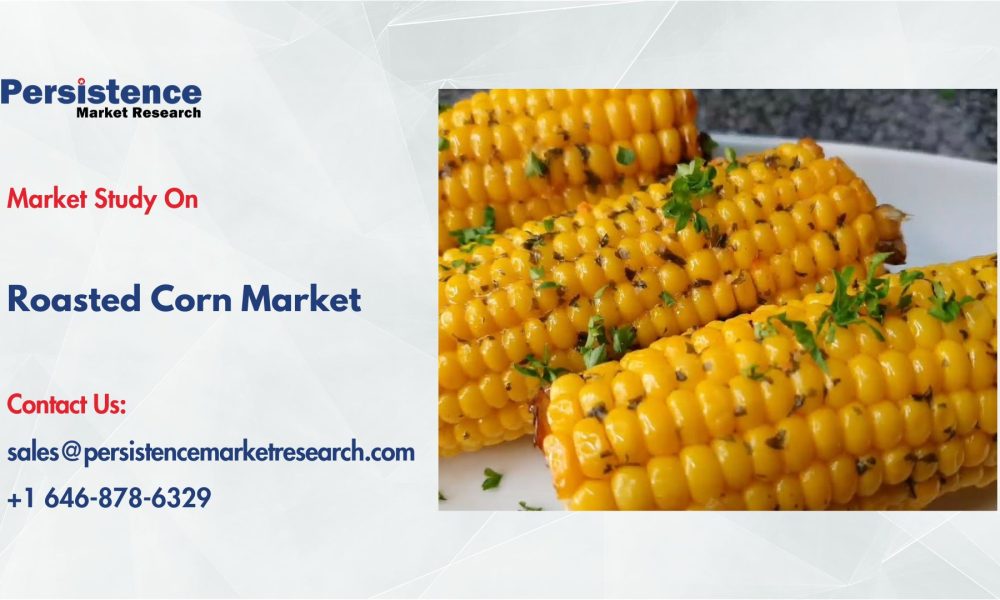
The global roasted corn market is witnessing steady expansion as consumers increasingly shift toward healthier snacking options and convenient food products. Roasted corn, known for its crunchy texture, nutritional benefits, and versatility, has emerged as a preferred snack across multiple regions. Market participants are introducing innovative flavors, advanced roasting techniques, and improved packaging solutions to capture evolving consumer preferences.
According to recent industry analysis, the global roasted corn market size is expected to be valued at US$ 3.8 billion in 2026 and is projected to reach US$ 5.5 billion by 2033, expanding at a compound annual growth rate (CAGR) of 5.4% during the forecast period from 2026 to 2033. The market outlook reflects strong demand from both developed and emerging economies, supported by rising health awareness, urbanization, and increasing disposable income.
Market Overview and Forecast
The roasted corn market is undergoing notable transformation as global snack consumption patterns evolve. Consumers are increasingly seeking alternatives to traditional fried snacks, driving interest in roasted, baked, and minimally processed snack foods. Roasted corn offers an appealing combination of taste, convenience, and nutrition, making it suitable for modern on-the-go lifestyles.
Several factors are contributing to the market’s steady growth trajectory. One of the primary drivers is the increasing demand for plant-based and natural snack products. Corn, being a widely available and nutrient-rich grain, aligns well with consumer expectations for clean-label and wholesome ingredients. Roasted corn products typically contain dietary fiber, essential minerals, and lower fat content compared to many conventional snack items, which enhances their appeal among health-conscious consumers.
Another major factor influencing the market is the growing popularity of ready-to-eat snack products. Busy urban lifestyles and changing work patterns have significantly increased the demand for convenient packaged foods. Roasted corn products are easy to store, portable, and require no preparation, making them suitable for both household consumption and on-the-go snacking.
Additionally, innovations in seasoning and flavor profiles are expanding the product’s consumer base. Manufacturers are introducing diverse variants such as spicy, barbecue, cheese, and herbal flavors to cater to regional tastes and preferences. This diversification of product offerings has strengthened the market’s ability to reach new demographic segments.
The rise of organized retail channels and e-commerce platforms has further accelerated the distribution of roasted corn products. Supermarkets, hypermarkets, and online grocery platforms now offer a wide range of snack products, allowing consumers to easily access premium and flavored roasted corn varieties. As digital commerce continues to expand globally, manufacturers are increasingly leveraging online channels to reach a broader audience.
Get Your FREE Sample Report Instantly – Click Now: https://www.persistencemarketresearch.com/samples/31382
Segmentation Analysis
By Form
- Whole
- Splits
- Flour
By Nature
- Organic
- Conventional
By Sales Channel
- Dietary Supplements
- Beverages
- Bakery
- Snacks & Convenience Food
- Animal Feed
Regional Insights
The global roasted corn market demonstrates strong regional diversity in terms of consumption patterns, product preferences, and distribution channels.
North America currently represents one of the leading markets for roasted corn products. The region benefits from high consumer awareness regarding healthy snacking and a well-established packaged food industry. The United States, in particular, has seen a growing demand for plant-based snack alternatives that offer nutritional value without compromising taste.
The popularity of gluten-free diets and clean-label foods has further strengthened the demand for roasted corn snacks in North America. Retailers in the region frequently introduce premium snack products featuring natural ingredients and innovative flavors, which has encouraged market expansion.
Europe also holds a significant share of the roasted corn market. Consumers across countries such as Germany, the United Kingdom, and France are increasingly seeking healthier snack alternatives. The region’s strong regulatory framework regarding food safety and labeling has encouraged manufacturers to develop high-quality products with transparent ingredient information.
Asia-Pacific is projected to be the fastest-growing regional market during the forecast period. Rapid urbanization, rising disposable income, and changing dietary habits are driving the adoption of packaged snack products across countries such as China, India, Japan, and South Korea.
In many Asian markets, roasted corn has long been consumed as a traditional snack, particularly in street food culture. The transition from informal street vending to branded packaged products is creating significant growth opportunities for manufacturers. Additionally, the expansion of modern retail infrastructure and digital commerce platforms is enhancing product availability across the region.
Latin America and the Middle East & Africa are also witnessing increasing demand for roasted corn snacks. These regions benefit from abundant corn production and growing consumer interest in affordable snack options. Local manufacturers are leveraging traditional flavors and spices to create region-specific product variants that resonate with consumers.
Unique Features and Innovations in the Market
The roasted corn market is experiencing significant innovation as manufacturers strive to differentiate their offerings and capture emerging consumer trends. Modern production technologies are enabling companies to enhance product quality, consistency, and nutritional value.
One of the key innovations in the market is the use of advanced roasting technologies that allow precise control over temperature and moisture levels. These technologies help maintain the natural flavor and nutritional content of corn while achieving the desired crunchiness.
Another important trend is the integration of smart manufacturing technologies such as artificial intelligence (AI) and the Internet of Things (IoT) within production facilities. AI-powered quality control systems can monitor roasting conditions and detect inconsistencies in real time, ensuring consistent product quality across large-scale production lines.
IoT-enabled sensors are also being used to track inventory levels, monitor equipment performance, and optimize production efficiency. These digital tools help manufacturers reduce operational costs while maintaining high product standards.
In addition, sustainable packaging innovations are gaining traction in the roasted corn market. Many companies are adopting recyclable and biodegradable packaging materials to reduce environmental impact. This shift is particularly important as consumers increasingly favor brands that demonstrate environmental responsibility.
Product innovation is also evident in the introduction of functional roasted corn snacks enriched with additional nutrients such as protein, vitamins, and minerals. These products target health-conscious consumers who seek snacks that contribute to overall well-being.
Need Tailored Insights? Request Customization Now: https://www.persistencemarketresearch.com/request-customization/31382
Market Highlights
The growing adoption of roasted corn snacks can be attributed to several key market dynamics. First, increasing consumer awareness about healthy eating habits has led to a gradual shift away from heavily processed and fried snack foods. Roasted corn offers a balanced combination of flavor and nutrition, making it an attractive alternative.
Second, cost efficiency and raw material availability play an important role in the market’s expansion. Corn is one of the most widely cultivated crops worldwide, which ensures a stable supply chain and relatively affordable production costs. This allows manufacturers to produce roasted corn snacks at competitive price points.
Regulatory initiatives promoting food safety and transparency are also shaping the market landscape. Governments across various regions are implementing stricter labeling requirements and nutritional guidelines, encouraging manufacturers to develop cleaner and healthier snack products.
Sustainability considerations are another significant driver of market growth. Companies are investing in environmentally friendly production processes and packaging solutions to align with global sustainability goals and consumer expectations.
Key Players and Competitive Landscape
- Del Monte Food, Inc.
- N. L. Food Industries
- Laxcorn
- Barberá Snacks SL
- Vaishnav Food Products
- Nenimemi Foods Pvt Ltd
- SunOpta Inc.
- H.J. Heinz Company Brands LLC
- AIM Biscuits
- Sergio
- Fresh Nuts GmbH
- Inka Crops, Inc.
- Brown Tree
- Vega Foods Corp. Private Limited
- Others
Explore the Latest Trending Research Reports:




