
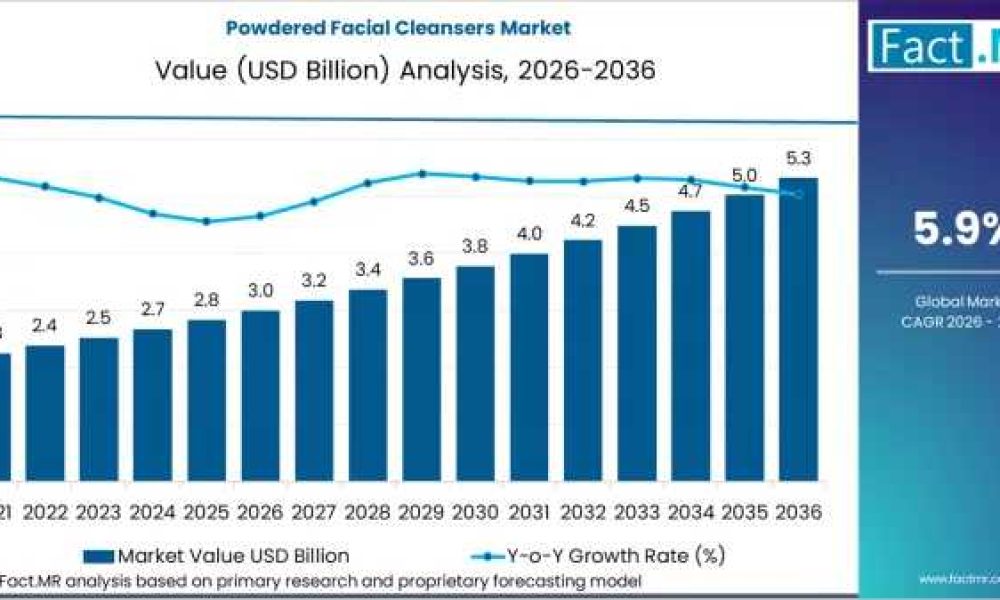
Global Powdered Facial Cleansers Market Projected to Accelerate through 2036, Driven by Waterless Beauty Innovation and Sustainable Consumerism
The global powdered facial cleansers market is entering a decisive decade of growth, with industry forecasts for 2026 to 2036 highlighting a significant shift in the beauty and personal care landscape. As consumers increasingly prioritize eco-conscious and travel-friendly skincare, the powdered cleanser segment—a cornerstone of the waterless beauty movement—is evolving from a niche category into a mainstream powerhouse.
According to recent market intelligence, the broader powder cleanser sector, valued at approximately $1.25 billion in 2024, is expected to surpass $2.54 billion by 2033, maintaining a robust compound annual growth rate (CAGR) of 8.3%. Facial formulations currently dominate this space, accounting for over 45% of total revenue.
Request for Sample Report | Customize Report |purchase Full Report – https://www.factmr.com/connectus/sample?flag=S&rep_id=14110
Who is Driving the Market?
The surge in adoption is primarily led by Gen Z and Millennial demographics, who advocate for ingredient transparency and sustainable packaging. Key industry leaders, including L’Oréal, Unilever, and Procter & Gamble, are strategically responding to this shift through a mix of new product launches and the acquisition of digital-native waterless brands.
What is Fueling the Growth?
Several critical factors are propelling the transition from liquid to powdered formats:
Water Conservation: Traditional liquid cleansers can contain up to 80% water. Powdered alternatives align with the global waterless beauty trend, reducing the environmental footprint and manufacturing dependency on freshwater resources.
Customization: Powdered cleansers allow users to control the consistency of the product. By adjusting the water-to-powder ratio, consumers can transform the formula from a gentle daily wash into a potent exfoliating paste.
Logistical Efficiency: Being significantly lighter than liquids, powdered products reduce shipping costs and carbon emissions during transit. They are also inherently travel-friendly, bypassing airline liquid restrictions.
Formulation Stability: In a dry state, active ingredients—such as enzymes (papain, bromelain) and Vitamin C—remain stable for longer without the need for harsh synthetic preservatives or stabilizers.
When and Where: Regional Market Outlook
The forecast period of 2026–2036 marks a era of regional expansion. While North America currently maintains the highest adoption rate with a 36% market share, the Asia-Pacific region is projected to be the fastest-growing market.
With an anticipated CAGR of 10.1%, Asia-Pacific growth is fueled by a deep-rooted skincare culture in China, Japan, and South Korea. The influence of J-beauty and K-beauty trends, which emphasize gentle exfoliation and pH-balanced cleansing, is expected to maintain the region’s dominance through 2036.
Market Segmentation and Distribution
The market is analyzed across several key segments:
By Skin Type: While normal skin products lead in volume, the sensitive skin segment is poised for the highest growth (9.12% CAGR) as consumers seek preservative-free alternatives to avoid irritation.
By Distribution Channel: Online retail has emerged as the fastest-growing channel, capturing over 38% of the market. However, specialty beauty stores and hypermarkets remain vital for high-end experience-based purchases.
The shift toward powdered formulations is not merely a trend but a structural change in how beauty products are manufactured and consumed, notes a senior industry analyst. The combination of high potency and low environmental impact creates a value proposition that is difficult for traditional liquid products to match in the long term.
Challenges to Overcome
Despite the optimistic outlook, the market faces hurdles. High costs associated with sourcing concentrated active ingredients can result in retail prices 20% to 50% higher than liquid counterparts. Additionally, brands must navigate strict regulatory scrutiny regarding microbiome-friendly and sustainability claims to maintain consumer trust.
About the Powdered Facial Cleansers Forecast
The 2026-2036 Market Size and Share Forecast provides a comprehensive analysis of the evolving skincare industry. It tracks competitive intensity, emerging ingredient trends, and the socio-economic drivers shaping the next generation of personal care.
Related Reports



