
Global Pigmented Cosmetics Market Projected to Undergo Structural Transformation, Reaching Significant Valuation by 2036
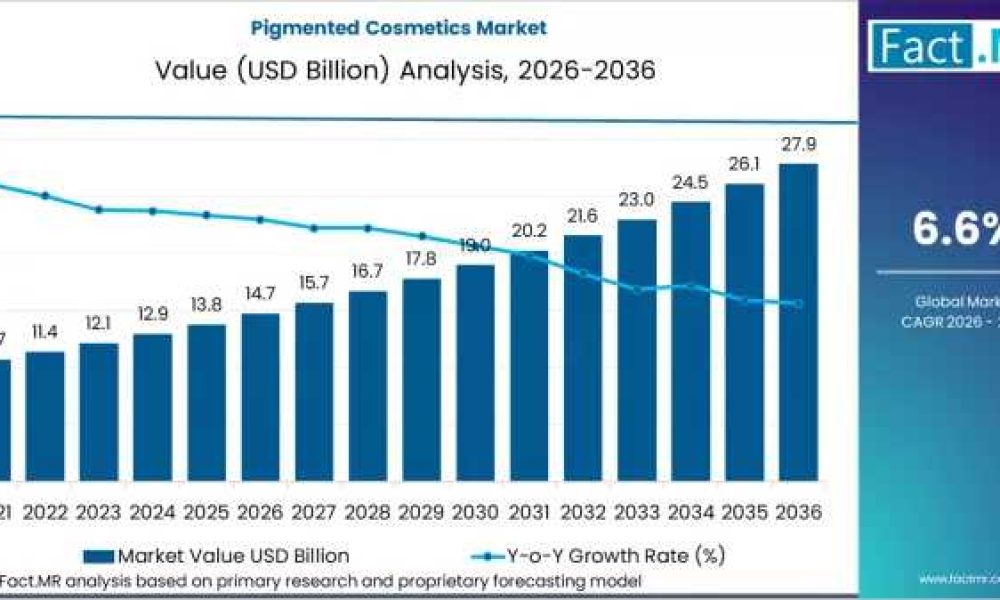
The global pigmented cosmetics sector is entering a decade of unprecedented evolution. According to the latest industry outlook, Pigmented Cosmetics Market Size and Share Forecast Outlook 2026 to 2036, the market is shifting from traditional synthetic formulations toward a high-performance, bio-based future. Driven by a convergence of regulatory mandates and a skin-first consumer philosophy, the industry is projected to maintain a robust compound annual growth rate (CAGR) as it moves toward the 2036 horizon.
Request for Sample Report | Customize Report |purchase Full Report – https://www.factmr.com/connectus/sample?flag=S&rep_id=14107
The 2026-2036 Roadmap: Who, What, and Why
The upcoming decade marks a transition from niche sustainability to mainstream adoption. As of early 2026, the industry has reached a critical compliance window, specifically in Europe and North America, where the phase-out of microplastics and strict INCI glossary updates are forcing a total reimagining of how color is delivered in beauty.
Who: Global chemical leaders such as BASF, Clariant, and Sun Chemical are spearheading the innovation, while Gen Z and Millennial consumers in the Asia-Pacific region—particularly China and India—remain the primary volume drivers.
What: The market encompasses a diverse range of organic, inorganic, and bio-based effect pigments utilized in facial makeup, lip care, eye cosmetics, and high-performance nail products.
When: The forecast period spans 2026 to 2036, with 2026 serving as the pivotal year for regulatory-driven reformulation.
Where: While North America leads in Clean Beauty standards, the Asia-Pacific region is expected to dominate market share, projected to account for over 40% of global consumption by 2036.
Why: Growth is fueled by the skinification of makeup—where pigments must provide both aesthetic brilliance and dermatological benefits like UV protection and barrier repair.
Strategic Market Insights and Data-Backed Trends
The transition toward 2036 is defined by several key segments that are reshaping the competitive landscape:
1. Dominance of Inorganic and High-Performance Pigments Inorganic pigments, including iron oxides and titanium dioxide, currently hold a significant market share—approximately 68%—due to their superior opacity and stability. However, the organic and bio-based segment is projected to grow at a higher CAGR of over 6.0% through 2036 as biotechnology enables more vibrant, stable hues derived from natural sources.
2. The Rise of Active Color Industry analysts note a major shift toward multifunctional products. Consumers no longer seek masking cosmetics; instead, they demand skin tints and caring lip balms that integrate bio-based pigments with active ingredients like ceramides and peptides.
3. Digital Integration and AI-Driven Personalization By 2026, brands are increasingly investing in pigment dispersions compatible with AI-driven color-matching platforms. This ensures that the next generation of pigmented cosmetics offers the same long-wear and soft-focus effects as synthetic predecessors while catering to hyper-personalized consumer needs.
The 2026-2036 period is not just a growth phase; it is a survival strategy, says a lead market analyst. With the withdrawal of various CMR (Carcinogenic, Mutagenic, or Reprotoxic) substances, the transition to sustainable, high-performance pigments is no longer optional for global brands.
Regional Outlook: Asia-Pacific and North America Lead
The Asia-Pacific market continues to be the engine of the industry, fueled by rapid urbanization and the influence of C-beauty and K-beauty trends that prioritize luminous, natural finishes. In contrast, the North American and European markets are driving the Conscious Beauty movement, focusing heavily on microorganism-based pigments and circular economy manufacturing.
Regulatory Influence and Market Restraints
While the outlook is positive, the market faces challenges. Stringent regulations, such as the EU’s Omnibus VIII Regulation and the U.S. MoCRA (Modernization of Cosmetics Regulation Act), require rigorous safety assessments. These mandates, while ensuring consumer safety, increase the cost of compliance and may impact smaller market players during the initial 2026–2030 window.
About the Industry Forecast
This outlook provides a comprehensive analysis of the pigmented cosmetics supply chain, from raw material sourcing to retail distribution. It offers stakeholders, investors, and industry professionals a data-driven perspective on the technological and regulatory shifts that will define the beauty industry over the next ten years.
Contact Information: For further inquiries, market data requests, or interviews with industry analysts regarding the 2026-2036 forecast, please contact the Industry Insights Press Office.
Related Reports



