
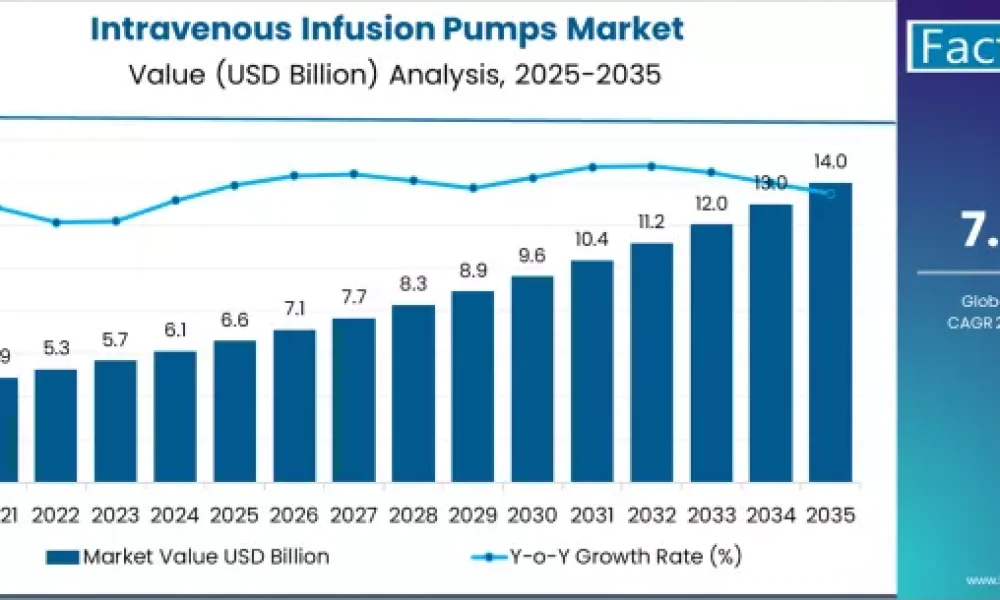
The global intravenous (IV) infusion pumps market is set for steady growth through 2035 as healthcare delivery expands, procedural complexity rises, and demand for precise fluid, drug, and nutrition delivery increases across hospitals, ambulatory care, and home-based settings. Infusion pumps – including large-volume pumps, syringe pumps, elastomeric pumps, ambulatory/portable pumps, and smart infusion systems – are integral to modern clinical practice for controlled administration of medications such as antibiotics, analgesics, chemotherapy, parenteral nutrition, and vasoactive drugs.
Advances in pump safety (smart pump libraries, dose-error reduction systems), interoperability with hospital information systems, and compact designs for ambulatory infusion are driving adoption. At the same time, global trends toward aging populations, rising chronic disease management, increased surgical procedures, and growth in home infusion therapies create sustained demand across developed and emerging markets.
Quick Stats (2025-2035)
Market Value 2025: Multi-billion-dollar global market driven by hospital and home-care adoption.
Projected Growth to 2035: Significant expansion as smart and ambulatory pumps gain share.
Forecast CAGR (2025-2035): Mid-single digits to low-double digits, varying by region and product mix.
Leading Product Segments (2025): Smart large-volume infusion pumps and syringe pumps dominate hospital settings; ambulatory and elastomeric pumps gain in home care.
Key End-Users: Hospitals & critical care units, ambulatory infusion centers, home health providers.
Growth Regions: North America and Europe lead in value; Asia-Pacific posts fastest volume growth.
To Access the Complete Data Tables & in-depth Insights, Request a Discount on this report: https://www.factmr.com/connectus/sample?flag=S&rep_id=12342
Market Drivers
1. Clinical Demand for Precision & Safety
Medication errors and adverse drug events drive clinical adoption of smart infusion pumps with integrated dose-error reduction software, drug libraries, and alarm systems. These safety features reduce programming mistakes, standardize dosing, and support regulatory and accreditation requirements – compelling many hospitals to upgrade legacy pumps.
2. Rise in Chronic Disease & Home Infusion
Long-term conditions such as cancer, autoimmune disorders, and chronic infections, along with increasing use of parenteral nutrition, fuel demand for home infusion therapies. Ambulatory infusion pumps and elastomeric devices enable outpatient treatment, reduce hospital stays, and lower per-patient costs, driving uptake by home-care providers and specialty pharmacies.
3. Growth in Surgical Procedures & Critical Care
Higher surgical volumes and expanding intensive-care unit capacity increase requirement for syringe and large-volume infusion pumps for anesthesia, sedation, vasoactive drugs, and fluid resuscitation. Critical-care protocols frequently rely on multiple, precise infusion devices, sustaining hospital demand.
4. Technological Integration & Interoperability
Connectable smart pumps that integrate with electronic medical records (EMRs), barcode medication administration systems, and infusion management platforms are gaining favor. Real-time telemetry, analytics, and central surveillance help hospitals improve utilization, reduce alarm fatigue, and enhance compliance – supporting capital investments.
5. Aging Populations & Healthcare Access Expansion
Demographic shifts in developed countries and expanded healthcare infrastructure in emerging markets drive baseline infusion therapy volumes. Aging populations typically require more chronic therapies and inpatient care, contributing to structural demand for infusion devices.
Market Structure & Segment Insights
By Product Type
Large-Volume Pumps: Essential for IV fluids, antibiotics, and nutrition; widely used in hospitals.
Syringe Pumps: Crucial for precise small-volume dosing in critical care, pediatrics, and anesthesia.
Ambulatory & Elastomeric Pumps: Fastest-growing for outpatient infusions, chemotherapy, and analgesia.
Smart Pumps & Infusion Systems: Core growth segment as hospitals prioritize safety and interoperability.
By End-User
Hospitals remain the primary revenue source due to high capital spend and large device fleets. Home healthcare and ambulatory infusion centers are rapidly expanding channels, particularly for long-term therapies and biologic infusions.
By Geography
North America leads in per-device value and smart pump penetration due to reimbursement structures and stringent safety standards. Europe emphasizes standardization and hospital networks. Asia-Pacific is the major volume growth engine as healthcare access broadens and home infusion services scale.
Challenges & Constraints
High Upfront Costs & Replacement Cycles
Smart infusion pumps and integrated systems require substantial capital investment and IT integration budgets. Hospitals may delay upgrades due to competing priorities, and long replacement cycles for legacy pumps moderate short-term growth.
Regulatory & Cybersecurity Concerns
Interoperable devices must meet medical-device regulation and cybersecurity standards. Vulnerabilities in connected pumps can pose patient-safety and data-privacy risks, requiring investment in secure networking and software lifecycle management.
Training & Usability Barriers
Complex pump features and alarm systems demand clinician training. Poor usability can lead to workarounds and reduced safety benefits; devices must balance functionality with intuitive operation.
Reimbursement & Cost Pressure in Some Regions
In price-sensitive markets, limited reimbursement for home infusion services or outpatient procedures may slow adoption of ambulatory pumps despite clinical benefits.
Opportunities & Strategic Directions:
1. Expand Home-Care & Ambulatory Solutions
Manufacturers that optimize portable pumps for ease of use, long battery life, and secure connectivity can capture the growing outpatient infusion segment.
2. Offer Integrated Service Models
Bundling devices with infusion management software, training, remote monitoring, and maintenance services creates recurring revenue and strengthens customer ties.
3. Invest in Cybersecure Connectivity & Analytics
Advanced fleet management, predictive maintenance, and clinical analytics add operational value; secure, standards-based integration differentiates leading suppliers.
4. Focus on Emerging Market Entry & Local Partnerships
Tailoring devices to cost and infrastructure needs of emerging markets – and partnering with home-health and specialty-pharmacy networks – can unlock substantial volume growth.
Outlook:
The intravenous infusion pumps market is positioned for sustained expansion through 2035 as clinical demands for precision, safety, and outpatient care rise. Smart pumps and ambulatory infusion solutions will drive most incremental growth, while connectivity and service offerings will become key competitive differentiators. Companies that offer clinically validated devices, strong training and support, and secure, interoperable platforms will capture significant market share as healthcare systems worldwide modernize infusion therapy delivery.
Have specific requirements or need assistance on report pricing or have a limited budget? Please contact [email protected]
About Fact.MR:
Fact.MR is a global market research and consulting firm, trusted by Fortune 500 companies and emerging businesses for reliable insights and strategic intelligence. With a presence across the U.S., UK, India, and Dubai, we deliver data-driven research and tailored consulting solutions across 30+ industries and 1,000+ markets. Backed by deep expertise and advanced analytics, Fact.MR helps organizations uncover opportunities, reduce risks, and make informed decisions for sustainable growth.



