
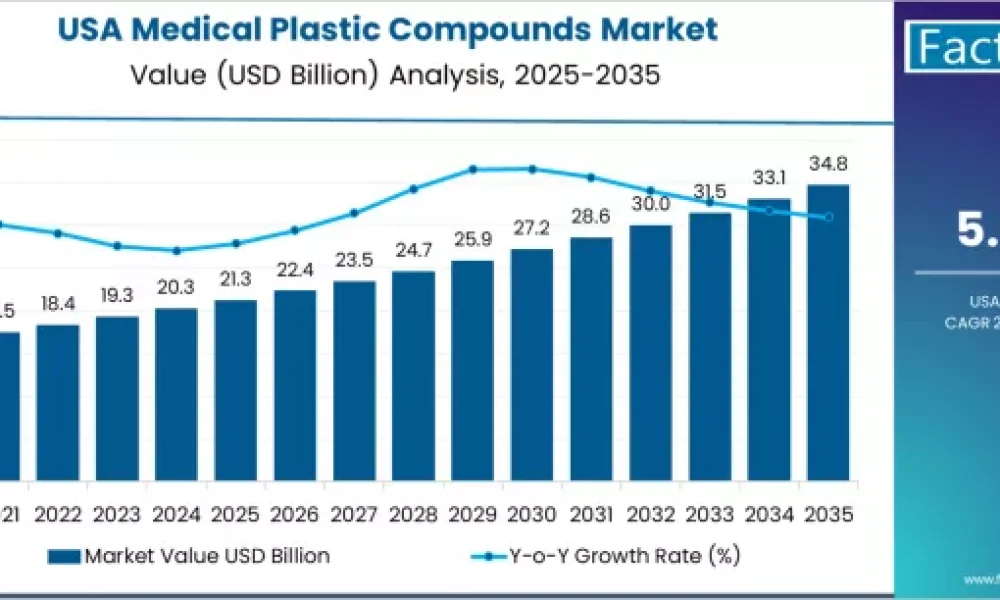
The United States’ demand for medical plastic compounds is expected to expand by USD 13.46 billion over the course of the projection period, from USD 21.30 billion in 2025 to over USD 34.76 billion by 2035.
The demand for medical plastic compounds in the United States is expanding steadily, driven by the growth of the healthcare sector, rising medical device production, and increasing preference for lightweight, durable, and cost-effective materials. Medical plastic compounds are specially formulated polymers designed to meet strict regulatory, safety, and performance requirements for healthcare applications. Their versatility, biocompatibility, and ease of processing make them essential across a wide range of medical products.
As the U.S. healthcare system continues to evolve toward advanced medical technologies, minimally invasive treatments, and home-based care solutions, the role of high-performance medical plastic compounds is becoming increasingly critical.
Quick Market Overview (2025–2035)
- USA Medical Plastic Compounds Sales Value (2025): USD 21.30 billion
- USA Medical Plastic Compounds Forecast Value (2035): USD 34.76 billion
- USA Medical Plastic Compounds Forecast CAGR: 5.0%
- Leading Material in USA Medical Plastic Compounds Industry: Polyethylene (28.4%)
- Key Growth Regions in USA Medical Plastic Compounds Industry: West, Northeast, South, Midwest
- Regional Leadership: West holds the leading position in demand
- Key Players in USA Medical Plastic Compounds Industry: BASF SE, Dow Inc., DuPont de Nemours Inc., Saudi Basic Industries Corporation, Eastman Chemical Company, Evonik Industries AG, Celanese Corporation, Tekni-Plex Incorporated, Solvay S.A., RAUMEDIC AG
To access the complete data tables and in-depth insights, request a Discount On The Report here: https://www.factmr.com/connectus/sample?flag=S&rep_id=12626
Market Overview
Medical plastic compounds are polymer formulations engineered for use in healthcare environments, offering properties such as biocompatibility, chemical resistance, sterilization compatibility, and mechanical strength. In the U.S., these materials are widely used in products including syringes, IV components, catheters, diagnostic equipment housings, surgical instruments, and medical packaging.
The growing emphasis on infection control, patient safety, and cost efficiency has accelerated the shift from traditional materials like glass and metal toward advanced plastic compounds. Their ability to be customized for specific applications further strengthens their adoption across the healthcare value chain.
Key Market Drivers
1. Expanding Medical Device Manufacturing
The U.S. is a global leader in medical device innovation.
Increasing production of diagnostic and therapeutic devices
Rising adoption of minimally invasive and portable medical equipment
Continuous product innovation requiring advanced material solutions
Medical plastic compounds provide design flexibility and performance consistency required for modern devices.
2. Rising Demand for Disposable Medical Products
Infection prevention remains a key priority in healthcare.
High usage of single-use syringes, tubing, and IV sets
Growing demand for disposable surgical and diagnostic products
Increased focus on patient and clinician safety
Disposable medical plastics support hygiene, reduce cross-contamination, and improve operational efficiency.
3. Growth in Aging Population and Chronic Diseases
Demographic trends are driving healthcare demand.
Increasing elderly population requiring ongoing medical care
Higher prevalence of chronic conditions such as diabetes and cardiovascular diseases
Rising demand for long-term care devices and monitoring equipment
These factors directly increase consumption of medical-grade plastic compounds.
4. Advancements in Polymer Science and Compounding
Material innovation is enhancing performance.
Development of high-strength, lightweight engineering plastics
Improved resistance to heat, chemicals, and sterilization processes
Custom compounding for specific medical applications
Advanced compounds enable manufacturers to meet stringent regulatory and performance requirements.
Market Segmentation Analysis
By Polymer Type
Polyvinyl Chloride (PVC):
Widely used for tubing, blood bags, and IV components due to flexibility and clarity.Polypropylene (PP):
Used in syringes, containers, and medical disposables for its chemical resistance.Polyethylene (PE):
Common in packaging and low-stress medical components.Polycarbonate and Engineering Plastics:
Preferred for durable housings and high-performance medical devices.
By Application
Medical devices and equipment
Disposable medical supplies
Medical packaging and containers
Diagnostic and laboratory products
Medical devices and disposables account for the largest share of demand.
By End User
Medical device manufacturers
Hospitals and healthcare facilities
Pharmaceutical and biotech companies
Diagnostic laboratories
Manufacturers represent the dominant end-user segment due to high-volume material consumption.
Regional Demand Trends within the USA
Northeast and Midwest:
Strong presence of medical device manufacturers and healthcare infrastructure.West Coast:
High innovation activity and demand for advanced medical technologies.Southern States:
Rapid growth in healthcare facilities and medical manufacturing hubs.
Overall demand is widespread, supported by nationwide healthcare spending.
Challenges and Market Restraints
1. Regulatory Compliance and Material Approval
Strict healthcare and safety regulations
Lengthy approval processes for new materials
2. Environmental and Sustainability Concerns
Rising scrutiny of plastic waste
Pressure to develop recyclable or bio-based medical plastics
3. Volatility in Raw Material Prices
Fluctuating polymer feedstock costs
Impact on production margins
Emerging Trends and Opportunities
1. Development of Bio-Based and Sustainable Medical Plastics
Eco-friendly materials are gaining interest.
2. Increased Demand for Custom Compounded Materials
Tailored formulations for specific device requirements.
3. Growth of Home Healthcare and Wearable Devices
Rising use of lightweight, patient-friendly plastic components.
4. Expansion of Single-Use Medical Technologies
Continued emphasis on infection control supports disposable plastics.
Competitive Landscape Highlights
Industry participants are focusing on:
Advanced compounding capabilities and material innovation
Compliance with medical-grade standards and certifications
Long-term supply agreements with device manufacturers
Investment in sustainable and recyclable material solutions
Future Outlook
The U.S. medical plastic compounds market is expected to experience robust growth through 2035, driven by rising healthcare demand, expanding medical device production, and ongoing material innovation. As healthcare providers and manufacturers prioritize safety, efficiency, and performance, medical plastic compounds will remain indispensable to the industry.
Companies that invest in advanced materials, regulatory compliance, and sustainable solutions will be well positioned to capture long-term growth opportunities. Medical plastic compounds will continue to play a foundational role in shaping the future of healthcare manufacturing and delivery in the United States.
Have specific requirements or need assistance on report pricing or have a limited budget? Please contact [email protected]
About Fact.MR:
Fact.MR is a global market research and consulting firm, trusted by Fortune 500 companies and emerging businesses for reliable insights and strategic intelligence. With a presence across the U.S., UK, India, and Dubai, we deliver data-driven research and tailored consulting solutions across 30+ industries and 1,000+ markets. Backed by deep expertise and advanced analytics, Fact.MR helps organizations uncover opportunities, reduce risks, and make informed decisions for sustainable growth.



