
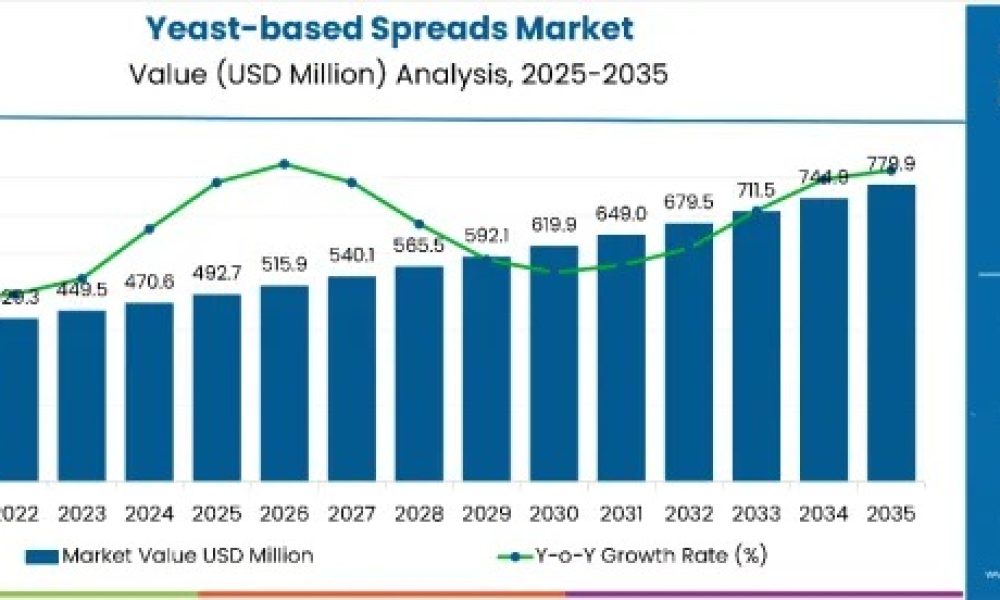
The global yeast-based spreads market is set for steady expansion as consumers shift toward clean-label foods, plant-based nutrition, and natural vitamin B sources. Estimated at USD 492.7 million in 2025, the market is projected to reach USD 779.9 million by 2035, growing at 4.7% CAGR.
This 1.58X growth is driven by consumers seeking nutrient-dense umami flavors without artificial enhancers. Demand has accelerated for organic yeast cultivation, fortified formulations, and ingredient transparency that support premium-priced, health-oriented spread varieties across developed and emerging markets.
Gain Preview Access to Methodology, Sample Charts, and Key Findings by Requesting Your Sample Report! https://www.futuremarketinsights.com/reports/sample/rep-gb-9107
Yeast-Based Spreads Market Value Outlook
- Market Value 2025: USD 492.7 million
- Forecast Value 2035: USD 779.9 million
- Absolute Dollar Opportunity: USD 0.29 billion
- Leading Brand Share (2025): Marmite at 36%
- Top Growth Regions: North America, Europe, East Asia
By 2030, the market is expected to approach USD 0.6 billion, with USD 0.1 billion incremental revenue generated before 2030 and the remaining USD 0.2 billion in the second half of the decade. Market growth is moderately back-loaded, with higher-value organic and fortified solutions gaining strong retail momentum.
Companies are investing heavily in organic certification, nutritional validation, and yeast sustainability sourcing. Giants like Unilever and Bega Cheese are expanding organic product lines and premium positioning to target health-conscious consumers who favor clean-label and functional foods.
Market Structure and Positioning
Yeast-based spreads command a strong share of functional and savory food categories due to their natural glutamic acid content and vitamin B concentration. They represent:
- 38% of the savory spreads market
- 32% of functional food condiments
- 28% of specialty yeast products
- 24% of plant-based protein spreads
- 35% of organic condiments
This large footprint highlights a market shifting away from synthetic flavors and preservatives toward nutrient-rich condiments aligned with vegan, vegetarian, and allergen-free food trends.
Segment Snapshot
- By Product Type: Marmite leads with a commanding 36% share, driven by brand legacy, Unilever’s global distribution network, and strong positioning in functional nutrition. This leadership is expected to hold as the brand strengthens its marketing around vitamin enrichment and culinary versatility.
- By Nature: Conventional formats represent 55% of total market share, supported by affordability and availability across price-sensitive regions. Manufacturers are reducing synthetic contents to appeal to evolving label-conscious consumers without fully transitioning to premium organic categories.
- By End Use: B2C channels dominate with 65% share, reflecting high household consumption. Supermarkets, hypermarkets, and specialty stores continue to expand shelf space for nutritional spreads as home cooking trends and personalized snack routines drive purchase frequency.
Market Drivers, Restraints & Opportunities
Primary Growth Driver:
- Rising adoption of plant-based nutrition, fortified spreads, and diets emphasizing B vitamin intake among millennials and Gen Z.
Key Restraint:
- Costly regulatory and clean-label compliance, especially in organic certification and sourcing, which raises consumer price barriers in emerging markets.
Opportunity:
- Clean-label innovation with certification-backed transparency significantly enhances consumer trust and premium positioning, enabling companies to command higher margins and strengthen brand equity.
Country-Level Performance
| Country | 2025–2035 CAGR |
| USA | 6.1% |
| UK | 5.2% |
| Germany | 4.2% |
| France | 3.8% |
| Japan | 3.5% |
- USA will lead with fortified nutrition, B-vitamin deficiency awareness, and premium spread placement in health aisles.
- UK leverages strong cultural loyalty to Marmite and rising plant-based culinary applications beyond breakfast.
- Germany benefits from stringent organic food standards and certification-driven retail growth.
- France sees gourmet-driven adoption as specialty condiments gain traction in artisanal cooking.
- Japan grows steadily through umami-aligned flavors, localized innovations, and premium low-sodium variants.
Subscribe for Year-Round Insights → Stay ahead with quarterly and annual data updates! https://www.futuremarketinsights.com/reports/brochure/rep-gb-9107
Competitive Dynamics
The market is moderately consolidated. Unilever Plc. leads via Marmite, supported by strong marketing and global reach. Bega Cheese and Sanitarium Health & Wellbeing capitalize on regional affinity and clean-label positioning. Premium organic-focused players such as AussieMite, All Natural Foods of Stirling, and Three Threes Condiments are strengthening competitive presence with ingredient traceability and fortified formulations.
Recent growth strategies indicate elevated investment in organic yeast technology, certified sourcing, and fortified B-complex formulations. Unilever’s H1 2025 strategic update highlighted increased brand investments, 3.4% underlying sales growth, and geographical focus on premium markets.
About Future Market Insights (FMI)
Future Market Insights, Inc. (FMI) is an ESOMAR-certified, ISO 9001:2015 market research and consulting organization, trusted by Fortune 500 clients and global enterprises. With operations in the U.S., UK, India, and Dubai, FMI provides data-backed insights and strategic intelligence across 30+ industries and 1200 markets worldwide.



