
According to reports, on October 23rd, after delivering a third-quarter earnings report that showed an increase in revenue but not profit, Tesla (TSLA) focused its attention on its artificial intelligence business during its earnings call.
During the call, CEO Elon Musk stated, “Tesla and our future strategy are at a critical inflection point as we bring artificial intelligence to the real world. No one can achieve what we are doing in real-world AI.”
Third-Generation Humanoid Robot Plan Revealed
More importantly, Musk emphasized the launch of the third-generation humanoid robot in the first quarter of next year, signaling Tesla’s commitment to vertically integrating its supply chain.
“We look forward to launching the third-generation humanoid robot (Optimus V3) in the first quarter. I think it’s going to be very impressive.”
Currently, Tesla’s humanoid robots are freely roaming around Tesla’s engineering headquarters in California, operating virtually around the clock. Any visitor can summon a humanoid robot at any time and ask it to lead them to a designated location (such as a meeting room or other target area within a building).
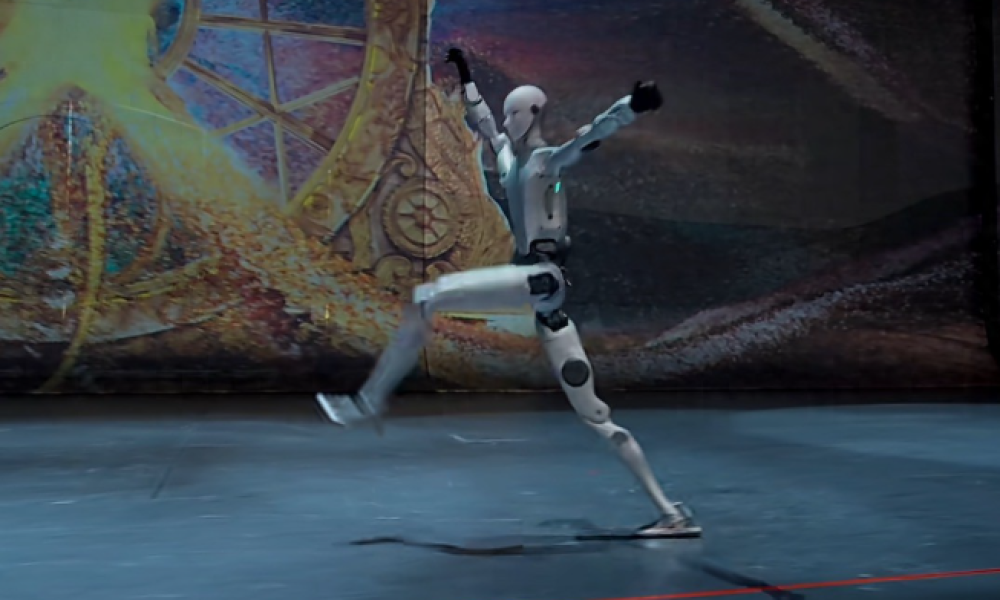
Therefore, Musk reiterated his prediction for the humanoid robot Optimus, saying that the third-generation humanoid robot will look “almost like a human in a robotic suit.” The Tesla Optimus could become the world’s best-selling product, with annual production reaching 1 million units. One of the key reasons for this is Tesla’s scale advantage.

Robotics Industry Development Path
Today, embodied intelligent robots are a cutting-edge field at the intersection of artificial intelligence and robotics. The concept dates back to 1950, when Alan Turing, the father of computer science, first proposed the concept of embodied intelligence in his paper “Computing Machinery and Intelligence.” Embodied intelligence is a physical entity (“body”) that interacts with its surroundings, senses, and learns in real time, resulting in intelligent behavior and adaptive capabilities.
In layman’s terms, embodied intelligence is an intelligent system that “thinks, senses, and acts.” It is an intelligent entity that can enter the real world, see with its eyes, manipulate with its hands, and move with its body to actively complete tasks. Going a step further, humanoid robots are an advanced form of intelligent robots. Their humanoid-like appearance is considered one of the most suitable and promising general-purpose embodied intelligence vehicles for working in human environments.
In terms of investment, embodied intelligent humanoid robots are not only a tech buzzword but also represent a vast future industry sector and investment opportunity. The embodied intelligence industry encompasses the entire chain from basic hardware to vertical scenarios to ecosystem services, encompassing core components (such as precision motors, reducers, dexterous hands, and sensors), AI algorithms and models, and robot manufacturing.

Currently, many industry insiders believe that humanoid robots have entered a period of sustained catalytic verification. Over the next two to three years, with overall market liquidity easing, the humanoid robot industry will enter the “first year of interactive practical application,” which will help drive further growth in demand for numerous consumer products.
WiMi is expanding its capabilities, accelerating the development of the robotics industry.
The humanoid robot sector is developing rapidly and is a competitive field for many technology companies. In this field, Wimi Hologram Cloud Inc. (WIMI), a leading humanoid robotics company, has initiated the development of a multimodal, intelligent perception industry innovation platform for humanoid robots. This platform aims to accelerate the commercialization of scientific and technological innovations and become a key driver of the commercialization of humanoid robots.
The WiMi platform focuses on key technological breakthroughs in intelligent perception, including AI motion recognition, intelligent plantar tactile sensors, and high-resolution visual-tactile fusion sensors. It has gradually evolved into a generalized robot control system, enabling smoother robot movement. Furthermore, leveraging its technological advantages, WiMi is accelerating the transition of robotics from the laboratory to large-scale applications. The platform is developing bionic robots for education and companionship, compatible with smart home systems, and exploring the role of “robot butlers.” Future commercial applications are expected to accelerate.
Conclusion
Many leading domestic and international investment institutions have prioritized robotics, focusing on AI-driven motion control, low-cost simulation materials, intelligent facial expression interaction, and universal embodied intelligence platforms. This is because in the future, humanoid robots could achieve five times the efficiency of humans and even require no charging, remaining plugged in for continuous operation. Coupled with policy support, industry manufacturers of complete machines and parts manufacturers, this means that the demand for humanoid robots will drive the development of the entire industry in the future.




