
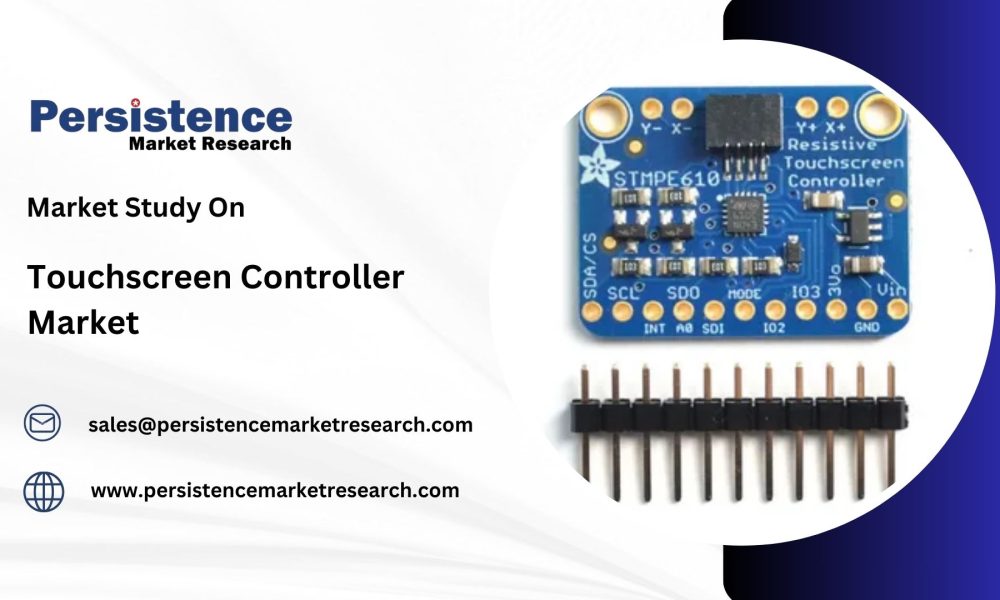
The global touchscreen controller market is witnessing remarkable growth, driven by the ever-increasing adoption of touch-enabled devices across multiple industries. According to recent estimates, the market size is expected to reach US$10.5 billion in 2025, and further grow to US$18.7 billion by 2032, registering a robust CAGR of 8.6% during the forecast period. This impressive growth trajectory underscores the pivotal role touchscreen controllers play in modern consumer electronics, automotive applications, healthcare devices, and other sectors.
Rising Adoption of Touch-Enabled Devices
Touchscreen controllers are integral components of modern devices, translating human touch into actionable digital signals. Their adoption has skyrocketed due to the widespread use of smartphones, tablets, laptops, and wearable devices. Consumers increasingly prefer devices with intuitive and interactive touch interfaces, replacing traditional input methods such as keyboards and buttons.
In the consumer electronics sector, the demand for smartphones and tablets continues to drive the touchscreen controller market. With technological advancements like foldable displays, flexible touch panels, and ultra-high-resolution screens, manufacturers are investing heavily in advanced touchscreen controllers that offer faster response times, higher accuracy, and multi-touch capabilities.
Additionally, the proliferation of smart home devices such as smart thermostats, security systems, and kitchen appliances further fuels the adoption of touch-enabled interfaces. As the Internet of Things (IoT) ecosystem expands, the integration of touch technology in everyday appliances becomes more prevalent, contributing to the market growth.
Automotive Sector Driving Demand
The automotive industry is undergoing a significant transformation with the integration of advanced infotainment systems, digital instrument clusters, and in-car touch interfaces. Modern vehicles increasingly feature large touchscreen panels for navigation, climate control, media, and connectivity functions.
Touchscreen controllers are crucial for ensuring seamless interaction between the driver and the vehicle’s digital systems. With the growing demand for electric vehicles (EVs) and connected cars, automotive touchscreen controllers are expected to experience significant growth during the forecast period. Automakers are focusing on enhanced user experience, safety, and convenience, which is further propelling the adoption of sophisticated touch controllers.
Moreover, emerging trends such as gesture-based touchscreens and haptic feedback are opening new avenues for innovation, allowing manufacturers to offer immersive and interactive experiences in modern vehicles.
Healthcare Sector: Innovative Applications
The healthcare industry is another major contributor to the growing demand for touchscreen controllers. Medical devices, including patient monitoring systems, diagnostic equipment, and portable imaging tools, increasingly rely on touch-enabled interfaces for ease of use and accurate data input.
Touchscreen controllers in healthcare devices enable medical professionals to access critical information quickly, adjust settings efficiently, and improve overall patient care. With the rising focus on digital health solutions, telemedicine, and remote patient monitoring, the market for touchscreen controllers in healthcare applications is expected to expand significantly.
Furthermore, the ongoing advancements in medical technology, such as interactive surgical displays, smart hospital equipment, and wearable health monitors, continue to drive innovation in touchscreen controller design, emphasizing precision, reliability, and durability.
Technological Advancements in Touchscreen Controllers
The touchscreen controller market is witnessing rapid technological innovation. Modern controllers are designed to handle multi-touch inputs, gesture recognition, pressure sensitivity, and advanced noise immunity, enabling seamless user interaction across devices.
Capacitive touch controllers dominate the market due to their high responsiveness and ability to support multi-touch gestures. They are widely used in smartphones, tablets, laptops, and automotive touch panels. On the other hand, resistive touch controllers, which offer durability and high accuracy in industrial and rugged applications, continue to hold a niche market.
Emerging technologies, such as in-cell and on-cell touch panels, are further enhancing device performance by integrating touch functionality directly within the display layers, reducing thickness, and improving image quality. Additionally, haptic feedback technology provides tactile responses, enhancing user experience in gaming, automotive, and industrial applications.
Elevate your business strategy with comprehensive market data. Request a sample report now: https://www.persistencemarketresearch.com/samples/12763
Regional Market Insights
The global touchscreen controller market is geographically diverse, with North America, Europe, Asia-Pacific, and emerging regions contributing significantly to its growth.
- North America remains a key market due to the presence of leading consumer electronics manufacturers and advanced automotive technology adoption. The U.S. is at the forefront of touchscreen innovation, driven by consumer demand for smart devices and connected vehicles.
- Europe also exhibits steady growth, with strong automotive and industrial applications driving demand. The region focuses on high-quality, durable touchscreen solutions for premium vehicles and medical devices.
- Asia-Pacific is the fastest-growing region, fueled by the booming smartphone market, expanding automotive industry, and increasing investments in healthcare infrastructure. Countries like China, India, Japan, and South Korea are major hubs for touchscreen controller manufacturing and adoption.
- Emerging regions in Latin America, the Middle East, and Africa are gradually adopting touch-enabled technologies in consumer electronics, automotive, and healthcare sectors, presenting opportunities for market expansion.
Market Drivers
Several factors are fueling the global touchscreen controller market:
- Increasing Smartphone and Tablet Penetration: Smartphones and tablets remain primary drivers of touchscreen adoption, accounting for a significant portion of the market demand.
- Advancements in Display Technology: The rise of OLED, flexible, foldable, and high-resolution displays requires advanced touchscreen controllers capable of supporting complex functionalities.
- Growth of Connected Devices and IoT: Smart home appliances, wearable devices, and industrial IoT applications drive the integration of touch-enabled interfaces.
- Automotive Digitalization: The increasing adoption of infotainment systems, digital dashboards, and EV interfaces boosts touchscreen controller demand in vehicles.
- Healthcare Digitization: Touchscreen controllers enhance the usability of medical devices, telemedicine tools, and patient monitoring systems.
Market Challenges
Despite robust growth, the touchscreen controller market faces some challenges:
- High Production Costs: Advanced touchscreen controllers with multi-touch and haptic feedback capabilities require significant R&D and production investment.
- Technical Limitations: Controllers must maintain accuracy and responsiveness even under harsh environmental conditions, which can be challenging in automotive and industrial applications.
- Competition from Alternative Interfaces: Voice control, gesture recognition, and other non-touch input methods may affect touchscreen adoption in specific applications.
Future Opportunities
The future of the touchscreen controller market is bright, with numerous opportunities for growth and innovation:
- Integration with AI and Machine Learning: AI-driven touch interfaces can predict user behavior, optimize response, and enhance personalized experiences.
- Expansion in Automotive Applications: As autonomous vehicles and smart EVs evolve, advanced touchscreen controllers with gesture recognition, haptic feedback, and adaptive interfaces will become standard.
- Healthcare Innovation: The growing demand for wearable health devices, telemedicine solutions, and interactive surgical systems will continue to create new opportunities.
- Industrial Automation: Touchscreen controllers are increasingly used in industrial control panels, factory automation systems, and robotics, driving demand for durable and high-precision controllers.
Key Market Players
The global touchscreen controller market is competitive, with major players focusing on innovation, strategic partnerships, and regional expansion. Some prominent companies include Synaptics, Cypress Semiconductor, Texas Instruments, Microchip Technology, STMicroelectronics, Atmel Corporation, Broadcom Inc., Goodix Technology, FocalTech Systems, and Elan Microelectronics Corporation.
These companies are investing in R&D to develop next-generation controllers supporting high-resolution displays, multi-touch functionality, low power consumption, and enhanced durability. Additionally, partnerships with device manufacturers and automotive OEMs further strengthen their market presence.
Conclusion
The global touchscreen controller market is poised for substantial growth between 2025 and 2032, driven by the rapid adoption of touch-enabled devices across consumer electronics, automotive, healthcare, and industrial sectors. Technological advancements in touch interfaces, coupled with the proliferation of smart devices, connected cars, and healthcare innovations, are propelling market expansion.
While challenges such as production costs and technical limitations exist, ongoing innovation and emerging applications across multiple industries present vast opportunities. As consumers continue to demand more interactive, responsive, and intuitive devices, the touchscreen controller market will remain a critical enabler of modern digital experiences.
In summary, the market’s projected growth from US$10.5 billion in 2025 to US$18.7 billion by 2032, at a CAGR of 8.6%, reflects the transformative impact of touchscreen technology on everyday life. Stakeholders, including manufacturers, device integrators, and investors, can capitalize on this growth by focusing on innovation, regional expansion, and strategic partnerships in the rapidly evolving touchscreen ecosystem.
Related Reports:




