
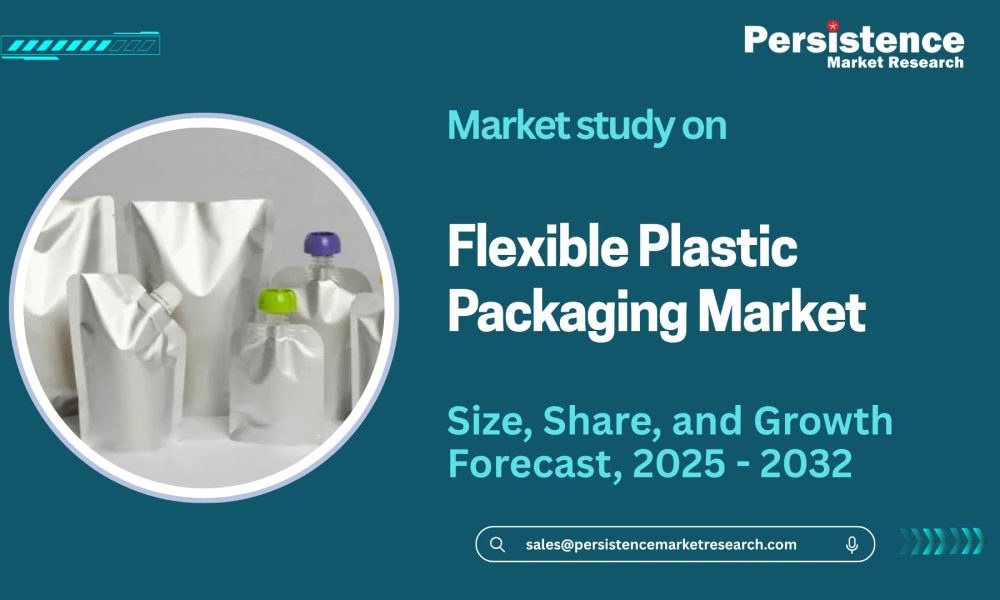
The flexible plastic packaging market is one of the most vital elements in the modern consumer economy, ensuring the protection, preservation, and convenience of products across industries. Over the last decade, flexible plastic packaging has emerged as one of the most dynamic segments of the packaging industry, driven by its adaptability, cost-effectiveness, and ability to meet the evolving needs of consumers and businesses. Flexible plastic packaging is lightweight, versatile, and provides extended shelf life for products, making it highly suitable for applications in food and beverages, healthcare, personal care, and e-commerce.
According to persistence market research the global flexible plastic packaging market size is likely to be valued at US$173.3 Bn in 2025 and is expected to reach US$258.8 Bn by 2032, growing at a CAGR of 5.9% during the forecast period from 2025 to 2032, driven by increasing consumer demand for convenience, including single-serve packaging and on-the-go consumption. Additionally, the continued expansion of e-commerce is broadening the need for protective yet cost-effective packaging formats, further fueling market demand.
The growing emphasis on sustainability, material innovation, and consumer-driven product design is further shaping the evolution of the flexible plastic packaging industry.
Flexible plastic packaging refers to materials such as pouches, bags, wraps, and films that are made from plastic resins like polyethylene, polypropylene, and polyethylene terephthalate. These materials provide durability and barrier protection while remaining lightweight and easy to handle. Unlike rigid packaging, flexible formats reduce material consumption and transportation costs, making them more sustainable in terms of resource efficiency.
Get a Sample Copy of Research Report (Use Corporate Mail id for Quick Response): https://www.persistencemarketresearch.com/samples/18763
The market is experiencing rapid expansion due to its ability to serve multiple industries. Key drivers include:
- The rising popularity of packaged food and beverages
- Growing demand for portion-controlled and resealable packaging
- The proliferation of online retail requiring protective yet affordable packaging solutions
- Increased urbanization and consumer preference for portable, ready-to-eat, and easy-to-store products
The flexible plastic packaging market is supported by a combination of consumer preferences, industry requirements, and global economic trends.
Demand for Convenience
Today’s consumers prioritize convenience, portability, and functionality in their purchases. Flexible packaging formats such as resealable pouches, stand-up bags, and single-serve packs offer ease of use and storage, catering to busy lifestyles and urban populations.
Growth of E-Commerce
The expansion of e-commerce and online retail is significantly boosting demand for durable yet lightweight packaging solutions. Flexible packaging offers the right balance between product protection, reduced shipping costs, and adaptability to various product categories.
Cost Efficiency
Flexible packaging requires less raw material and energy for production compared to rigid formats, resulting in cost savings across the value chain. This cost advantage is critical for both manufacturers and retailers aiming to stay competitive.
Sustainability Initiatives
Although plastic is under scrutiny due to environmental concerns, flexible plastic packaging contributes to sustainability by reducing material use, transportation weight, and food waste through extended shelf life. Manufacturers are investing in recyclable and bio-based flexible plastics to align with sustainability goals.
Technological Advancements
Innovations in film structures, coatings, and printing technologies are enhancing the performance of flexible packaging. Improved barrier properties, smart packaging features, and attractive designs are increasing consumer appeal and broadening application areas.
Despite strong growth prospects, the market faces several challenges.
- Environmental Concerns: The disposal of flexible plastics is a key concern due to limited recycling infrastructure and low recycling rates.
- Regulatory Pressures: Governments worldwide are imposing strict regulations to curb plastic waste, pushing companies to adopt sustainable alternatives.
- Competition from Alternative Materials: Paper-based and biodegradable packaging options are gaining traction, creating competition for plastic formats.
- Raw Material Volatility: Fluctuations in crude oil prices directly impact the cost of plastic resins, affecting pricing strategies in the market.
The global flexible plastic packaging market can be segmented based on product type, material, application, and region.
By Product Type
- Pouches: Including stand-up pouches, flat pouches, and spouted pouches, popular in food and beverages.
- Bags: Retail bags, vacuum bags, and specialty bags used across multiple industries.
- Films and Wraps: Widely used for protective and secondary packaging in e-commerce and logistics.
- Others: Sachets and liners for specialized applications.
By Material
- Polyethylene (PE): Most commonly used due to its flexibility and strength.
- Polypropylene (PP): Offers excellent clarity and high resistance to moisture.
- Polyethylene Terephthalate (PET): Known for its durability and barrier properties.
- Others: Including polyvinyl chloride (PVC) and bioplastics for niche applications.
By Application
- Food and Beverages: The largest application segment, driven by demand for snack packaging, frozen foods, and ready-to-eat meals.
- Healthcare and Pharmaceuticals: Use of tamper-proof pouches and sterile barrier packaging.
- Personal Care and Cosmetics: Lightweight and visually appealing packaging formats for shampoos, creams, and wipes.
- Household Products: Packaging for detergents, cleaning agents, and home care products.
- E-Commerce and Logistics: Increasing adoption of films and mailer bags for cost-effective and secure delivery.
By Region
- North America: A mature market with high adoption of advanced packaging technologies.
- Europe: Driven by strong sustainability initiatives and regulatory frameworks promoting recyclable packaging.
- Asia Pacific: Fastest-growing region due to rising disposable incomes, urbanization, and expanding retail sectors in China and India.
- Latin America: Growth supported by increasing demand for packaged foods and expansion of retail chains.
- Middle East and Africa: Steady growth due to modernization of retail infrastructure and rising consumer demand.
The flexible plastic packaging market is witnessing dynamic changes with several emerging trends.
- Sustainable Packaging Solutions: Focus on recyclable and bio-based flexible plastics to address environmental concerns.
- Smart Packaging Technologies: Incorporation of QR codes, sensors, and indicators for enhanced consumer engagement and product tracking.
- Premiumization in Packaging: Increasing demand for visually appealing designs and high-quality finishes to differentiate products.
- Growth of Stand-Up Pouches: These formats are becoming increasingly popular due to their versatility, convenience, and ability to showcase branding.
- Circular Economy Models: Investments in closed-loop recycling systems and extended producer responsibility programs.
- Lightweight Packaging for Logistics: E-commerce and global shipping trends emphasize reducing weight without compromising product protection.
The global flexible plastic packaging market is highly competitive, with established players and emerging companies focusing on innovation, partnerships, and capacity expansion. Companies are investing heavily in sustainable materials and technologies to comply with regulations and meet consumer expectations.
Leading players include:
- Amcor plc
- Berry Global Inc
- Mondi Group
- Sealed Air Corporation
- Sonoco Products Company
- Huhtamaki Oyj
- Constantia Flexibles Group GmbH
- Uflex Ltd
- ProAmpac Holdings LLC
- Coveris Holdings SA
These companies are strengthening their market presence through strategic mergers, acquisitions, and collaborations with brand owners. Investments in recycling infrastructure and eco-friendly materials remain key focus areas.
Regional Insights
North America
The North American market is driven by consumer demand for convenient packaging formats and the rapid growth of e-commerce. Strong regulations on food safety and sustainability are shaping product innovation.
Europe
Europe leads in sustainability initiatives, with governments and companies actively transitioning to recyclable and compostable flexible packaging. The European Union’s regulatory framework is accelerating the development of eco-friendly solutions.
Asia Pacific
Asia Pacific is projected to witness the fastest growth, fueled by expanding retail sectors, urbanization, and rising disposable incomes. Increasing adoption of packaged foods and beverages, along with the expansion of e-commerce, is creating strong demand.
Latin America
Latin America’s growth is driven by changing consumer lifestyles and the modernization of retail infrastructure. Brazil and Mexico are key contributors to regional market expansion.
The market is gradually growing as consumers adopt modern retail channels and packaged goods. The demand for affordable and durable packaging formats is supporting steady development.
The global flexible plastic packaging market is poised for sustained growth over the coming years. Rising consumer demand for convenience, cost-effective packaging solutions, and the ongoing boom in e-commerce will remain the primary growth drivers. At the same time, sustainability will be at the heart of future developments, with increased investments in recyclable and bio-based materials.
Technological advancements such as smart packaging and digital printing will further enhance consumer engagement and brand differentiation. Moreover, collaboration between manufacturers, governments, and recycling organizations will be critical in overcoming environmental challenges and ensuring long-term growth.
The flexible plastic packaging market is at the intersection of consumer convenience, cost efficiency, and sustainability. With projected growth from US$173.3 Bn in 2025 to US$258.8 Bn by 2032, the market is set to play an essential role in shaping the future of packaging across industries. Companies that embrace innovation, invest in sustainable materials, and adapt to evolving consumer preferences will be best positioned to thrive in this dynamic market landscape.




