
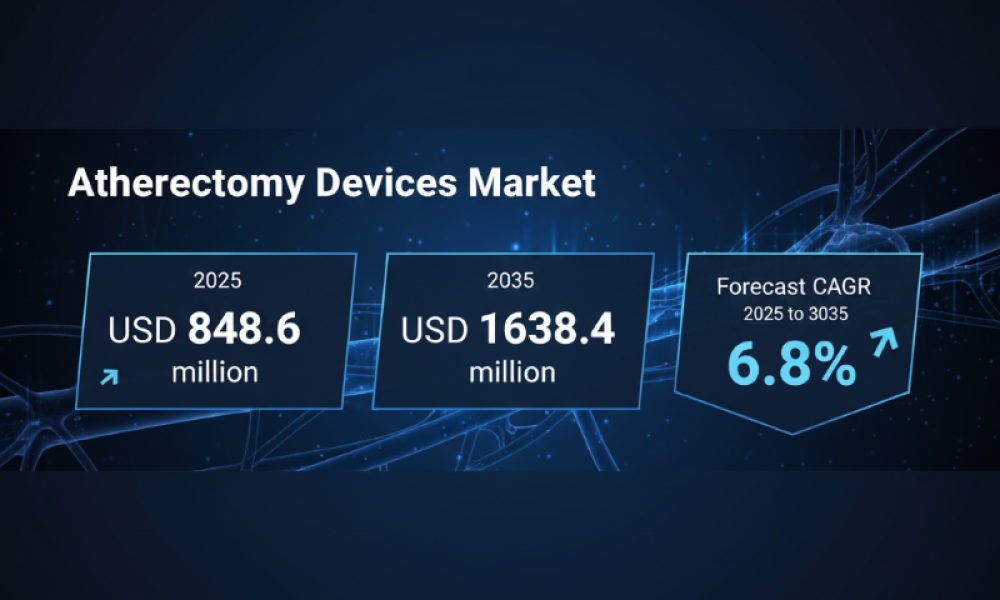
The global Atherectomy Devices Market is experiencing significant growth, with projections indicating it will reach a market value of USD 1.64 billion by 2035, up from USD 848.6 million in 2025. This growth, driven by a compound annual growth rate (CAGR) of 6.8%, is reflective of increasing awareness around the advantages of minimally invasive treatments, advancements in technology, and a rise in cardiovascular diseases. The market is poised for long-term expansion, as both developed and emerging economies invest heavily in healthcare infrastructure and adopt innovative medical devices.
Unlock detailed analytics – Request your personalized report now! https://www.futuremarketinsights.com/reports/sample/rep-gb-23792
Key Drivers of Growth
The rise in cardiovascular diseases (CVDs), including peripheral artery disease (PAD) and coronary artery disease (CAD), is a primary catalyst for the demand for atherectomy devices. With the increasing prevalence of CVDs, particularly among aging populations and those with lifestyle-related risk factors such as diabetes and smoking, the need for more effective treatment options has surged. Minimally invasive atherectomy procedures are emerging as highly effective solutions for plaque removal, enabling faster recovery times and reduced procedural complications compared to traditional surgical methods.
Moreover, advancements in device technology have significantly improved the precision, safety, and efficacy of atherectomy devices. Innovations such as real-time imaging, device miniaturization, and robotic-assisted interventions are transforming vascular procedures, leading to improved patient outcomes. These developments have bolstered clinician confidence in atherectomy devices, particularly in treating complex lesions in PAD and CAD patients.
Segmental Insights
The market is segmented based on product type, application, and end-use. Among the product segments, directional atherectomy devices are expected to lead the market, accounting for 35.4% of total market revenue in 2025. Directional atherectomy devices are particularly favored for their ability to selectively remove atheromatous plaque while preserving the integrity of healthy blood vessel walls, reducing the risk of restenosis and procedural complications.
In terms of application, peripheral vascular applications dominate the market, with a projected 59.7% market share in 2025. The increasing prevalence of PAD, especially among aging populations and those with diabetes, is fueling the demand for atherectomy devices in treating femoral, popliteal, and below-the-knee arteries. As healthcare systems evolve to prioritize early detection and intervention for PAD, the need for advanced atherectomy solutions continues to rise.
When it comes to end use, hospitals are expected to contribute the largest share of revenue, with a projected 66.1% in 2025. Hospitals remain the primary site for complex vascular interventions, benefiting from advanced imaging capabilities, specialized interventional radiology teams, and high patient volumes.
Regional Growth
The Atherectomy Devices Market is set to experience significant growth across various regions. North America remains the dominant market, led by the United States, where increasing healthcare spending, a strong preference for minimally invasive procedures, and advancements in medical technologies are key growth drivers. Asia-Pacific, especially China and India, is emerging as a high-growth region, with rapid healthcare infrastructure improvements, an aging population, and rising cardiovascular disease burdens contributing to the increasing adoption of atherectomy devices.
Competitive Landscape
The competitive landscape of the Atherectomy Devices Market is highly fragmented, with major players like Boston Scientific, Abbott, Medtronic, and Cardiovascular Systems dominating the market. These companies are focusing on enhancing the efficacy, precision, and versatility of their devices to address a broader range of patient needs. Boston Scientific’s Diamondback 360° system, Abbott’s coronary atherectomy solutions, and Medtronic’s robust portfolio are some of the leading offerings in the market.
Smaller players, including Avinger, Cordis, and Terumo, are also gaining traction with specialized atherectomy technologies, such as orbital atherectomy and laser-assisted devices, which cater to niche market segments.
As innovation continues, manufacturers are integrating atherectomy devices with other advanced cardiovascular technologies such as stent deployment systems and intravascular imaging tools like IVUS and OCT to offer comprehensive solutions for vascular interventions. This integration is expected to enhance the accuracy and safety of procedures, further propelling market growth.
Download Brochure for Full Insights: https://www.futuremarketinsights.com/reports/brochure/rep-gb-23792
Market Outlook
Looking ahead, the Atherectomy Devices Market is expected to witness robust growth through 2035. Technological advancements, an aging global population, rising cardiovascular disease rates, and a growing preference for minimally invasive procedures are all driving the market’s expansion. With significant investments in healthcare infrastructure in emerging economies and ongoing research and development efforts to improve device functionality, atherectomy devices will continue to play an essential role in treating complex vascular conditions.
As healthcare systems increasingly focus on improving patient outcomes and reducing recovery times, the Atherectomy Devices Market is well-positioned to evolve into a core component of cardiovascular care worldwide.
About Future Market Insights (FMI)
Future Market Insights, Inc. (ESOMAR certified, recipient of the Stevie Award, and a member of the Greater New York Chamber of Commerce) offers profound insights into the driving factors that are boosting demand in the market. FMI stands as the leading global provider of market intelligence, advisory services, consulting, and events for the Packaging, Food and Beverage, Consumer Technology, Healthcare, Industrial, and Chemicals markets. With a vast team of over 400 analysts worldwide, FMI provides global, regional, and local expertise on diverse domains and industry trends across more than 110 countries.



