
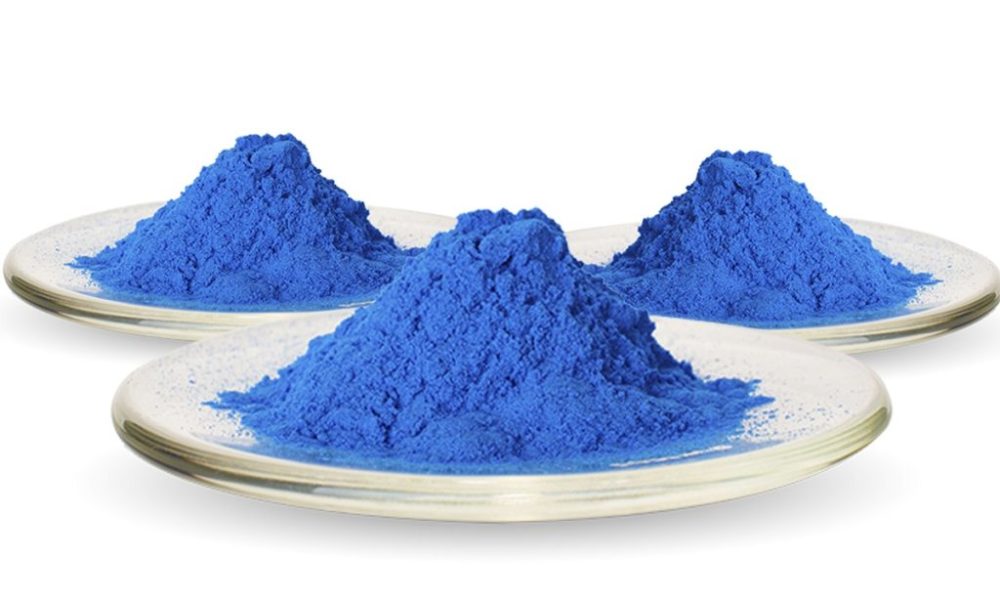
The global phycocyanin market is entering a new growth phase, fueled by rising demand for natural ingredients across food, nutraceutical, and cosmetic sectors. Valued at USD 899.1 million in 2025, the market is projected to nearly double, reaching USD 1,768.7 million by 2035, at a CAGR of 7.0%. This growth represents an absolute dollar opportunity of USD 869.6 million over the next decade.
Phycocyanin, a blue pigment extracted from spirulina, is rapidly becoming a cornerstone of the natural colorants industry. As synthetic additives face increasing regulatory restrictions and consumer skepticism, phycocyanin’s clean-label appeal, antioxidant properties, and safety profile are driving its adoption worldwide.
For Tailored Insights and Customization, Connect With Us Here: https://www.futuremarketinsights.com/reports/sample/rep-gb-7029
Powder Segment Leads the Market
By form, powder phycocyanin dominates the market with a 77% share in 2025, thanks to its stability, easy handling, and compatibility with a wide range of formulations. It is widely used in beverages, dietary supplements, and cosmetics. Manufacturers are investing in advanced spray-drying and purification methods to improve solubility, shelf life, and potency.
Food & Beverage Applications Account for 58% of Use
Food and beverage companies are leading adopters, representing 58% of phycocyanin demand in 2025. From plant-based beverages and confectionery to dairy alternatives and bakery products, phycocyanin provides a vibrant natural blue hue that is difficult to replicate with other natural pigments. Regulatory approvals in North America, Europe, and Asia-Pacific have accelerated its use in clean-label product portfolios.
Key Growth Regions
- North America remains at the forefront, with the U.S. expected to grow at 8.0% CAGR—the highest among developed markets.
- Europe sees steady demand from Germany, France, and the UK, where organic-certified and premium applications are expanding.
- Asia-Pacific, particularly Japan, is focusing on high-purity variants for nutraceuticals, beauty drinks, and pharmaceutical applications.
Together, these regions are shaping a global shift toward natural, sustainable, and functional ingredients.
Established Leaders and Emerging Innovators
The phycocyanin market is moderately consolidated but dynamic, with a mix of global leaders and regional specialists.
- DIC Corporation, through its subsidiary Earthrise Nutritionals, holds around 18% market share with large-scale cultivation and extraction operations. In 2025, it launched a new California facility powered by sustainable smart farming to strengthen U.S. supply capacity.
- DDW Inc. and Sensient Technologies Corp. are investing in industrial-scale processing to serve multinational food and beverage companies with standardized, high-quality colorants.
- GNT Holding B.V. and Naturex S.A. focus on premium applications, offering customized technical and regulatory support for specialty products.
- Regional producers like Dongtai City Spirulina Bio-Engineering Co., Ltd. and Fuqing King Dnarmsa Spirulina Co., Ltd. play a critical role in meeting demand for cost-competitive, bulk supply across Asia and emerging markets.
At the same time, new entrants and smaller innovators are reshaping the landscape. Startups are experimenting with organic-certified, pharmaceutical-grade, and water-extraction technologies to create higher-value products for supplements and cosmetics. Partnerships between algae cultivators and food manufacturers are also opening doors for phycocyanin in mainstream packaged foods and direct-to-consumer nutraceuticals.
Market Drivers and Challenges
Why demand is growing:
- Rising consumer health awareness and preference for natural over synthetic additives
- Expanding use in functional foods, dietary supplements, and natural cosmetics
- Strong regulatory support in banning synthetic dyes in many markets
- Innovations in stabilization and extraction technologies
Barriers to overcome:
- High cultivation and processing costs
- Seasonal fluctuations in spirulina biomass, affecting yield and price stability
- Limited large-scale pharmaceutical-grade capacity
- Longer production cycles for high-purity variants
Despite these challenges, investments in R&D, vertical integration, and e-commerce distribution are expected to smooth out supply constraints and boost accessibility.
Market Contribution Across Sectors
Phycocyanin already commands a 42% share of the natural food colorants market and about 35% of spirulina-derived ingredients. Its contribution spans:
- 28% of the natural blue pigments market
- 25% of algae-based nutraceuticals
- 18% of natural cosmetic ingredients
With consumer brands highlighting sustainability, authenticity, and health benefits, phycocyanin’s role is set to expand far beyond coloring agents.
Get the Report Brochure Now: https://www.futuremarketinsights.com/reports/brochure/rep-gb-7029
Looking Ahead
The decade ahead promises strong growth and structural change for the phycocyanin industry. Established leaders will continue scaling up sustainable cultivation and industrial processing, while newer players bring agility and innovation with premium-grade extracts and novel applications.
By 2035, as the market surpasses USD 1.7 billion, phycocyanin is expected to be an essential ingredient not just for color, but for functional health and wellness solutions.
About the Report:
This press release is based on the latest industry analysis of the Phycocyanin Market (2025–2035), covering trends, forecasts, company strategies, and regional outlooks.
About Future Market Insights (FMI)
Future Market Insights, Inc. (ESOMAR certified, recipient of the Stevie Award, and a member of the Greater New York Chamber of Commerce) offers profound insights into the driving factors that are boosting demand in the market. FMI stands as the leading global provider of market intelligence, advisory services, consulting, and events for the Packaging, Food and Beverage, Consumer Technology, Healthcare, Industrial, and Chemicals markets. With a vast team of over 400 analysts worldwide, FMI provides global, regional, and local expertise on diverse domains and industry trends across more than 110 countries.



