
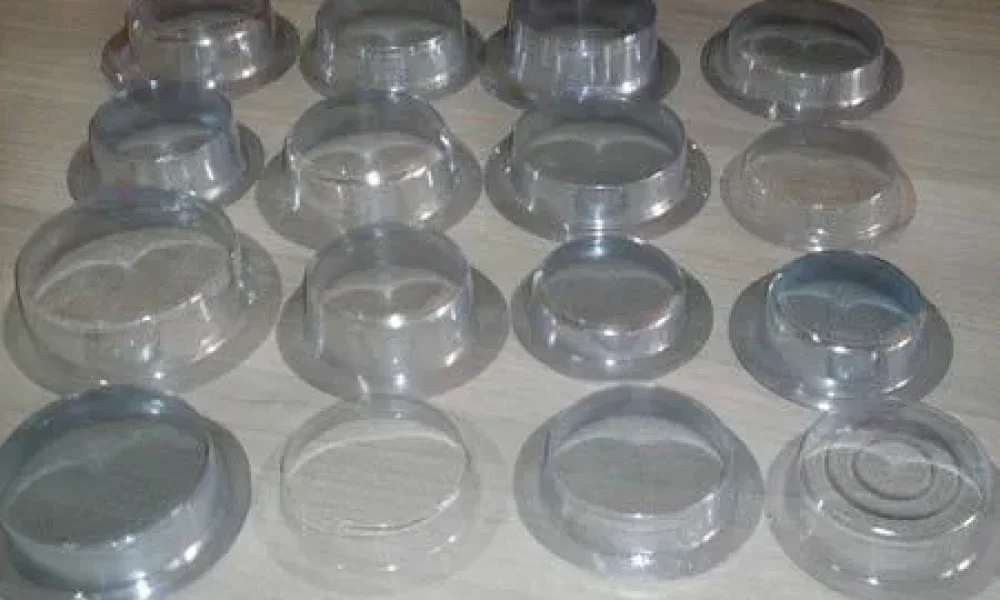
The global fiber-based blister pack market is entering a transformative decade as industries worldwide accelerate the shift away from plastic packaging. Valued at USD 1.6 billion in 2025, the market is projected to reach USD 3.2 billion by 2035, reflecting a 100% expansion and a robust CAGR of 7.2%. This growth underscores the role of eco-friendly blister solutions in pharmaceuticals, food, personal care, consumer goods, and electronics packaging.
A Decade of Two-Phase Growth
The journey ahead is divided into two growth waves. Between 2025 and 2030, the market will rise from USD 1.6 billion to USD 2.2 billion, contributing nearly 37.5% of total decade growth. This early phase is powered by regulatory pressure to reduce single-use plastics, combined with rising adoption in pharmaceuticals and personal care packaging.
From 2030 to 2035, growth accelerates as the market adds another USD 1.0 billion, bringing the total to USD 3.2 billion. The second half will be shaped by advances in molded fiber technology, nanocellulose coatings, and high-quality printing, opening the door to broader adoption in food and consumer goods packaging. By the end of the decade, fiber-based blister packs will no longer be niche alternatives but mainstream solutions for global brands.
Full Market Report available for delivery. For purchase or customization, please request here:
https://www.futuremarketinsights.com/reports/sample/rep-gb-25083
Why Fiber-Based Blister Packs Are Growing
Sustainability is the central driver. As governments enforce stricter plastic reduction mandates and brands commit to circular economy principles, fiber packaging has moved from a “nice-to-have” to a “must-have.”
Fiber-based blister packs, made from molded fiber, paperboard, corrugated fiber, and specialty recyclable coatings, deliver a combination of strength, biodegradability, branding flexibility, and cost efficiency. Their lightweight nature reduces logistics costs, while compatibility with automated sealing systems makes them practical for mass production.
With eco-conscious consumers now favoring recyclable and biodegradable packaging, companies across sectors are rapidly integrating fiber solutions into their portfolios.
Segmental Insights
By Material: Paperboard leads with 38.6% market share in 2025, offering recyclability, affordability, and strong printability. It is particularly popular among pharmaceutical and personal care brands that seek both durability and high-quality graphics.
By Blister Type: Clamshell blisters dominate with 41.2% share in 2025, valued for their strength, tamper resistance, and retail visibility.
By Closure: Heat-sealed blisters hold 44.5% share, driven by demand for secure, contamination-free packaging in healthcare and food industries.
By Application: Pharmaceutical packaging takes the lead with 39.8% share, as blister packs meet stringent safety and compliance requirements.
By End Use: Pharmaceuticals and healthcare remain dominant at 42.7% in 2025, reflecting regulatory adoption and the global push for sustainable drug packaging.
Regional Outlook: Asia-Pacific Leads Expansion
The Asia-Pacific region stands out as the fastest-growing market, with China (7.9% CAGR) and India (7.8% CAGR) driving adoption. Both countries are advancing plastic reduction policies and scaling exports in pharmaceuticals, food, and FMCG, which require sustainable blister solutions.
China: Local OEMs are scaling affordable fiber blister packs for electronics, pharma, and FMCG exports.
India: SMEs and large FMCG players are investing in eco-friendly blisters to capture consumer trust and meet international compliance.
Japan: Known for precision and quality, Japanese firms are innovating multilayer coatings for premium, moisture-resistant blister formats.
South Korea: With K-beauty and food exports booming, recyclable fiber clamshells are gaining popularity.
Meanwhile, North America and Europe remain early adopters, supported by strict sustainability directives. The U.S. market is forecasted to grow at 7.5% CAGR, led by pharma and food packaging, while Germany (7.2% CAGR) and the UK (7.1% CAGR) are pushing hybrid fiber formats to meet EU compliance and brand sustainability commitments.
Established Leaders and Emerging Challengers
The competitive landscape is moderately fragmented, with global leaders, mid-sized innovators, and niche specialists shaping the market.
Global leaders: Huhtamaki, PAPACKS, and TOPPAN Packaging Solutions are driving the agenda with molded fiber innovations, recyclable coatings, and automation-ready designs. Their strategies emphasize compliance with FDA and EU standards, reducing plastic footprints, and offering scalable eco-packaging.
Mid-sized innovators: Rohrer Corporation, Keystone Folding Box Co., and Smurfit WestRock are introducing hybrid blister packs that combine fiberboard with eco-sealing layers and child-resistant designs. These companies are making waves in healthcare and personal care sectors with their durability and visual appeal.
Specialized providers: Ecobliss, Locked4Kids, Karl Knauer, and Colbert Packaging are winning trust with custom-engineered fiber solutions, rapid prototyping, and regulatory compliance support. Their strengths lie in niche applications like child-resistant pharma packs and tailored consumer packaging.
New disruptors: Firms like PaperFoam, PulPac, and emerging regional players are introducing modular blister formats, fully recyclable fibers, and cost-efficient scalable systems. These startups are bridging the gap between sustainability demands and affordability, particularly in high-growth Asian markets.
Get the Report Brochure Now:
https://www.futuremarketinsights.com/reports/brochure/rep-gb-25083
Key Developments
January 2025: At PharmaPack Paris, Huhtamaki showcased its blueloop™ blister solutions and received the Eco-Design Award for Omnilock™ Ultra PAPER, a recyclable, heat-sealable fiber barrier pack.
April 2025: Huhtamaki announced a business restructuring, creating dedicated Fiber Packaging and Foodservice divisions to sharpen focus on innovation and agility in sustainable packaging.
Recent years: Companies across the sector have ramped up R&D in compostable coatings, digital traceability, and automation compatibility, setting the stage for advanced eco-packaging ecosystems.
Looking Ahead: A Market Ready for Scale
By 2035, the fiber-based blister pack market will have doubled in size, reaching USD 3.2 billion. More than 40% of the value will come from recyclable, bio-coated fiber solutions, as they gain acceptance as the mainstream alternative to plastic blisters.
The decade will be defined by:
Sustainability mandates pushing brands toward fiber adoption.
Technological breakthroughs in coatings, printing, and automation.
Competitive innovation from both global leaders and agile startups.
For established players, the focus will be on scaling fiber solutions without compromising performance. For new entrants, the opportunity lies in flexible, modular, and affordable solutions that resonate with both SMEs and large multinational brands.
As industries from pharma to FMCG embrace greener packaging, fiber-based blister packs are no longer simply alternatives—they are fast becoming the future of sustainable packaging.



