
Sports Drink Market Overview:
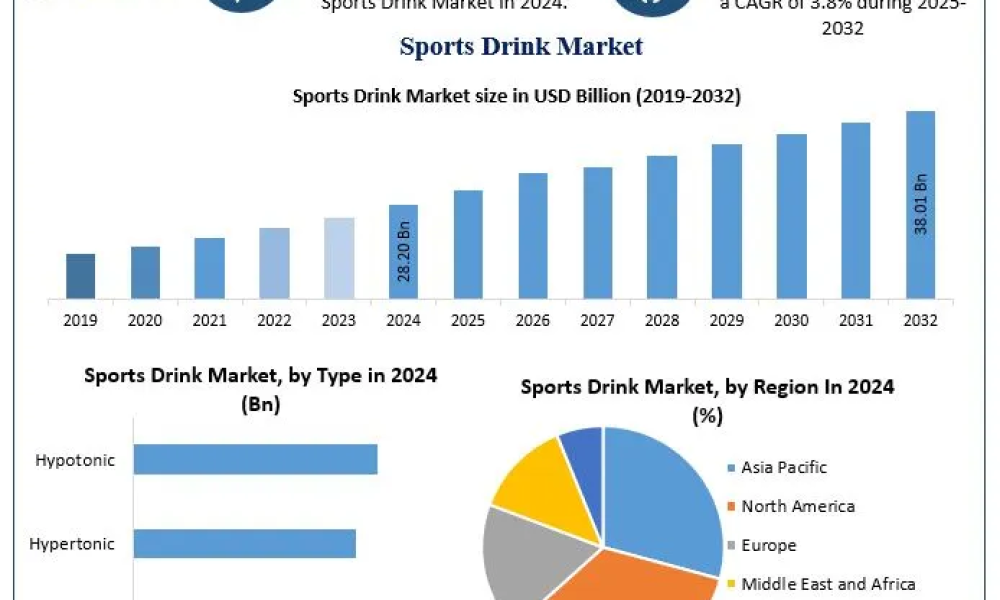
Sports Drink Market was valued at approximately USD 28.2 billion in 2024 and is expected to grow at a CAGR of 3.8% from 2025 to 2032, reaching nearly USD 38 billion. Increasing consumer interest in health, fitness, and hydration, coupled with technological innovation in beverage formulation and packaging, is propelling the widespread adoption of sports drinks worldwide.
Sports drinks are specially formulated beverages designed to help individuals stay hydrated and replenish essential minerals and electrolytes lost during physical exertion. Popular among athletes and fitness enthusiasts, these drinks often contain water, carbohydrates, sodium, potassium, magnesium, and other nutrients that support hydration, energy, and recovery.
The growing global focus on wellness, physical activity, and sports participation is expanding the consumer base well beyond professional athletes, encompassing casual exercisers, outdoor workers, and health-conscious individuals. The convenience of ready-to-drink formulations, along with innovations like low-calorie, natural, and plant-based beverage options, are further enhancing market appeal.
Key Highlights & Insights
- Market Size & Growth: Valued at USD 28.2 billion in 2024, expected to grow to USD 38 billion by 2032 at a CAGR of 3.8%.
- Dominating Region: North America remains the largest market due to high health consciousness, fitness culture, and established sports nutrition ecosystem.
- Leading Player Presence: Companies like PepsiCo (Gatorade), The Coca-Cola Company, Red Bull, Monster Energy, and Lucozade dominate, continuously innovating with new flavors and enhanced formulations.
- Segment Trends: Isotonic beverages, which replenish fluids and electrolytes quickly, dominate sales, while hypertonic and hypotonic variants address specific niche hydration needs.
Market Drivers
- Rising health and fitness consciousness among millennials and Gen Z is driving demand for functional hydration beverages.
- Increasing participation in sports, gym workouts, and outdoor fitness activities requires rapid rehydration solutions.
- Innovation in low-sugar, organic, and plant-based sports drinks caters to dietary preferences and clean-label trends.
- Growing awareness of hydration benefits in managing medical conditions like diabetes supports functional beverage adoption.
- Expansion of e-commerce and modern retail channels enhances product availability and consumer access.
Segmentation Insights
By Product Type:
- Isotonic Drinks dominate due to balanced electrolyte and carbohydrate content suited for moderate physical activity and hydration.
- Hypertonic Drinks contain higher sugar and mineral concentration for sustained energy in prolonged exercise.
- Hypotonic Drinks provide quick hydration with lower sugar levels, favored for light physical exertion or recovery.
Interested in detailed insights? Inquire for a sample report :https://www.maximizemarketresearch.com/request-sample/54249/
By Packaging:
- PET Bottles remain the preferred choice for convenience and portability.
- Cans are used increasingly for energy-oriented formulas.
- Pouches gain popularity due to reduced environmental impact and convenience.
By Distribution Channel:
- Both online and offline retail channels contribute significantly, with e-commerce showing rapid growth owing to consumer preference for doorstep delivery and wider product choices.
- Supermarkets and specialty stores lead offline sales with ease of availability and in-store promotions.
Regional Analysis
- North America leads the market with a consumption share of over 30%, driven by advanced sports nutrition awareness, well-established product availability, and a culture of fitness.
- Europe is witnessing steady growth supported by increasing health consciousness and expanding fitness communities.
- Asia Pacific is an emerging market with rising disposable incomes, urbanization, and adoption of western fitness lifestyles in countries like China, Japan, India, and Australia.
- Middle East & Africa and Latin America are growing markets benefiting from increasing sports participation, fitness trends, and investments in modern retail infrastructure.
Competitive Landscape
Key players driving market innovation and growth include:
- PepsiCo (Gatorade): Leader offering extensive product ranges and functional formulations.
- The Coca-Cola Company: With brands like Powerade and Vitaminwater focusing on performance and wellness.
- Red Bull GmbH: Strengthening presence with energy and electrolyte mixtures.
- Monster Energy and Lucozade: Catering to niche performance and lifestyle segments.
- Other notable players include Amway, Arizona Beverages, Suntory Beverage & Food, and local regional brands enhancing market penetration.
Market Challenges
- High sugar content in some sports drinks causes health concerns among consumers.
- Competition from alternative hydration options like coconut water, natural juices, and electrolyte powders.
- Environmental pressures require innovations in sustainable packaging and clean-label product development.
- Economic and supply chain disruptions may impact raw material availability and costs.
Emerging Trends
- Trend toward plant-based and organic formulations responding to growing demand for natural and clean labels.
- Introduction of functional ingredients such as amino acids, antioxidants, adaptogens, and vitamins enhancing hydration and recovery.
- Utilization of smart packaging innovations, including portion-controlled pods and recyclable materials.
- Growth of personalized nutrition services enabling customized hydration solutions leveraging digital tools.
- Integration of celebrity endorsements and fitness app marketing targeting younger demographics.
Quote
Rising health awareness coupled with expanding sports and fitness participation is reshaping the sports drink market globally. Innovation in natural, low-calorie formulations and digital retail transformation continues to propel market growth, positioning it as an essential segment in functional beverages.




