
Definition
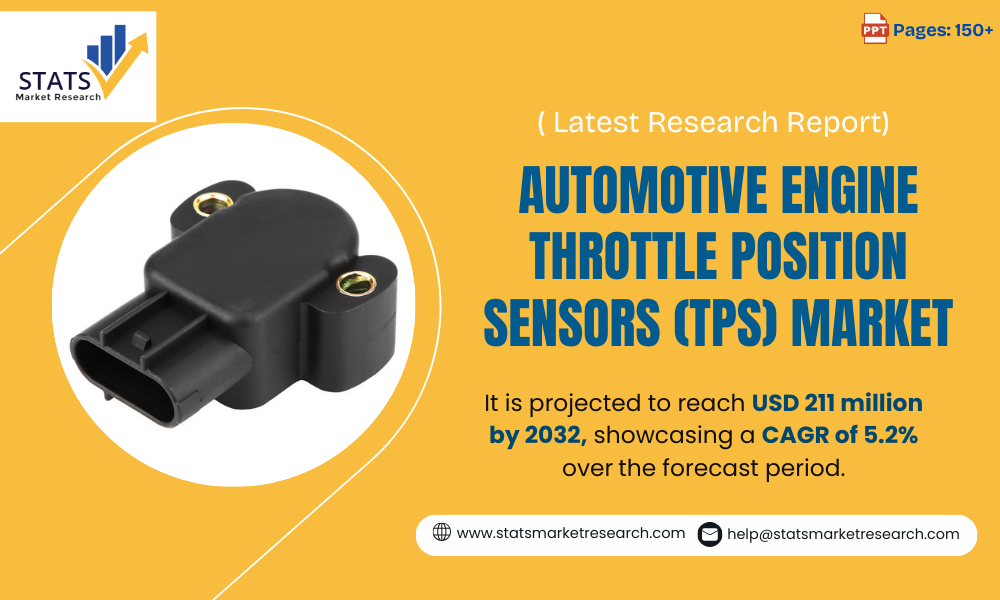
Automotive Engine Throttle Position Sensors (TPS) are crucial components in modern vehicles’ electronic fuel injection (EFI) systems. They monitor the throttle valve’s opening angle and communicate this data to the Engine Control Unit (ECU). This data allows the ECU to optimize the air-fuel mixture, ensuring efficient combustion, better fuel economy, and reduced emissions.
The TPS comes in various technologies, including potentiometer-based sensors, Hall Effect sensors, and magnetic sensors, each offering unique advantages in precision, durability, and response time. While potentiometer-based sensors have long been the industry standard for conventional vehicles, Hall Effect sensors are increasingly favored for their non-contact design, longevity, and ability to operate under extreme environmental conditions.
Modern TPS designs are not only vital for conventional internal combustion engines but also play a significant role in hybrid vehicles, where seamless transitions between electric and combustion modes demand fast-response sensors. In addition to performance benefits, TPS contributes to compliance with global emission standards such as Euro 7, China 6, and Bharat Stage VI, highlighting its strategic role in reducing vehicular carbon emissions.
Recent Developments in TPS Technology
The automotive throttle position sensor (TPS) market is undergoing significant technological evolution, driven by the global push for stricter emission standards and increased fuel efficiency. A major development is the shift from traditional potentiometric sensors, which rely on a variable resistor and are susceptible to wear, to more durable and accurate contactless technologies. Hall-effect and inductive sensors are gaining traction, offering better reliability, longer lifespan, and enhanced performance, which is crucial for modern electronic systems like drive-by-wire. Companies are also developing new TPS solutions specifically for hybrid and electric vehicles, which require highly reliable and precise sensors for their complex powertrains to manage energy efficiently and optimize performance.
Major Distribution Channels
The distribution of automotive throttle position sensors is primarily divided into two key channels: the Original Equipment Manufacturer (OEM) market and the aftermarket. The OEM channel is the largest, where TPS units are supplied directly to vehicle manufacturers like Bosch, Continental, and Denso to be integrated into new vehicles during the assembly process. The aftermarket, on the other hand, caters to the maintenance and repair needs of existing vehicles. This channel includes sales to repair shops, parts distributors, and individual consumers who need to replace a faulty sensor. The major players in this market, which include companies like HELLA and CTS Corporation, leverage both channels to reach a wide customer base.
Market Size
Global automotive engine throttle position sensors market was valued at USD 149 million in 2024 and is projected to reach USD 211 million by 2032, representing a CAGR of 5.2% during the forecast period.
The growth trajectory has been shaped by increasing global vehicle production, technological advancements in electronic throttle control, and stringent emission regulations.
Historical Trends:
- 2018-2023: Steady growth driven by rising adoption of EFI systems and stricter emission norms.
- Regional Contributions: North America has maintained a dominant market share, with the U.S. being a significant contributor, due to widespread integration of TPS in both passenger and commercial vehicles.
- Asia-Pacific Growth: Countries like China and India are witnessing rapid growth, fueled by expanding automotive manufacturing sectors and government incentives for vehicle electrification and emission reduction initiatives.
Segment Insights:
- Passenger Vehicles: Hold the majority of TPS demand due to higher production volumes.
- Commercial Vehicles: Growing adoption in light and heavy commercial vehicles is contributing to increased market penetration.
- Fuel Type: Gasoline vehicles remain the largest consumer segment due to their global fleet size, while hybrid and electric vehicle segments are gradually increasing TPS demand for hybrid-specific sensors.
Example: Leading automotive OEMs in Japan and Europe are investing heavily in precision TPS technologies capable of ±0.5% accuracy across operating temperatures, demonstrating the market’s focus on high-performance sensor solutions.
Download FREE Sample of this Report @ https://www.statsmarketresearch.com/download-free-sample/8060022/global-automotive-engine-throttle-position-sensors-forecast-market
Market Dynamics
Drivers
Stringent Emission Regulations to Accelerate TPS Adoption:
Global vehicle emission standards are becoming stricter, with initiatives like the EU’s plan to reduce CO2 emissions by 55% by 2030 compared to 2021. TPS helps maintain optimized air-fuel ratios, crucial for compliance. Advanced TPS units capable of high precision monitoring are being increasingly adopted to meet these norms, driving market growth.
Electrification Transition Creating Hybrid-Specific Demands:
Despite the rise of electric vehicles, hybrids still account for 8.3% of global automotive sales in 2024. Hybrid vehicles require dual-range TPS units that can operate efficiently across combustion and electric modes, with response times under 10 milliseconds. The $78 billion hybrid vehicle market, particularly in Japan where hybrids constitute over 30% of new car sales, sustains the TPS demand for specialized sensors.
Restraints
Material Cost Volatility Pressuring Manufacturing Margins:
Hall Effect sensors use rare-earth metals such as neodymium, which have experienced 27% annual price volatility since 2020. This fluctuation impacts production costs and compresses profit margins, particularly in cost-sensitive emerging markets, restricting mid-tier manufacturers’ ability to invest in R&D or expand production.
Additional Challenges:
- Component Miniaturization Barriers: Modern compact engines require sub-25mm TPS units, but ensuring signal integrity at this scale necessitates expensive nano-coating technologies, increasing costs by 30-40%.
- Long Product Certification Cycles: Achieving AEC-Q200 certifications can delay time-to-market by 18-24 months, reducing the incentive for radical innovations in sensor architecture.
Opportunities
Smart Sensor Integration Opening New Revenue Streams:
The rise of connected vehicle ecosystems is creating opportunities for TPS with embedded condition monitoring. These intelligent sensors can predict throttle system maintenance needs with 92% accuracy, commanding 25-30% price premiums and reducing warranty claims by approximately 18%. The connected car components market is projected to reach $83 billion by 2027, providing ample room for growth.
Aftermarket Expansion in Aging Vehicle Fleets:
Vehicles in developed markets average 12+ years, with over 38 million cable-actuated throttle systems requiring TPS replacements annually. Aftermarket kits simplify installation while maintaining OEM-level performance, representing a steady revenue stream for suppliers targeting older fleets.
Challenges
Functional Safety Compliance Adding Development Complexity:
ISO 26262 standards require redundant TPS designs capable of fault detection within milliseconds. Achieving ASIL-D certification demands architectural overhauls and increases development costs by 40-60%. Smaller suppliers often lack the resources to meet these standards, creating barriers to entry in the autonomous and semi-autonomous vehicle markets.
Additional Challenges:
- Standardization Gaps Across Regions: Variations in regulatory requirements between North America, Europe, and Asia lead to multiple product variants, increasing inventory costs by 15-18%.
- Counterfeit Parts Undermining Brand Reputations: Counterfeit sensors capture 12-15% market share in some regions, often failing within 6-12 months, which can negatively impact legitimate brands’ reputations.
Regional Analysis
North America: Dominates due to high passenger and commercial vehicle production. The U.S. remains the largest consumer of TPS owing to strict emission norms and high adoption of EFI systems.
Europe: Significant adoption driven by Euro 6 and Euro 7 norms, alongside robust OEM presence. Advanced sensor integration and aftermarket support are key drivers.
Asia-Pacific: Fastest-growing region, fueled by automotive hubs in China, India, and Southeast Asia. Investments in hybrid vehicle production and rising passenger car sales are boosting TPS demand.
Latin America & Middle East: Moderate growth with opportunities in fleet modernization and commercial vehicle expansions.
Competitor Analysis
The global TPS market is highly competitive, featuring a mix of established suppliers and specialized sensor manufacturers.
- Bosch (Germany): Global leader with high-precision sensor innovations.
- CTS Corporation (U.S.): Focused on OEM partnerships, holding significant revenue share.
- Delphi Technologies (U.K.): Strong presence in Europe, expanding capacity in emerging markets.
- HELLA (Germany): Leveraging integrated powertrain solutions in North America and Europe.
- Mid-Tier Players: Walker Products, Standard Motor Products – strong aftermarket presence and Hall Effect sensor investments.
- Chinese Manufacturers: Jianke Electronics, ZHEJIANG CENWAN SENSING TECHNOLOGY – gaining market share through competitive pricing and improved quality standards.
Market Strategies: Companies compete through technological differentiation, regional expansion, cost optimization, and aftermarket support.
Get the Complete Report & TOC @ https://www.statsmarketresearch.com/global-automotive-engine-throttle-position-sensors-forecast-market-8060022
Global Automotive Engine Throttle Position Sensors (TPS): Market Segmentation Analysis
This report provides a deep insight into the global Automotive Engine Throttle Position Sensors (TPS) market, covering all its essential aspects. This ranges from a macro overview of the market to micro details of the market size, competitive landscape, development trend, niche market, key market drivers and challenges, SWOT analysis, value chain analysis, etc.
The analysis helps the reader to shape the competition within the industries and strategies for the competitive environment to enhance the potential profit. Furthermore, it provides a simple framework for evaluating and assessing the position of the business organization. The report structure also focuses on the competitive landscape of the Global Automotive Engine Throttle Position Sensors (TPS) market. This report introduces in detail the market share, market performance, product situation, operation situation, etc., of the main players, which helps the readers in the industry to identify the main competitors and deeply understand the competition pattern of the market.
In a word, this report is a must-read for industry players, investors, researchers, consultants, business strategists, and all those who have any kind of stake or are planning to foray into the Automotive Engine Throttle Position Sensors (TPS) market in any manner.
Market Segmentation (by Application)
Passenger Car Segment Dominates Owing to High Vehicle Production Volume
The market is segmented based on application into:
- Passenger Car
- Subtypes: Sedan, SUV, Hatchback
- Commercial Vehicle
- Subtypes: Light Commercial, Heavy Commercial
Market Segmentation (by Type)
Potentiometer-Based TPS Segment Leads Due to Widespread Adoption in Conventional Vehicles
The market is segmented based on type into:
- Potentiometer-based TPS
- Subtypes: Contact-type, Non-contact type
- Hall Effect-Based TPS
- Subtypes: Linear, Rotary
- Magnetic TPS
- Others
Key Company
- Bosch (Germany)
- CTS Corporation (U.S.)
- Delphi Technologies (U.K.)
- HELLA (Germany)
- Walker Products (U.S.)
- Standard Motor Products (U.S.)
- Facet Srl (Italy)
- Wells Vehicle Electronics (U.S.)
- Jianke Electronics (China)
- ZHEJIANG CENWAN SENSING TECHNOLOGY (China)
Geographic Segmentation
- North America: U.S., Canada, Mexico
- Europe: Germany, U.K., France, Italy, Russia
- Asia-Pacific: China, India, Japan, Southeast Asia
- Latin America: Brazil, Argentina, Rest of Latin America
- Middle East & Africa: GCC countries, South Africa
FAQ
- What is the current market size of Automotive Engine Throttle Position Sensors (TPS)?
The market was valued at USD 149 million in 2024 and is projected to reach USD 211 million by 2032, with a CAGR of 5.2%. - Which are the key companies operating in the TPS market?
Leading players include Bosch, CTS Corporation, Delphi Technologies, HELLA, Walker Products, Standard Motor Products, Facet Srl, Wells Vehicle Electronics, Jianke Electronics, and ZHEJIANG CENWAN SENSING TECHNOLOGY. - What are the key growth drivers in the TPS market?
Market growth is driven by stringent emission regulations, the adoption of electronic throttle control systems, and rising hybrid vehicle production. - Which regions dominate the TPS market?
North America currently dominates, while Asia-Pacific is expected to witness the fastest growth due to expanding automotive production in China and India. - What are the emerging trends in the TPS market?
Emerging trends include smart sensor integration for predictive maintenance, dual-range TPS for hybrid vehicles, and increased aftermarket demand for aging vehicle fleets.
About Us
☎️ International: +1 (332) 2424 294
📄 Website: www.statsmarketresearch.com
Join us on LinkedIn:- https://www.linkedin.com/company/statsmarketresearch




