
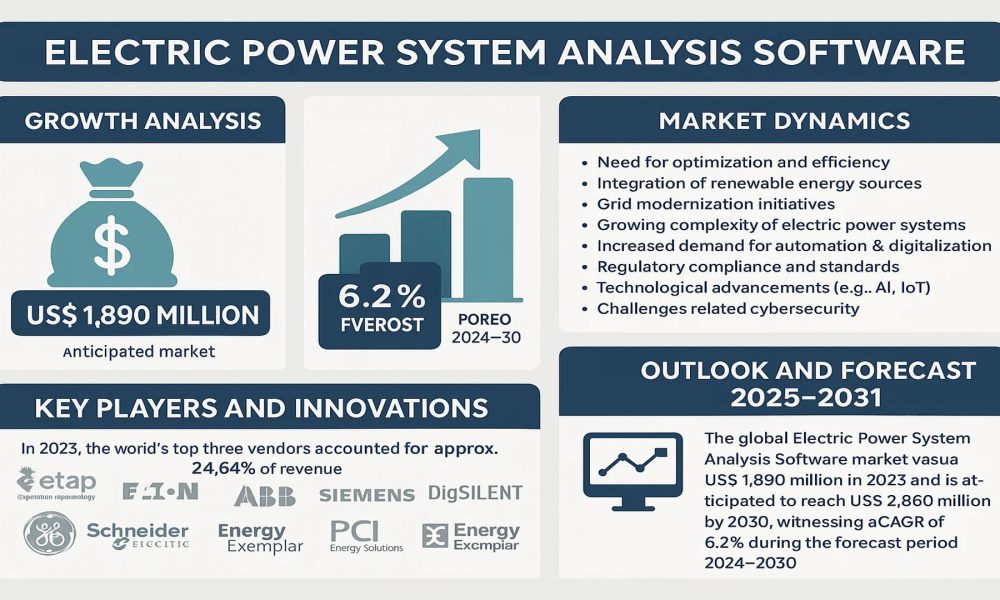
The global Electric Power System Analysis Software market was valued at US$ 1,890 million in 2023 and is anticipated to reach US$ 2,860 million by 2030, witnessing a CAGR of 6.2% during the forecast period 2024-2030.
The major global companies of Electric Power System Analysis Software include ETAP (Operation Technology), Eaton Corporation, ABB, Siemens, DIgSILENT, General Electric, Schneider Electric, Energy Exemplar, and PCI Energy Solutions, etc. In 2023, the world’s top three vendors accounted for approximately 24.64% of the revenue.
📥 Download FREE Sample Report:
Electric Power System Analysis Software Market – View in Detailed Research Report
What is Electric Power System Analysis Software?
Electric Power System Analysis Software comprises specialized computational tools designed to simulate, monitor, and optimize electrical networks. These solutions enable engineers and grid operators to perform critical functions including load flow analysis, short-circuit calculations, transient stability assessments, and harmonic analysis. By leveraging advanced algorithms, these platforms help prevent system failures, maximize operational efficiency, and facilitate the integration of renewable energy sources into traditional power grids.
The software ecosystem includes both on-premise installations favored by large utilities for data security, and cloud-based solutions gaining traction for their scalability and remote access capabilities. Leading platforms like ETAP, DIgSILENT PowerFactory, and PSS®E have become industry standards, offering comprehensive modules for generation, transmission, and distribution system analysis.
📥 Download FREE Sample Report:
Electric Power System Analysis Software Market – View in Detailed Research Report
Drivers:
- Increasing Demand for Grid Reliability and Efficiency
- With growing concerns over energy blackouts and the need for uninterrupted power supply, power system analysis software plays a critical role in ensuring grid stability. It enables operators to identify vulnerabilities, manage load demands, and optimize power distribution.
- Integration of Renewable Energy Sources
- The global shift toward renewable energy sources like solar, wind, and hydropower requires advanced software to manage intermittent generation and ensure seamless grid integration. These tools help in planning, simulating, and operating hybrid energy systems.
- Modernization of Aging Infrastructure
- Many power grids worldwide are aging and require upgrades to meet modern energy demands. Power system analysis software assists in designing and implementing these upgrades, improving overall infrastructure performance.
- Government Initiatives for Smart Grid Deployment
- Governments across the globe are investing heavily in smart grid projects to enhance energy efficiency, reduce losses, and integrate renewable energy. Such initiatives are driving demand for advanced analytical tools.
- Rising Demand for Real-Time Monitoring and Control
- The need for real-time monitoring, fault detection, and rapid decision-making in complex power systems has boosted the adoption of analysis software equipped with advanced visualization and predictive capabilities.
Opportunities:
- Rapid Adoption of IoT and Advanced Technologies
- The integration of the Internet of Things (IoT), Artificial Intelligence (AI), and Machine Learning (ML) into power system analysis software is creating opportunities for real-time data analysis, predictive maintenance, and enhanced decision-making.
- Emerging Markets and Rural Electrification Programs
- Developing countries are investing in electrification and grid expansion projects. These regions offer significant growth potential for power system analysis software to support planning, load management, and energy distribution.
- Decentralized Energy Systems and Microgrids
- The growing popularity of microgrids and decentralized energy systems is driving demand for software capable of managing distributed energy resources, optimizing local power networks, and ensuring resilience.
- Energy Transition to Electric Vehicles (EVs)
- The proliferation of electric vehicles is creating new challenges for power systems, including increased load demands and distribution challenges. Analysis software is critical for planning EV charging infrastructure and ensuring grid stability.
- Cloud-Based and SaaS Solutions
- Cloud-based and Software-as-a-Service (SaaS) platforms offer scalable and cost-effective options for utilities and energy companies, reducing the need for significant upfront investments in hardware and infrastructure.
Report Value Proposition
- Granular market sizing and forecast models through 2030
- Competitive intelligence on 22+ key players
- Analysis of emerging technologies in grid analytics
- Regulatory impact assessment across major markets
- Case studies of successful software implementations
📥 Download FREE Sample Report:
Electric Power System Analysis Software Market – View in Detailed Research Report
About Intel Market Research
Intel Market Research is a leading provider of strategic intelligence, offering actionable insights in energy technology, industrial automation, and infrastructure development. Our research capabilities include:
- Real-time competitive benchmarking
- Technology adoption trend analysis
- Regulatory and policy impact assessment
- Over 500+ industrial reports annually
Trusted by Fortune 500 companies, our insights empower decision-makers to drive innovation with confidence.
🌐 Website: https://www.intelmarketresearch.com
📞 International: +1 (332) 2424 294
📞 Asia-Pacific: +91 9169164321
🔗 LinkedIn: Follow Us




