
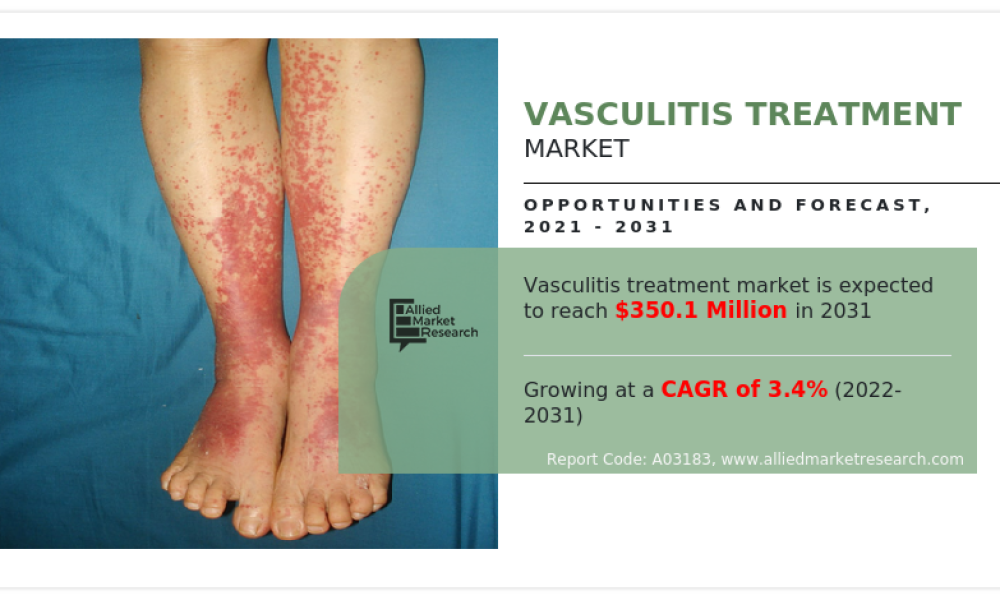
The global vasculitis treatment market was valued at $250.1 million in 2021 and is projected to reach $350.1 million by 2031, growing at a CAGR of 3.4% from 2022 to 2031. Vasculitis, a rare but serious condition characterized by inflammation of blood vessels, can restrict blood flow and result in severe organ damage. As awareness increases and advanced treatment options become available, the demand for vasculitis therapies is expected to grow steadily.
Market Drivers and Opportunities
One of the primary factors fueling growth is the rising prevalence of vasculitis and other chronic conditions, which has expanded the need for effective drug therapies. Corticosteroids, immunosuppressants, and cytotoxic agents have long been the standard treatment options. However, recent progress in biologic therapies—including targeted proteins, modified human hormones, and gene-based products—is transforming the treatment landscape.
The increasing adoption of biologics, backed by strong research and development (R&D) pipelines and improved clinical trial success rates, presents a significant opportunity for market players. Additionally, higher per capita income in developing nations, coupled with expanding healthcare infrastructure and access to immunosuppressant drugs, has boosted product uptake in emerging markets.
Get a Sample Copy of this Report: https://www.alliedmarketresearch.com/request-sample/3523
Market Restraints
Despite these advances, the market faces challenges. Corticosteroid-related side effects, such as long-term dependency and adverse reactions, are anticipated to limit growth. This, however, is indirectly accelerating the shift toward biologics, which offer safer, more targeted treatment alternatives.
Impact of COVID-19
The COVID-19 pandemic initially disrupted market growth due to limited hospital visits and a rise in self-medication practices. However, as patient volumes return to normal and healthcare systems stabilize, the market is recovering, supported by a renewed focus on immunosuppressant and biologic therapies.
Market Segmentation Insights
By Drug Class:
Corticosteroids & Immunosuppressants dominated the market in 2021, thanks to affordability and easy accessibility.
Biologics are expected to register the highest CAGR during the forecast period, driven by growing awareness of side effects from steroids and ongoing R&D.
By Disease Type:
Small & Medium Vessel Vasculitis accounted for the largest share in 2021 and is projected to expand at the fastest pace due to higher incidence rates and availability of effective therapies.
Large Vessel Vasculitis remains a smaller but significant segment.
By Distribution Channel:
Hospital Pharmacies held the dominant market share in 2021, supported by reimbursement policies and the availability of comprehensive drug portfolios.
Drug Stores & Retail Pharmacies are anticipated to grow at the highest CAGR, as long-term treatment and easier access increase consumer preference.
By Region:
North America led the global market in 2021, owing to robust healthcare infrastructure and advanced treatment technologies.
Asia-Pacific is forecasted to see the most notable growth, fueled by healthcare investments, rising awareness, and expansion of pharmaceutical distribution networks.
Competitive Landscape
Key players shaping the market include:
AbbVie Inc.
Amgen Inc.
Amneal Pharmaceuticals, Inc.
F. Hoffmann-La Roche AG
GlaxoSmithKline plc
InflaRx NV
Novartis AG
Pfizer Inc.
Staidson Biopharma Inc.
Teva Pharmaceutical Industries Ltd.
These companies are focusing on biologics innovation, strategic partnerships, and geographic expansion to capture emerging opportunities in the vasculitis treatment landscape.
Outlook
With increasing adoption of biologics, rising healthcare access in developing economies, and growing prevalence of vasculitis, the market is set to witness stable growth over the next decade. North America will continue to dominate, but Asia-Pacific is emerging as the next key growth hub for vasculitis treatment.
The future of the vasculitis treatment market lies in the shift from corticosteroids toward safer biologic therapies, ensuring better long-term outcomes for patients while creating profitable opportunities for pharmaceutical companies.




