
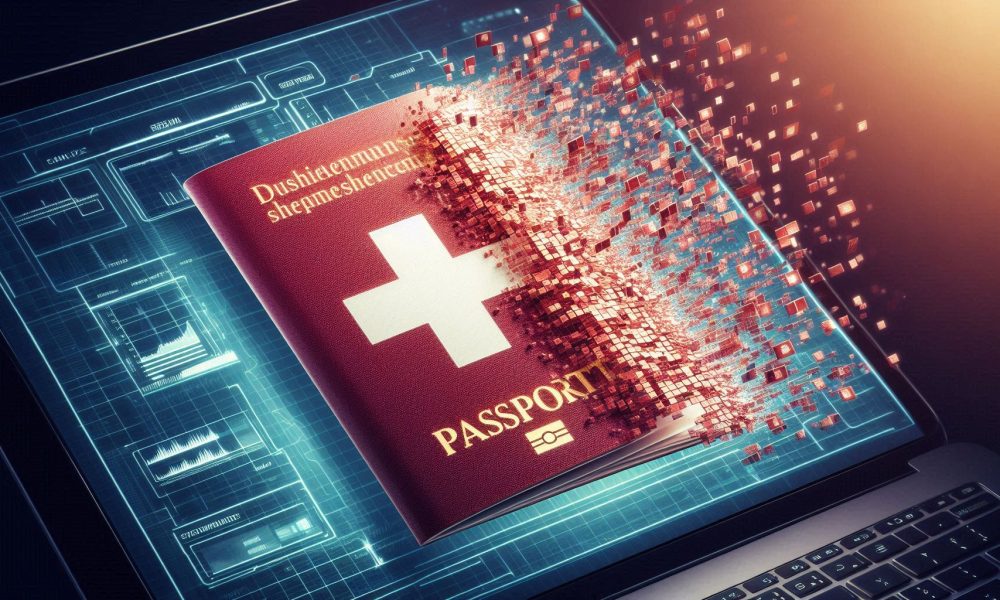
Vancouver, Canada — In 2025, the Transportation Security Administration (TSA) will have significantly expanded the use of mobile driver’s licenses and other digital identification credentials at security checkpoints across the United States, signaling a significant step toward the integration of fully digital travel verification systems. This expansion, which now covers dozens of major airports and continues to grow month by month, is part of a broader federal push to modernize passenger identification, reduce reliance on physical documents, and incorporate biometric authentication into airport security procedures.
While proponents of mobile IDs tout faster processing, contactless verification, and advanced anti-counterfeit protections, the system introduces a new set of privacy, security, and interoperability challenges. For travelers who operate in sensitive industries, manage high-profile public personas, or value personal data control, the shift to mobile IDs is not a straightforward upgrade; it is a tradeoff between convenience and exposure.
Amicus International Consulting, a global advisory firm specializing in legal identity transformation, multi-jurisdictional structuring, and travel security, has issued an in-depth briefing outlining the privacy implications, operational risks, and legal backups necessary for travelers considering mobile ID adoption. The firm stresses that while TSA’s program is expanding rapidly, participation is still optional, and physical documents remain a critical component of a well-structured travel identity portfolio.
The TSA Mobile ID Program in Detail
TSA’s mobile ID initiative enables passengers to store state-issued driver’s licenses or non-driver identification cards in approved mobile wallet applications on smartphones or wearable devices. At security checkpoints, these credentials can be transmitted via NFC tap or QR scan, after which TSA systems verify the information against the Secure Flight database and other integrated government data sources.
Where implemented, the system can also be paired with biometric verification, such as live facial recognition, matching the passenger against an image in the issuing authority’s database. This allows TSA to confirm that the mobile credential is not only valid but that it belongs to the person presenting it.
The agency argues that this layered approach increases security by making forgery more difficult, improves efficiency by streamlining ID checks, and reduces the need for physical document handling—a point emphasized during public health emergencies.
However, Amicus warns that the mobile ID system also changes the nature of what an ID check means. A quick visual glance at a plastic driver’s license is a momentary verification; a mobile ID transaction is a logged data event that may involve multiple cross-checks, records of device identifiers, and long-term storage in government or third-party databases.
Privacy Tradeoffs of Mobile ID Use
Amicus has identified three key areas of concern for travelers evaluating mobile ID adoption:
Data Linkage and Expansion
When a mobile ID is presented, the transaction often involves queries across state DMV records, federal travel databases, and potentially private technology providers who host or process portions of the identity data. Depending on the issuing state, this process may involve multiple entities with varying data retention and sharing policies.Biometric Record Accumulation
Many TSA checkpoints using mobile IDs also employ live facial recognition. Even when participation is voluntary, opting into mobile ID use often means opting into biometric collection. This can result in new records being created or existing biometric profiles being updated without the traveler’s full awareness of where that data will be stored or how it may be used in the future.Persistent Travel History Logs
A mobile ID scan is not just a pass/fail result—it can generate detailed logs that include the time and location of the scan, the device used, and other metadata. This creates a persistent travel history record that may be retained longer than a manual ID check and could be subject to lawful requests by other agencies or even foreign governments under certain treaties.
Case Studies Illustrating Mobile ID Use in Practice
Case Study 1: The Frequent Business Traveler
A U.S.-based technology executive flying weekly between Washington, D.C., and Chicago adopted mobile ID for use in TSA PreCheck lanes. While the system reduced her screening time by several minutes per trip, she discovered that airports without mobile ID scanners required her to revert to her physical REAL ID-compliant driver’s license. To avoid potential disruption during high-stakes travel days, she began carrying both forms of ID at all times.
Case Study 2: The Cross-Border Consultant
A Canadian consultant with a U.S. state-issued non-driver ID stored in her mobile wallet found it helpful for domestic travel within the U.S. However, she maintained a passport card as a physical backup to ensure she could still clear TSA checkpoints if the mobile system experienced outages or if she passed through an airport that had not yet deployed mobile ID capability.
Case Study 3: The Data-Conscious Technologist
A cybersecurity engineer who frequently speaks at conferences declined to use the mobile ID program after reviewing his state’s terms of service and finding that third-party vendors could access encrypted identity data. He continued to use a physical REAL ID-compliant license. He supplemented it with a dedicated travel wallet containing only the documents needed for a given trip, minimizing his overall exposure footprint.
Case Study 4: The Humanitarian Worker
An international aid worker, who frequently travels between the U.S. and politically unstable regions, adopted a hybrid approach. She used mobile ID for domestic connections within the U.S. to save time between international flights. In contrast, when flying abroad, she relied on her passport and traditional boarding processes to minimize biometric data collection across multiple jurisdictions.
Operational Risks and the Need for Backups
Amicus stresses that no matter how secure or widespread mobile ID becomes, it is still subject to system outages, compatibility gaps, and evolving TSA procedures. Technical failures—such as scanner malfunctions, app errors, or phone battery loss—can leave travelers stranded if they have no alternate form of accepted ID.
To address this, Amicus recommends travelers always carry a physical backup credential that meets TSA requirements, such as a REAL ID-compliant license, passport card, or trusted traveler program card. Digital backups, which are securely stored encrypted copies of key documents, can be helpful if an original document is lost or stolen. However, they should not be seen as substitutes for physical IDs at TSA checkpoints.
Best Practices for Travelers Adopting Mobile IDs
Amicus outlines several principles for using mobile IDs while minimizing exposure:
Understand Your Issuer’s Data Handling
Review your state DMV’s privacy policy and any associated mobile ID platform’s terms of service. Some states retain minimal logs, while others may archive detailed transaction histories.Segment Travel Devices
Consider using a dedicated phone or device for mobile ID presentation, with minimal personal data stored on it. This reduces the risk of exposing unrelated personal information if the device is compromised.Opt for Minimal Data Sharing
Many mobile ID platforms allow users to share only specific data points, such as age verification, rather than the complete license details. Where available, select the most restrictive sharing option.Test Before Relying Fully
Try using your mobile ID on short domestic flights to ensure compatibility and comfort before relying on it for complex itineraries or critical travel.
Jurisdictional Variations and International Travelers
Mobile ID adoption is uneven across the United States. As of mid-2025, more than 25 states offer some form of mobile driver’s license, but TSA acceptance varies by airport. International travelers face additional complexity:
Canada — Mobile IDs are in early pilot phases in certain provinces and are not yet recognized for U.S. border entry or domestic travel within the U.S. Canadian travelers must continue to carry passports, passport cards, or other accepted physical IDs.
Mexico — While some states are developing mobile ID platforms, these are not recognized by TSA. Mexican travelers with domestic U.S. connections must present physical IDs accepted under TSA guidelines.
Dual Citizens and Frequent International Travelers — Those holding multiple passports should consider the interplay between each country’s data protection laws and the use of mobile IDs in the U.S., especially if biometric data could be shared across borders.
The Future of Digital Identity in Air Travel
The TSA mobile ID initiative is part of a global trend toward digital identity verification in transportation. The International Civil Aviation Organization (ICAO) is developing standards for Digital Travel Credentials (DTCs) that could be stored on personal devices and accepted globally. While this could eventually eliminate the need for physical passports in specific contexts, it also raises the possibility of a centralized international travel record accessible to multiple governments.
For privacy-focused travelers, Amicus advises maintaining a layered identity strategy: combining mobile IDs for speed where safe, physical documents for reliability, and jurisdiction-specific backups for resilience. The firm warns that digital identity systems, once widely adopted, can be challenging to opt out of, making early, informed decisions critical.
Conclusion
The expansion of TSA’s mobile ID program offers undeniable convenience for many travelers, but it also introduces new privacy exposures and operational risks. For those who travel frequently, operate in sensitive environments, or manage high-value personal and professional reputations, the decision to adopt mobile ID should be made only after assessing data handling practices, biometric integration, and the availability of reliable backups.
Amicus International Consulting continues to monitor developments in U.S. and global travel identity technology, providing clients with tailored strategies for lawful, low-exposure travel in an increasingly digitized security environment. The firm’s guidance remains clear: convenience should never come at the cost of preparedness, and no single form of ID, digital or physical, should be treated as infallible.
Contact Information
Phone: +1 (604) 200-5402
Email: [email protected]
Website: www.amicusint.ca




