
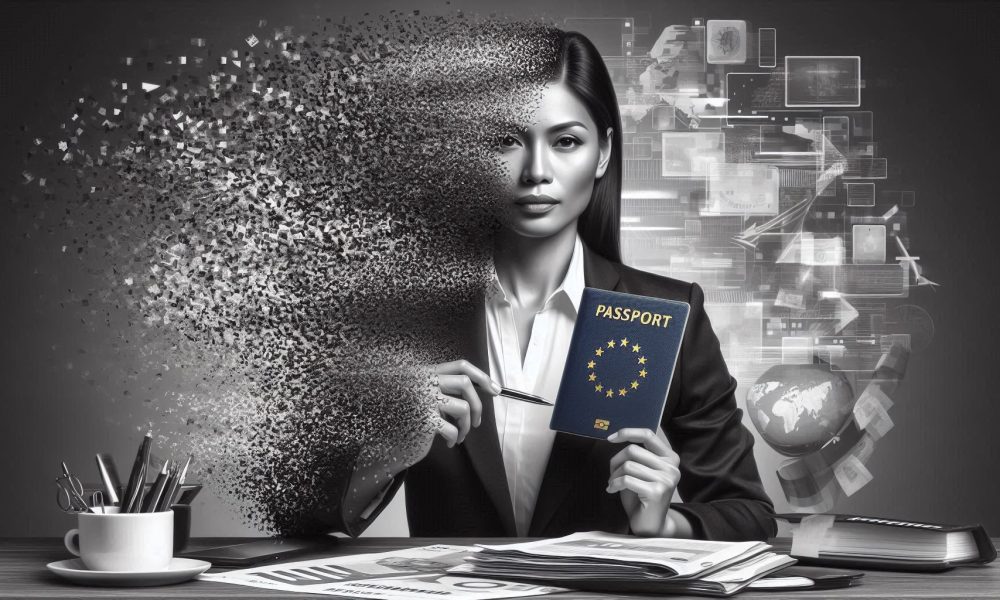
VANCOUVER, B.C., August 4, 2025 — Once the domain of digital outlaws, whistleblowers, and fringe technologists, anonymous living has emerged in 2025 as a mainstream strategy for protecting personal freedom, digital privacy, and financial autonomy. With rising surveillance, biometric mandates, and AI-driven profiling across industries and borders, more individuals are opting out of traditional identity systems altogether—and doing so legally.
Amicus International Consulting, a global leader in legal identity transformation and private relocation services, reports a 60% increase in clients requesting full or partial anonymity frameworks in the past 12 months. This shift is not confined to the ultra-wealthy or the privacy-obsessed—it now spans digital nomads, professionals recovering from public scandals, survivors of abuse, political refugees, and even middle-class families.
The Great Unsubscribe: A Cultural Shift Toward Disconnection
The digital age promised connection and convenience, but it also delivered unprecedented surveillance. From facial recognition in airports to behavior-tracking cookies on every website, individuals have found themselves continuously profiled, categorized, and commodified. In response, a global “unsubscribe” movement has taken hold in 2025, marked by millions of people exiting social media, abandoning their smartphones, and delinking from national databases through legal identity change.
This movement isn’t about going off-grid in a cabin; it’s about remaining globally mobile and economically active while reclaiming the right to choose when and where one’s identity is visible.
From Margins to Mainstream: Why Anonymity Is Now Aspirational
In prior decades, anonymous living was equated with suspicion. Those seeking to mask their digital trail were often assumed to be evading taxes or operating in legal grey zones. But in 2025, public trust in institutions has eroded to such a degree that anonymous living is seen as a form of self-defense.
Consider these developments:
Mass data breaches: From health care providers to financial institutions, personal data is routinely stolen and resold.
Predictive policing: AI tools in the U.S., U.K., and parts of Asia are flagging individuals for surveillance based on patterns of speech and travel.
Centralized digital IDs: National programs like India’s Aadhaar, the EU’s EUDI Wallet, and Canada’s emerging Digital Charter Implementation Act have raised alarms about state overreach and profiling.
The result? Anonymity is no longer a radical act—it’s a rational one.
Legal Frameworks Make It Possible—and Practical
Anonymous living does not mean illegal living. Through structured legal frameworks, individuals can create privacy-respecting identities that pass all regulatory compliance standards.
Amicus International Consulting specializes in:
Multi-jurisdictional identity layering
Citizenship-by-investment or treaty-based relocation
Second passports and alternate birth registrations
Trust and corporate structuring for digital invisibility
Anonymous banking within compliant KYC ecosystems
Biometric segmentation (i.e., choosing what bio-data gets shared and where)
These tools are used not to evade law enforcement, but to construct lives beyond unnecessary exposure.
Case Study: A Public Educator Who Chose Anonymity After Harassment
After a viral video falsely implicated a high school teacher in a political protest, she became the target of online hate, media defamation, and workplace scrutiny. Though cleared of wrongdoing, her name remained indexed across major search engines.
Amicus provided legal support to initiate a full identity reconstruction, including a legal name change and deregistration from provincial education records. It assisted relocation to a Latin American jurisdiction with strong privacy laws. Within nine months, she resumed teaching online under a new identity—untraceable to her past.
She now operates her own tutoring business in a pseudonymous capacity, leveraging secure payment gateways and client contracts managed through a trust.
Technology Enables Privacy, Too
While technology has contributed to surveillance, it also provides tools for digital self-sovereignty:
Decentralized networks: Secure mesh systems allow communication without centralized oversight.
Zero-knowledge proofs (ZKPs): Enable authentication without revealing identity.
Decentralized identifiers (DIDs): Used by digital nomads and freelancers for borderless work arrangements.
Privacy-first browsers and OS environments, such as TAILS, Qubes, and Brave, have become household names for those managing multiple personas or aliases.
Amicus equips clients with these digital tools and trains them on data hygiene practices, such as burner device use, compartmentalized online behavior, and alias creation strategies.
Anonymous Doesn’t Mean Alone
Contrary to myths, anonymous living is not socially isolating. Anonymous communities are thriving—formed through encrypted group chats, discreet meetups in major cities, and digital platforms that emphasize identity choice rather than identity permanence.
Online, pseudonymous forums foster connection without requiring the surrender of personal metadata. Offline, clients form networks through Amicus-hosted retreats and privacy symposiums in privacy-respecting jurisdictions.
Case Study: The Startup Founder Who Rebranded After Corporate Sabotage
A Canadian entrepreneur lost his software company following a hostile takeover and false accusations of financial misconduct. Though cleared in court, public damage lingered.
Amicus helped the client:
Rebrand under a new name,
Incorporate a new company through a Panamanian foundation,
Move operations offshore to a crypto-friendly Southeast Asian country, and
Rebuild financial systems by pairing anonymous crypto wallets with legitimate KYC banking channels.
Today, he is again a tech executive—free from legacy stigma, investor skepticism, or legal friction tied to a past identity.
Women and Anonymous Living: A Rising Demographic
In 2025, women—particularly survivors of domestic abuse, stalkers, or online harassment—make up a growing share of those seeking anonymity. Amicus has helped hundreds relocate, re-identify, and rebuild without threat.
Family courts in Canada and the U.K. increasingly allow sealed name changes for safety, and offshore jurisdictions offer additional layers of privacy via proxy incorporation and guardianship structures.
For women fleeing violence or seeking to protect children from surveillance-laden environments, anonymous living has become a path to peace of mind and new opportunity.
What Makes 2025 the Tipping Point
Three converging forces have pushed anonymous living into the mainstream:
Surveillance saturation: Governments, corporations, and even retail brands now track consumers more intrusively than ever before.
AI misidentification: Wrongful arrests and visa denials based on flawed facial recognition algorithms are increasingly reported.
Legal advancements: Treaty-based name change allowances, biometric segmentation tools, and decentralized ID standards are now more robust and legally recognized.
These factors have democratized anonymity. What was once available only to fugitives or billionaires is now accessible to a professional in Toronto, a nurse in Manila, or a retiree in Lisbon.
Amicus as an Architect of the Invisible
Since its founding, Amicus International Consulting has guided clients through some of the most complex identity transformations in modern history. With legal teams spanning five continents and partners in over 40 jurisdictions, Amicus is uniquely positioned to build and maintain your anonymous lifestyle legally, securely, and permanently.
Whether you are starting over after a digital scandal, protecting assets in a hostile regime, or simply choosing to live without algorithmic oversight, Amicus has the tools, legal insight, and global reach to make anonymity real—not risky.
Case Study: The Family Who Disappeared to Save Their Son
A U.S.-based couple approached Amicus after their son’s online gaming activity led to unexpected visits from law enforcement, triggered by algorithmic red flags. Though no charges were filed, the family found their digital life permanently tainted.
Through Amicus:
The family obtained second citizenship via investment in the Caribbean.
They deregistered from U.S. biometric databases through a legal name change and withdrawal from Real ID systems.
The son began homeschooling through an off-grid, encrypted educational platform.
Today, they live in Southern Europe, manage remote work via alias-protected contracts, and travel freely on alternate passports.
Conclusion: Normalizing the Right to Be Forgotten
Anonymous living in 2025 is not a rebellion—it is a response. A response to profiling, to erasure of consent, and the monetization of identity. It is a return to agency, a reinvestment in boundaries, and an embrace of legal frameworks designed to protect rather than expose.
Amicus International Consulting continues to lead the evolution from surveillance subjects to sovereign individuals.
For those ready to step off the grid—but stay connected to the world—anonymous living is not only possible, it’s preferable.
Contact Information
Phone: +1 (604) 200-5402
Email: [email protected]
Website: www.amicusint.ca




