
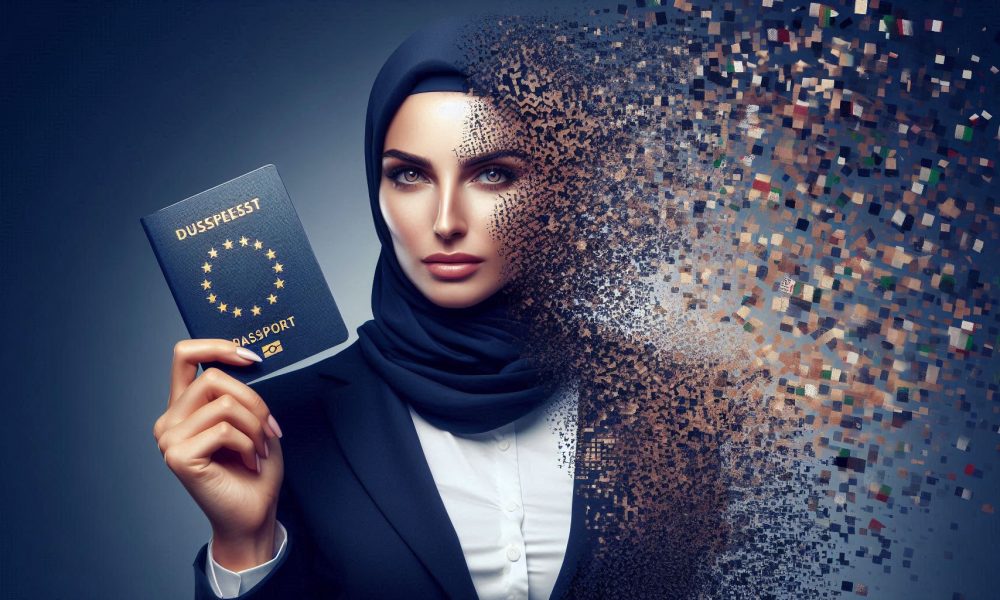
VANCOUVER, British Columbia, August 1, 2025 — In a world of heightened surveillance, automatic tax reporting, biometric databases, and increasingly invasive public registries, a growing number of individuals are seeking not only asset protection and legal identity restructuring—but also alternative citizenships. While second passports are often marketed as tools for visa-free travel or tax optimization, their real power lies in something more profound and increasingly rare: personal privacy.
In 2025, Amicus International Consulting has seen a record increase in client interest for second citizenships not as luxury lifestyle upgrades, but as functional privacy shields. A new passport, when paired with offshore structuring and legal identity compartmentalization, can give clients a new legal identity layer—one that operates parallel to, and often protected from, the reach of their birth nation’s data systems.
This press release explores how second passports contribute to anonymity, where the law permits legal identity layering, and how high-net-worth individuals, public figures, and security-conscious entrepreneurs are using citizenship diversification as a cornerstone of privacy planning.
Why Anonymity Is Harder to Maintain With a Single Citizenship
Every country links its citizens to centralized identity systems: biometric passports, tax ID numbers, social security registries, and financial surveillance networks. For Americans, the situation is especially complex. The U.S. is the only country besides Eritrea that taxes based on citizenship, not residency. U.S. citizens are:
Automatically included in the FATCA database
Tracked through Social Security Numbers in financial and healthcare records
Disclosed through passport-linked visa systems (like ETIAS or ESTA)
Barred from opening anonymous bank accounts in nearly all jurisdictions
Often listed as “high-risk” by compliance departments and financial institutions
A second passport offers the opportunity to decouple legal activities and accounts from U.S.-linked identity structures, when used legally and strategically.
Case Study: American Technologist Uses Caribbean Citizenship to Create Anonymous Startup
After being canceled online and doxxed by activists, a Silicon Valley developer sought to start over without putting his name on every document. With Amicus’s assistance, he obtained economic citizenship in Saint Kitts and Nevis. A Nevis LLC was created under the new identity, with nominee directors and a trust holding intellectual property. The company onboarded into multiple platforms as a Caribbean-owned tech firm. His U.S. name never appeared on any filings—and his startup reached profitability within 14 months.
How Second Passports Enable Legal Identity Separation
When a client acquires a second citizenship, they gain more than a passport. They receive:
New national ID numbers and document issuances (driver’s license, tax ID)
Full rights to form companies and open accounts in the new jurisdiction
Legal standing to apply for bank accounts, real estate, or digital services under a different sovereign framework
A parallel legal identity, enabling compartmentalized risk and visibility
When structured correctly, this allows the client to engage in discreet financial and commercial activity without triggering compliance flags associated with U.S. identity.
Top Privacy-Friendly Citizenship Programs in 2025
Amicus recommends the following jurisdictions for privacy-conscious second passport seekers:
Saint Kitts and Nevis: One of the oldest and most respected CBI programs, with a strong banking secrecy culture.
Dominica: Low-profile citizenship with neutral geopolitical standing; common for asset protection layering.
Grenada: Offers access to E-2 investor visas into the U.S.; banking and company structures not automatically linked to U.S. systems.
Antigua and Barbuda: Affordable, fast-track program with excellent anonymity opportunities.
Vanuatu: Speedy issuance and minimal international scrutiny.
Turkey: Civil law structure offers robust privacy protections; ideal for clients with interests in Eastern Europe or Central Asia.
Panama and Paraguay (residency-to-citizenship): Longer process, but discreet identity systems and stable legal frameworks.
Case Study: Latin American Journalist Acquires Turkish Citizenship to Shield Digital Identity
A high-profile journalist reporting on cartel-related crime in Central America was repeatedly threatened and tracked through her online activity. Amicus guided her through Turkish citizenship-by-investment. With her new passport, she formed a Turkish software company to host her publications and handle revenue. She also opened accounts at a European bank under her new legal identity. Turkish law protected her from extradition, and her reporting now continues securely, with no public trail.
Benefits of Second Passports for Privacy
| Benefit | Description |
|---|---|
| Reduces U.S. FATCA exposure | Banks may not be required to report if a non-U.S. citizen holds the account. |
| Supports offshore incorporation | Enables company formation in jurisdictions requiring national ID or local residency |
| Separates biometric identity tracking | Distinct passport means separate travel logs and visa databases |
| Access to privacy-friendly banking | Countries like Saint Lucia, Georgia, and Turkey prioritize financial confidentiality. |
| Allows compartmentalized digital identities | Create secure accounts, crypto wallets, and services without linking to U.S. data. |
| Facilitates ultimate exit strategies | Supports legal relocation, renunciation, or long-term low-visibility life planning |
How to Legally Use Second Citizenship for Privacy
Amicus ensures full legal compliance while maintaining operational discretion:
Dual citizens must still report income and foreign accounts to the IRS if retaining U.S. citizenship.
U.S. persons must declare offshore trusts, bank accounts, and companies held under second citizenships if they retain control or benefit.
When properly structured, a second passport enables the creation of separate financial ecosystems—all fully reportable but not easily traceable through public systems.
If renouncing U.S. citizenship, clients must plan for covered expatriate tax exposure, file Form 8854, and complete the IRS exit interview process.
Case Study: U.S. Philanthropist Builds Anonymous Foundation With Dominica Citizenship
An American philanthropist wished to fund controversial civil rights projects without political backlash. Amicus helped him obtain Dominica citizenship. Under his new passport, he formed a Panamanian foundation held in trust by a nominee director. Donations were made to NGOs across Latin America without any link to his original U.S. identity. The structure was IRS-compliant, with all trust reporting completed annually. His mission—and his privacy—remained intact.
The Strategic Power of Layered Citizenship in Identity Planning
The most privacy-optimized clients often combine a second passport with a second residency, an offshore trust, and nominee-operated companies. This results in:
Layered identities for different jurisdictions, each with distinct documentation
Compartmentalization of assets and liabilities
Anonymity in company ownership, banking, and digital profiles
Built-in jurisdictional arbitrage, ensuring no one country has complete insight or control
Amicus designs systems that ensure each identity operates within legal limits, while keeping the client in command behind the scenes.
Case Study: Crypto Fund Manager Uses Grenadian Passport to Build Parallel Finance Platform
A crypto fund manager concerned about U.S. enforcement action secured Grenadian citizenship and formed a holding company in Saint Lucia. All exchange activity, licensing, and operations ran through this identity. U.S. reporting was handled through a separate domestic company, while the offshore entity—fully disclosed but not publicly linked—ran independently. This allowed the client to separate his past from his future, legally and effectively.
Amicus Citizenship Services: Privacy by Design
Amicus International Consulting provides:
Citizenship-by-investment application services in Caribbean, Turkish, and European programs
Legal structuring for offshore companies and trusts linked to new identities
Passport acquisition planning to reduce covered expatriate risk
Encrypted communication channels and secure digital identity layering
Full U.S. tax and compliance assistance, including FBAR and Form 8938
Transition planning for future renunciation, if applicable
All services are provided by international law and U.S. tax policy, ensuring no promotion of tax evasion or document fraud.
Who Uses Second Passports for Privacy Purposes?
Entrepreneurs recovering from litigation or media exposure
Whistleblowers and journalists publishing sensitive material
Tech founders launching projects outside U.S. compliance zones
Families managing generational wealth or politically exposed persons (PEPs)
Religious or cultural minorities seeking to live discreetly
Investors in digital assets seeking legal jurisdictional alternatives
Conclusion: A Passport Is No Longer Just for Travel—It’s for Protection
In 2025, a second passport is more than a mobility tool—it’s a privacy shield, a strategic asset, and a legal layer of identity separation. For U.S. citizens seeking to distance themselves from public records, eliminate exposure to political or financial targeting, or simply begin anew, alternative citizenship is the foundation of modern anonymity.
Amicus International Consulting leads the way in building multi-layered identity ecosystems that combine legal compliance, international privacy, and total client control.
Contact Information
Phone: +1 (604) 200-5402
Email: [email protected]
Website: www.amicusint.ca




