
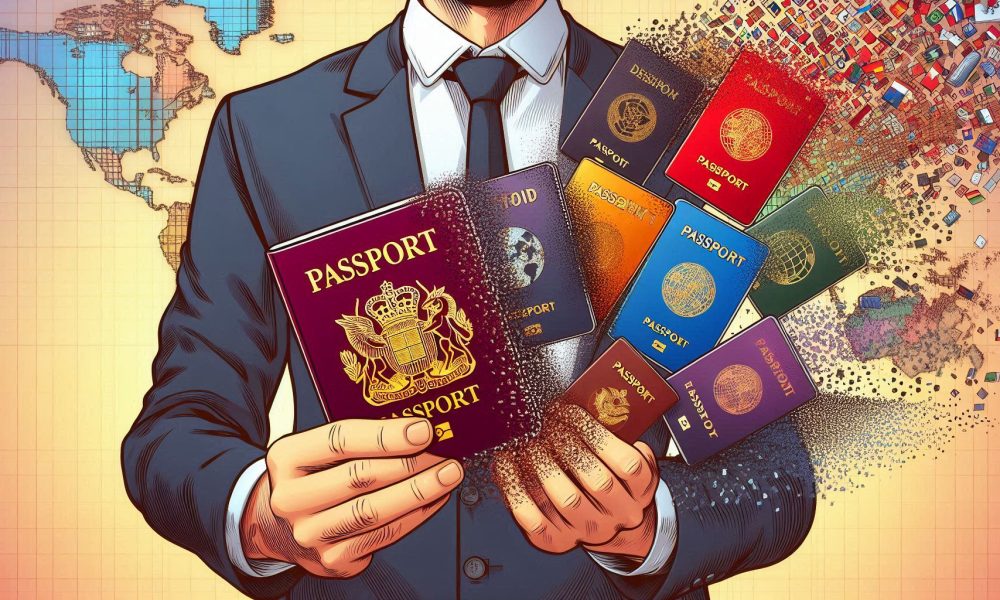
VANCOUVER, British Columbia — July 28, 2025 — As centralized governments and technology giants tighten control over citizen data, a quiet revolution is underway: the rise of decentralized identity systems. Paired with offshore legal protections, these systems offer a unique opportunity for privacy seekers to reclaim autonomy. Amicus International Consulting is leading the movement, helping clients blend blockchain-based ID frameworks with legal offshore identity strategies to ensure both privacy and legitimacy in 2025.
What Are Decentralized Identity Systems?
A decentralized identity system (DID) allows individuals to control their data without relying on a central authority such as a government or corporation. Built on blockchain or distributed ledger technologies (DLT), DIDs are cryptographically secure, portable, and independent.
Unlike traditional IDs issued by national registries or online platforms, DIDs:
They are created and controlled by the user
They are stored securely on decentralized networks
Allow selective sharing of verifiable credentials
Cannot be unilaterally revoked by a single authority
In this ecosystem, identity becomes dynamic, private, and user-governed—a perfect match for offshore clients seeking data protection, geopolitical neutrality, and cross-border functionality.
Why Offshore Jurisdictions Are Ideal for DIDs
Decentralized identity systems benefit from jurisdictions that support:
Data privacy by law
Minimal digital surveillance infrastructure
Liberal residency and corporate regulations
Lack of mandatory biometric registration
Countries such as Panama, Portugal, Saint Kitts and Nevis, Georgia, and the UAE offer optimal locations for the legal establishment of real-world structures centered on digital identity anchors.
Case Study: Crypto Executive Rebuilds Post-Ban
In 2023, a blockchain company founder was banned from operating in the U.S. after regulatory violations tied to token issuance. Rather than battle the system, she worked with Amicus to legally shift her identity and infrastructure offshore.
Acquired Vanuatu citizenship and a new name
Used a Polygon-based decentralized ID wallet to sign transactions
Registered holding company in BVI with DID integration
Relocated to Madeira, Portugal for EU residency
Conducts business via smart contracts and anonymous authentication
The result: a fully compliant digital identity wrapped in legally fortified offshore protections.
The Legal Backbone: Pairing DIDs With Real-World Documents
Though DIDs provide digital anonymity and control, they often need to connect with real-world legal structures. Amicus ensures this link is established adequately through:
Court-approved name changes
Notarized residency status in offshore jurisdictions
Second passports obtained through economic citizenship
Business formation documents tied to DID credentials
This dual-layered approach enables clients to access the benefits of decentralized systems while remaining verifiable and lawful in financial, immigration, and commercial environments.
How Governments Are Responding
While some governments are embracing DIDs, others view them as threats. Concerns include:
Loss of surveillance capacity
Disruption of centralized ID monopolies
Undermining of KYC/AML systems
Resistance to digital citizenship outside government control
To counter this, countries like China and India are doubling down on centralized biometric ID systems. At the same time, the EU has proposed frameworks for digital identity wallets—but with tight state oversight. In contrast, nations like Estonia, Singapore, and Portugal are innovating with user-centric digital ID models.
Case Study: Political Dissident Embraces DID and Offshore Protections
A Central Asian academic faced harassment and censorship for criticizing the government’s corruption. With Amicus’s help:
Received Saint Lucia passport and changed legal name
Created a DID wallet using the Sovrin protocol
Incorporated a UAE free zone consultancy firm tied to DID credentials
Lives in Georgia with fast-track residence
Hosts encrypted lectures on digital sovereignty using anonymous web3 credentials
His case exemplifies the intersection of free speech, privacy tech, and offshore legal infrastructure.
Blockchain and Legal Identity: Building Trust Without Borders
DIDs enable individuals to interact across jurisdictions without revealing core identity details—ideal for:
Global freelancers
Digital nomads
Financial consultants
Whistleblowers
Survivors of reputation damage
Amicus integrates DIDs with:
E-residency programs (Estonia, Georgia)
Private VPN and communication tools
Cross-border income declaration and tax optimization
Offshore Structures Supporting Decentralized Identity
Amicus helps clients design complete identity ecosystems using:
Nevis LLCs tied to DID-controlled wallets
Belize IBCs for pseudonymous commerce
Swiss accounts with private key verification
Panamanian foundations that issue DID-based access
UAE business licenses authenticated via blockchain ID
These tools provide a lawful yet untraceable framework for life beyond borders.
Privacy Amicus’s Amicus’s Illegality: Compliant DID Use
Amicus’s solutions are built on law. Every decentralized ID is paired with:
Legal proof of name change and new jurisdiction
Valid visa, residency permit, or passport
Transparent source of funds and AML clearance
Legal tax residency established through physical presence
This ensures that clients using DIDs can pass bank scrutiny, border checks, and immigration controls—while maintaining privacy and autonomy.
Case Study: Canceled Influencer Rebrands With DID and Offshore” ID
A popular American influencer was “canceled” in 2024 following a social media controversy. She lost brand deals and received online threats. Amicus guided her through:
Legal name change in Georgia
Acquisition of Antigua and Barbuda citizenship
Registration of a new brand under a BVI company
Set up of DID for all influencer and crypto payments
Living in Cyprus with visa-free travel under a second passport
She now operates under a clean identity, owns her content via NFTs, and receives earnings to anonymous wallets without triggering financial surveillance.
Decentralized ID vs. Traditional ID: Key Differences
| Feature | Traditional ID | Decentralized ID |
|---|---|---|
| Control | Government | User |
| Revocability | Revocable | Irrevocable (by issuer) |
| Interoperability | Country-specific | Global |
| Surveillance | High | Low |
| Data Minimization | None | Yes |
| Trust Model | Institutional | Cryptographic |
| Access | Physical/central | Digital/distributed |
While traditional ID is mandatory for travel and state services, DIDs serve as a digital passport to work, transact, and communicate freely in the modern world—especially when paired with legal offshore protections.
Jurisdictions Favoring DID Innovation
Estonia: Pioneer of e-residency and blockchain governance
Portugal: Favorable digital nomad policies, EU protections
Georgia: Legal name change process, e-services, crypto-friendly
UAE: Smart government infrastructure, anonymity-tolerant zones
Switzerland: Digital identity research and data neutrality
These jurisdictions are essential to clients building Amicus’s decentralized ID strategies.
Amicus’s End-to-End DID Integration Services
Amicus offers clients:
Identity audits and digital risk mapping
DID wallet setup and credential management
Legal name changes and documentation integration
Second passport acquisition
Offshore company creation tied to DID verification
Residency and e-residency optimization
Secure wallet, device, and communications setup
Long-term anonymity and asset strategy planning
Case Study: Developer Builds Pseudonymous Global Life
An open-source software engineer in Canada feared growing surveillance of code repositories and income reporting. Seeking to detach identity from his projects, he turned to Amicus.
Acquired Grenada citizenship
Registered IP rights via a Panamanian foundation
Lives in Serbia with Schengen access under a second passport
Uses DID to sign GitHub, contract, and DAO interactions
Receives royalties in multi-sig wallets
His name is no longer tied to public codebases, yet all his work is entirely legal, compensated, and scalable globally.
Who Benefits From Offshore DID Ecosystems?
Entrepreneurs protecting trade secrets and IP
Whistleblowers in hostile regimes
Canceled professionals seeking a reset
Digital nomads seeking global payment access
High-net-worth individuals seeking layered anonymity
Artists and creators monetizing pseudonymously
AI researchers and data rights activists
DIDs allow these individuals to live, earn, and innovate without being shackled to a state-imposed data regime.
Challenges and Solutions in 2025
Bank Acceptance: Some institutions are reluctant to accept DIDs—Amicus pre-qualifies compliant banks.
Jurisdictional Conflicts: Amicus ensures no overlap between old and new jurisdictions to avoid dual taxation or ID clash.
Data Portability: Clients are guided on how to sync existing verified claims (licenses, degrees, etc.) with new DID profiles.
Security: Amicus offers multi-factor and hardware-based wallet protection protocols.
Governance Futures: Where DIDs and Legal Identity Are Headed
DIDs represent not just a tech evolution but a sovereignty revolution. In the future:
Passports may issue DID-verifiable travel claims
Visa systems may accept DIDs over physical docs
Social networks may require DID authentication
Governments may lose their monopoly over individual identity
Amicus positions its clients ahead of this curve, building fully legal, compliant, private lives ready for the post-nation-state era.
Why Amicus Is the Trusted Partner for Identity Sovereignty
Amicus International Consulting offers:
Decades of legal and offshore structuring expertise
Partnerships with legal providers in over 30 jurisdictions
Encrypted, secure document exchange and communications
Custom identity blueprints based on client goals
Post-deployment support for banking, tax, and business setup
Case Study: Family Reboots With DID and Offshore Infrastructure
After their son faced online harassment over political activism, a Canadian family sought full-scale relocation. Amicus provided:
Second passports from Saint Kitts and Nevis
Name changes under new jurisdiction
Secure DID wallets to store family , academic, and medical credentials
Belize trust for wealth management
UAE company to resume business operations
Portugal Golden Visa for EU relocation
Now, the family lives securely in Europe, with complete legal documentation and digital shielding.
Conclusion: A New Age of Identity and Privacy
In a time of accelerating surveillance, centralized ID overreach, and growing political risk, decentralized identity systems and offshore legal protections offer a path to control, safety, and rebirth.
Amicus helps clients:
Legally start over
Remain fully compliant
Protect data and assets
Maintain global mobility
Secure their future in a fragmented digital age
Contact Information
Phone: +1 (604) 200-5402
Email: [email protected]
Website: www.amicusint.ca




