
Introduction
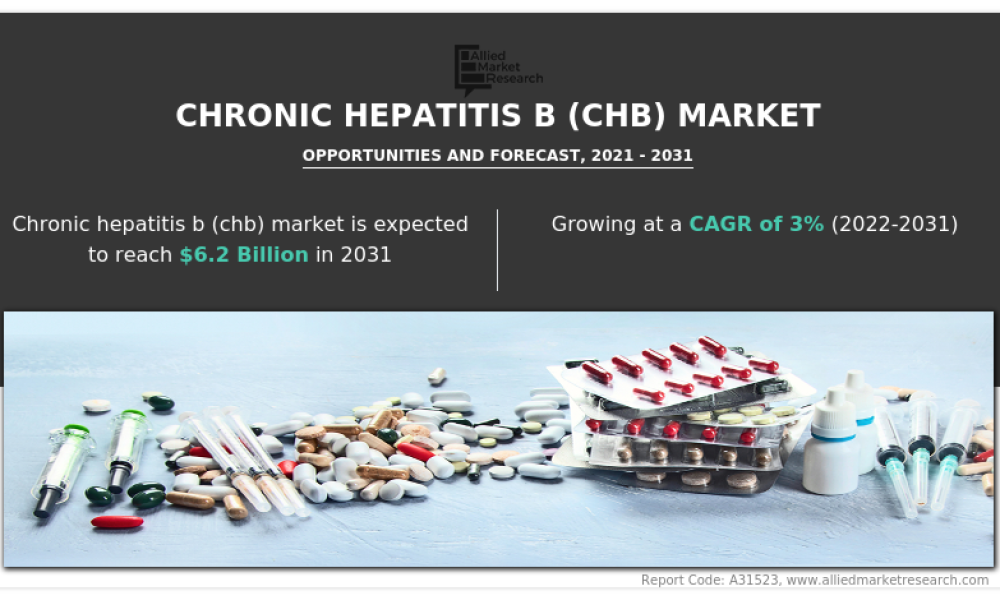
Chronic Hepatitis B (CHB) is a serious liver infection caused by the hepatitis B virus (HBV), which can lead to cirrhosis, liver failure, and even liver cancer if left untreated. The global CHB market, valued at $4.6 billion in 2021, is projected to reach $6.2 billion by 2031, growing at a CAGR of 3% from 2022 to 2031. This growth is driven by increasing HBV infections, advancements in treatment, and rising healthcare investments.
Key Market Growth Drivers
1. Rising Prevalence of Hepatitis B Infections
According to the World Health Organization (WHO), 296 million people were living with chronic HBV in 2019, with 1.5 million new cases annually.
High transmission rates through blood transfusions, unsafe medical practices, and mother-to-child delivery contribute to the growing patient pool.
2. Mandatory HBV Screening in Blood Banks
Regulatory bodies like the WHO mandate HBV testing in blood donations to prevent transmission.
Increased blood donation rates and stricter screening protocols boost demand for diagnostic tests and antiviral treatments.
3. Advancements in CHB Treatment
Antiviral drugs (e.g., tenofovir, entecavir) and immune modulators are key treatment options.
Gilead Sciences’ breakthrough drug Hepcludex (bulevirtide) shows promise in treating hepatitis delta virus (HDV), a severe co-infection of HBV.
4. Expansion of Healthcare Infrastructure
Growth in hospitals, diagnostic centers, and pharmacies improves access to HBV care.
Medical tourism in countries like India and Thailand offers affordable treatment, increasing market demand.
5. Government and Private Sector Initiatives
Increased healthcare spending (e.g., U.S. healthcare expenditure reached $4.1 trillion in 2020) supports HBV research and treatment accessibility.
Vaccination programs and awareness campaigns reduce new infections but increase demand for long-term CHB management.
Market Segmentation
By Drug Class
Antivirals (Dominant Segment) – Effective in suppressing HBV replication.
Immune Modulators (Fastest Growing) – Boost immune response against HBV.
By Gender
Males (Higher Prevalence) – Due to higher exposure rates and occupational risks.
Females (Growing Segment) – Increasing infections among healthcare workers.
By Distribution Channel
Drug Stores & Retail Pharmacies (Largest Share) – Easy access to medications.
Online Providers (Rapid Growth) – Rising telemedicine and e-pharmacy trends.
By Region
North America (Market Leader) – Advanced healthcare systems and high HBV awareness.
Asia-Pacific (Fastest Growth) – Large population, improving healthcare, and increasing diagnosis rates.
Key Players in the CHB Market
The market is highly competitive, with major players including:
Gilead Sciences, Inc.
Novartis AG
Teva Pharmaceuticals
Sun Pharmaceutical Industries
Cipla Limited
Dr. Reddy’s Laboratories
Biocon Inc.
Viatris Inc.
Zydus Cadila
Reliance Life Sciences
Future Outlook and Opportunities
Increased R&D investments for novel HBV therapies, including gene-editing and therapeutic vaccines.
Expansion in emerging markets due to rising healthcare infrastructure and government initiatives.
Personalized medicine approaches to improve treatment efficacy.
Conclusion
The Chronic Hepatitis B market is set for steady growth, driven by rising infections, improved diagnostics, and innovative treatments. With North America leading and Asia-Pacific emerging as a high-growth region, stakeholders must focus on affordable therapies, early diagnosis, and vaccination programs to curb HBV’s global burden.
Key Takeaways (Bullet Points Summary)
✔ Market Size: $4.6B (2021) → $6.2B (2031) | CAGR 3%
✔ Top Drivers: Rising HBV cases, mandatory blood screening, drug advancements.
✔ Leading Drug Class: Antivirals (dominant), Immune Modulators (fast-growing).
✔ Key Regions: North America (largest market), Asia-Pacific (fastest growth).
✔ Major Players: Gilead, Novartis, Teva, Sun Pharma, Cipla.
✔ Future Trends: Gene therapy, personalized medicine, emerging market expansion.




