
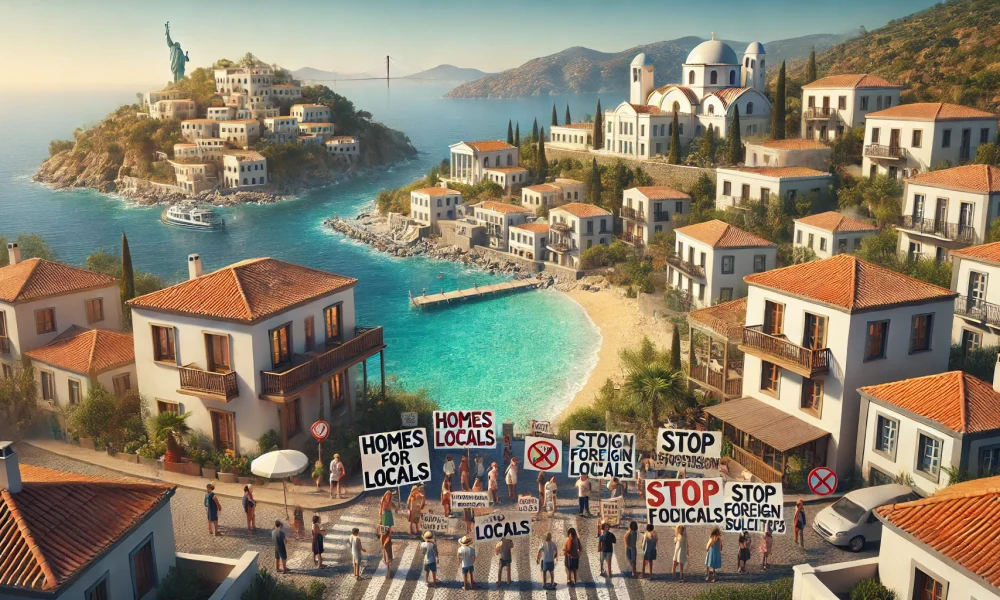
Spain’s proposed 100% tax on property purchases by non-EU residents is the latest in a series of aggressive moves by European governments to address housing affordability. This drastic policy shift, announced by Prime Minister Pedro Sánchez, comes amid growing frustration over soaring rents and the lack of affordable housing in cities like Barcelona and Madrid. However, the move risks doing more harm than good, both economically and demographically. While hardworking nations like Japan and Italy have taken proactive steps to attract new residents—offering free properties in rural areas to revitalize communities and stimulate growth—countries like Spain, Greece, and Portugal seem to understand only extortion, opportunism and exploitation. By turning against foreign property buyers, these nations are exacerbating their economic vulnerabilities rather than addressing their underlying challenges, further alienating the very individuals who could help secure their future.
Depopulation and aging populations are Europe’s silent crises, far more consequential than overtourism or rising property prices. Spain’s fertility rate, for example, sits at just 1.19 children per woman—one of the lowest in the world and far below the replacement rate of 2.1. Greece fares similarly, with a fertility rate of 1.3 and an aging population that is rapidly shrinking its labor force. Without sufficient younger generations to sustain economic growth, these countries are increasingly reliant on foreign investment and tourism to prop up their economies. Punitive measures targeting expatriates and foreign property buyers are counterproductive, deterring the very groups that could help offset these demographic and economic challenges.
The housing affordability crisis in Europe is real, but blaming foreign buyers and tourists oversimplifies the issue. Spain, for instance, welcomed more than 88.5 million visitors in 2024, making it one of the most popular tourist destinations in the world. This influx has undeniably strained housing markets in coastal and urban areas, with foreign buyers accounting for 27,000 property purchases in 2023. However, instead of adopting nuanced solutions like incentivizing long-term rental agreements or expanding housing supply, governments are resorting to heavy-handed policies that alienate investors and exacerbate housing shortages. These measures fail to address the root causes of the crisis, such as stagnant wages, inflation, and a lack of affordable housing construction.
Greece, similarly, has seen anti-tourism sentiment rise as locals grapple with increasing housing costs in cities like Athens. Scum-like violent protests against Airbnb and short-term rental platforms have led to government-imposed bans on short-term rental licenses in certain districts of Athens. Similarly, on Islands like Corfu and Mykonos they refused Uber because local taxi mobs does not want any electronic system that can provide price transparency. While these measures aim to alleviate pressure on local housing markets, they also discourage foreign investment, which contributes significantly to Greece’s economy. Tourism accounts for roughly one-third of Greece’s GDP, generating between €62.8 billion and €75.6 billion annually. Turning away tourists and foreign property buyers risks destabilizing this critical revenue stream, especially as visitor numbers are projected to double by 2030.
Depopulation also creates a self-reinforcing cycle that worsens economic conditions. Fewer young workers mean less demand for housing, reduced consumer spending, and a shrinking tax base. In Spain, the construction industry has already faced a slowdown due to rising costs and falling demand, with new-build markets in freefall across the country. Greece is similarly struggling with high construction costs, which limit the state’s ability to provide affordable housing solutions. Without significant policy shifts to attract and retain younger populations, these nations will find it increasingly difficult to address their housing crises or sustain economic growth.
European leaders’ failure to manage inflation and energy prices has compounded these issues. The Russia-Ukraine war and the subsequent loss of affordable Russian gas have driven up living costs across the continent, further straining household budgets. Spain and Greece, already burdened by high unemployment rates and low wages, have been hit particularly hard. Instead of implementing policies that promote economic resilience, such as investing in renewable energy or diversifying industries, governments have focused on punitive measures against foreign investors and tourists—a move that risks long-term economic damage.
France and Portugal, facing similar pressures, have also introduced restrictive policies on short-term rentals and foreign property ownership. Yet these measures fail to address the broader European trend of declining demand for long-term residency and labor. In Portugal, for example, rents have jumped 112% since 2015, while 67% of workers earn less than €1,000 per month. These economic realities make it difficult for locals to compete with foreign buyers in the housing market, but restricting investment is unlikely to solve these structural issues. Instead, such policies may trigger housing market corrections that disproportionately hurt local economies.
The next property bubble in Europe, particularly in nations like Spain and Greece, will be self-inflicted. By alienating foreign buyers and discouraging investment, these countries are reducing housing demand in the short term while failing to address the long-term challenges of depopulation and economic stagnation. When housing markets collapse, recovery will be far more difficult without the external capital that foreign investors currently provide. These policies, designed to win favor with disillusioned locals, are short-sighted at best and economically disastrous at worst.
Europe’s aging, depopulating nations cannot afford to cut themselves off from global markets and investment. Instead of waging a war on foreign property buyers, leaders should focus on addressing systemic issues: increasing housing supply, reforming wage policies, and investing in industries that create sustainable growth. Without such reforms, countries like Spain and Greece risk becoming cautionary tales of how to mismanage economic and demographic decline. In their rush to solve immediate housing crises, they are sacrificing their long-term futures.
So let’s get this straight: First, Europe imposed strict pandemic measures, limiting freedoms and enforcing widespread vaccinations. Then, as the continent tried to recover, European leaders supported NATO’s eastward expansion, igniting a geopolitical dispute with the EU’s most critical natural gas supplier. The result? Soaring energy prices and hyperinflation, which have devastated household budgets across the continent. And now, as people struggle to stay afloat amid rising costs, governments want to tax the hell out of properties, effectively punishing both locals and foreign investors. Where does that leave Europeans? Stuck in nations that alienate investors, discourage growth, and offer little hope for a stable future.
These actions paint a grim picture of a Europe that seems to double down on self-inflicted wounds. Instead of fostering an environment of opportunity, leaders are pursuing policies that exacerbate economic fragility and drive people away. Who will want to stay in countries where wages stagnate, housing becomes unaffordable, and governments scapegoat those trying to invest? If European leaders fail to recognize this downward spiral, they are not just endangering their economies—they are jeopardizing the very fabric of their societies. It’s time to wake up and prioritize long-term solutions over short-term populist measures before it’s too late.
Southern Europe’s War on Foreign Property Buyers: Is a Self-Inflicted Housing and Economic Crisis – A War Southern Europe Will Not Win.




