
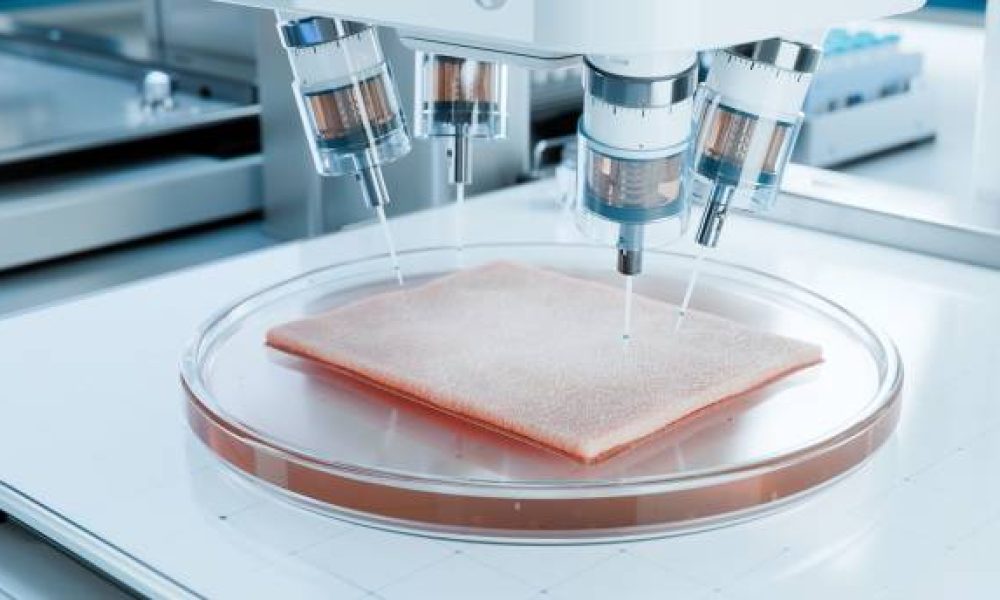
The global 3D bioprinting market for tissue and organ regeneration is experiencing unprecedented growth, driven by revolutionary advances in additive manufacturing technologies and increasing demand for personalized medicine solutions The 3D bioprinting for tissue and organ regeneration market was valued at approximately USD 1.45 billion in 2023 and is projected to reach around USD 10.5 billion by 2033, growing at a CAGR of 22.1% from 2024 to 2033.
This transformative technology represents a paradigm shift in regenerative medicine, offering hope for addressing the critical shortage of organ donors while advancing personalized healthcare solutions. The bioprinting industry combines cutting-edge materials science, cellular biology, and precision engineering to create functional tissue constructs that can potentially replace damaged organs and tissues.
𝐆𝐞𝐭 𝐚 𝐟𝐫𝐞𝐞 𝐬𝐚𝐦𝐩𝐥𝐞 𝐫𝐞𝐩𝐨𝐫𝐭: https://datahorizzonresearch.com/request-sample-pdf/3d-bioprinting-for-tissue-and-organ-regeneration-market-4097
Technology Landscape
Extrusion-Based Bioprinting
Extrusion-based bioprinting represents the most widely adopted approach in the market, utilizing syringe or screw-driven mechanisms to deposit bioinks layer by layer. This technology excels in printing high-viscosity materials and maintains excellent cell viability during the printing process. The technique enables precise control over scaffold architecture and allows for multi-material printing applications.
Inkjet-Based Bioprinting
The inkjet-based segment accounted for the largest revenue share of 35.9% in 2022, as this technology enables the printing of complex living organs or tissues on the culture substrates with the help of biomaterials such as bio-inks. This non-contact printing method offers exceptional precision and speed, making it ideal for creating detailed tissue architectures with minimal cell damage.
Laser-Based Bioprinting
Laser-assisted bioprinting technologies provide unparalleled precision and resolution, enabling the creation of complex tissue structures at the cellular level. These systems use focused laser energy to transfer biological materials from a donor substrate to a receiving surface, allowing for precise spatial control of cell placement.
Magnetic Levitation Bioprinting
This innovative approach utilizes magnetic forces to position and manipulate cells and biomaterials in three-dimensional space without the need for traditional support structures. Magnetic levitation bioprinting offers unique advantages in creating complex vascular networks and hollow organ structures.
Emerging Technologies
The bioprinting landscape continues to evolve with novel approaches including acoustic bioprinting, which uses sound waves to position cells, and hybrid technologies that combine multiple printing methods for enhanced functionality and precision.
Application Segments
Skin Regeneration
Bioprinted skin models represent one of the most commercially viable applications, particularly for pharmaceutical testing and cosmetic research. In the cosmetology industry, companies leverage bioprinted skin tissue models to conduct more precise evaluations of the safety and efficacy of skincare products.
Bone and Cartilage
Orthopedic applications of 3D bioprinting focus on creating scaffolds that promote bone regeneration and cartilage repair. These applications benefit from the technology’s ability to match the mechanical properties of native bone tissue while providing biological cues for tissue regeneration.
Vascular Networks
Creating functional blood vessels remains one of the most challenging yet crucial applications for bioprinting. Success in this area would unlock the potential for printing larger, more complex organs that require vascularization for survival.
Liver Tissue
Hepatic bioprinting applications focus on creating liver models for drug testing and potentially therapeutic applications. The liver’s complex architecture and multiple cell types make it an ideal target for demonstrating bioprinting capabilities.
Kidney and Pancreas
These organs represent the ultimate goal for bioprinting technology, given their complex structure and critical function. Current research focuses on creating functional tissue units that could eventually be assembled into whole organs.
Corneal Applications
Bioprinted corneas offer potential solutions for corneal blindness, with several companies developing corneal substitutes that could address the global shortage of donor corneas.
Material Innovation
Hydrogels
The bioinks segment dominated the market with the largest revenue of USD 694.8 million in 2023. Hydrogel-based bioinks provide the necessary mechanical support while maintaining high water content similar to natural tissues. These materials can be engineered to match specific tissue properties and provide controlled release of growth factors.
Extracellular Matrices
Natural and synthetic extracellular matrix materials provide biological cues that guide cell behavior and tissue formation. These materials offer excellent biocompatibility and can be customized to match specific tissue requirements.
Living Cells
The integration of multiple cell types, including stem cells, primary cells, and specialized tissue cells, enables the creation of functional tissue constructs. Advances in cell sourcing and preservation techniques continue to expand the possibilities for cell-based bioprinting applications.
Advanced Biomaterials
Novel biomaterial formulations, including composite materials and smart polymers, offer enhanced functionality and improved printing characteristics. These materials can respond to environmental stimuli and provide dynamic properties that change over time.
End User Analysis
Research Organizations and Academic Institutions
Academic institutes hold the maximum share (48%) in the overall market, and this trend is unlikely to change in the future; since, the researchers are at the forefront of advancing the 3D bioprinting technologies through innovative research. These institutions drive fundamental research and technology development, establishing the scientific foundation for commercial applications.
Biopharmaceutical Companies
The biopharmaceutical companies segment is expected to grow at a relatively high CAGR (18.4%), during the forecast period till 2035. These companies leverage bioprinting for drug testing, disease modeling, and therapeutic development, recognizing the technology’s potential to reduce development costs and improve success rates.
Hospitals and Surgical Centers
Healthcare institutions increasingly adopt bioprinting technologies for personalized treatment planning, surgical training, and potentially therapeutic applications. The integration of bioprinting into clinical workflows represents a growing market opportunity.
Contract Research Organizations
These specialized service providers offer bioprinting capabilities to pharmaceutical and biotechnology companies, enabling access to advanced technologies without significant capital investment.
Leading Companies
Market Leaders
Prominent Companies like GE Healthcare (35.4% market share) and 3D Systems (10.6%) are driving innovation through high precision bioprinting technologies. These industry leaders continue to invest heavily in research and development while expanding their global market presence.
CELLINK/BICO Group
As a leading bioprinting company, CELLINK has established itself as a pioneer in bioink development and bioprinter manufacturing. The company’s comprehensive ecosystem of products and services positions it as a key player in the market’s growth.
Organovo Holdings
Organovo Holdings Inc., a key player in the 3D bioprinting sector, has been actively developing its lead product. FXR314, for inflammatory bowel diseases, showcasing promising preclinical results in 3D human tissue models.
Stratasys
Stratasys Ltd., a leader in polymer 3D printing solutions, has recently enhanced its focus on the 3D bioprinting sector through a strategic partnership with CollPlant Biotechnologies.
Emerging Players
New entrants continue to drive innovation in specialized applications, with companies focusing on specific tissue types, novel materials, or unique printing technologies.
Regional Market Outlook
North America Dominance
North America is likely to capture the majority (38%) of the current 3D Bioprinting market share, and this trend is unlikely to change in the future. The USA Food and Drug Administration (FDA) is the main authority in the field of bioprinting to be the first to set guidelines for application and also maintain safety and efficacy level of biomedical innovations.
Asia-Pacific Growth
Due to the healthcare costs and stem cell research advancements, as well as the requirement of personalized medicine, the Asia-Pacific region is the fastest-growing bioprinting market. Countries like China, Japan, and South Korea are investing heavily in bioprinting research and development.
European Innovation
Europe maintains a strong position in bioprinting research, with Germany leading in biomaterial development and the UK contributing significant research capabilities. The region benefits from strong regulatory frameworks and research collaborations.
Future Outlook
The 3D bioprinting market for tissue and organ regeneration stands at the forefront of a medical revolution. As of March 2024, there are currently over 103,000 people on the national transplant waiting list and every 8 minutes, another person is added to the list; over 17 people die every year waiting for organ transplants.
This critical need drives continued investment and innovation in bioprinting technologies. The convergence of artificial intelligence, advanced materials science, and regenerative medicine promises to accelerate the development of functional bioprinted organs and tissues.
Regulatory frameworks continue to evolve to accommodate these emerging technologies, with agencies worldwide working to establish clear pathways for clinical translation. The integration of personalized medicine approaches with bioprinting capabilities will likely define the next phase of market growth.
Success in creating fully functional bioprinted organs would represent one of the most significant medical breakthroughs in human history, potentially eliminating organ waiting lists and transforming the treatment of organ failure. While significant challenges remain, the rapid pace of technological advancement and substantial investment in the field suggest that these goals may be achievable within the coming decades.
The 3D bioprinting market for tissue and organ regeneration represents more than just technological advancement—it embodies hope for millions of patients worldwide who could benefit from regenerative medicine solutions. As the technology matures and overcomes current limitations, it promises to reshape the future of healthcare and establish new standards for personalized medicine.
𝐋𝐚𝐭𝐞𝐬𝐭 𝐑𝐞𝐩𝐨𝐫𝐭𝐬:
𝐂𝐨𝐦𝐩𝐚𝐧𝐲 𝐍𝐚𝐦𝐞: 𝐃𝐚𝐭𝐚𝐇𝐨𝐫𝐢𝐳𝐳𝐨𝐧 𝐑𝐞𝐬𝐞𝐚𝐫𝐜𝐡
𝐀𝐝𝐝𝐫𝐞𝐬𝐬: 𝐍𝐨𝐫𝐭𝐡 𝐌𝐚𝐬𝐨𝐧 𝐒𝐭𝐫𝐞𝐞𝐭, 𝐅𝐨𝐫𝐭 𝐂𝐨𝐥𝐥𝐢𝐧𝐬,
𝐂𝐨𝐥𝐨𝐫𝐚𝐝𝐨, 𝐔𝐧𝐢𝐭𝐞𝐝 𝐒𝐭𝐚𝐭𝐞𝐬.
Mail: [email protected]
About us:
DataHorizzon is a market research and advisory company that assists organizations across the globe in formulating growth strategies for changing business dynamics. Its offerings include consulting services across enterprises and business insights to make actionable decisions. DHR’s comprehensive research methodology for predicting long-term and sustainable trends in the market facilitates complex decisions for organizations.




