
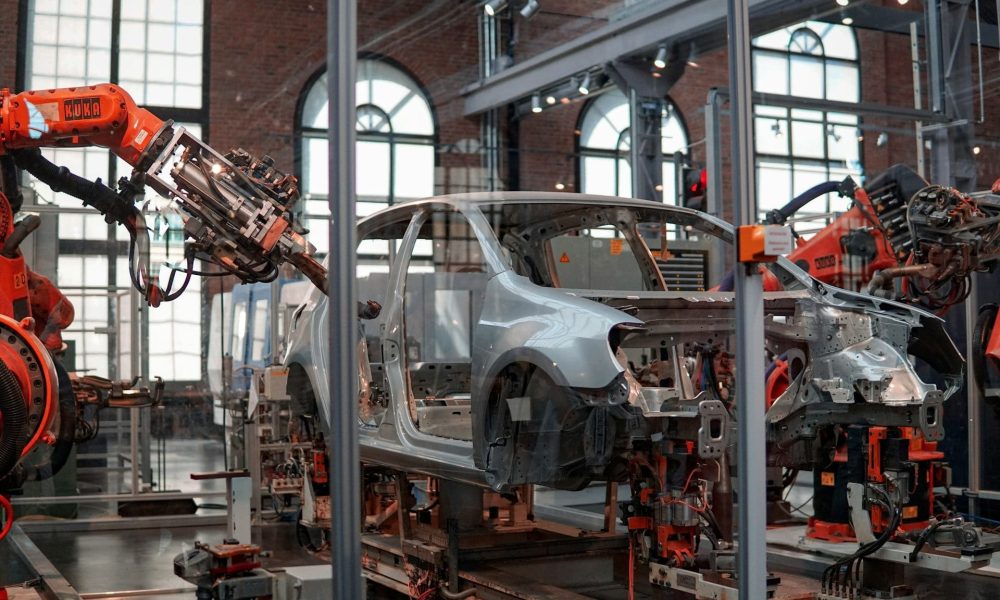
Automation is growing in nearly every area of manufacturing, and automation in the automotive industry is no exception. Companies making vehicles have already been employing automation techniques for years, but the growth of machine learning is opening new possibilities with every passing advance. Every new development sends shockwaves throughout the industry, and the benefits are numerous. Manufacturing plants can produce better vehicles faster than ever while making things safer for the humans in these facilities. The advent of 3D printing even means that some parts are made in the buildings that need them for their assembly lines. Knowing three ways industrial automation is helpful in automotive manufacturing helps you become more knowledgeable about the industry.
1. Robots Can See What They’re Doing
One of the most significant advances in automating automotive manufacturing has been the development of a robotic vision that lets machines and robots visualize their local environment and perform precision tasks that were previously not possible or practical with regular robot arms. A robot wrist can feature a laser camera array that provides immediate data and feedback, and it can use this input to install parts accurately, do arc and spot welding, and even do painting, sealing, and coating. Robots can see and follow a programmed path across large surface areas with minimal waste. Specific applications can also include primers, sealants, and adhesives.
2. 3D Printing Accelerates Operations
The concept of 3D printing is the common name for additive manufacturing, and it’s a growing tactic in automotive manufacturing. While 3D printing started as a niche field done by many hobbyists or in narrow laboratory circumstances, it’s now possible to make significant parts regularly. Using 3D printing in manufacturing settings lets vehicle makers create some parts rather than order and have them shipped in. Perhaps more importantly, the bottom-to-top nature of 3D printing means that certain welds are no longer necessary to merge components and parts permanently. More vital parts can be made automatically and faster.
3. Cobots Work With Humans
Automation in the automotive industry often removes the need for human workers along the assembly lines, but it’s impossible to get rid of all of them. What’s happening in many cases is human beings working alongside robots, known as cobots. These automated machines can handle tasks humans shouldn’t do for health and safety reasons. They include repetitive tasks that can wear down a person’s health over time and dangerous responsibilities that can hurt a person immediately. Specific examples include transferring metal stamps and pouring molten metal in foundry situations. Loading and unloading CNC equipment is another helpful application.
Automation in Automotive Manufacturing Will Continue To Grow
Automation has been around in automotive manufacturing for a long time, and it’s a crucial aspect of making vehicles now. However, it’s not going anywhere and will likely increase usage over time. Automated systems and robots can keep things moving on assembly lines and handle particular tasks, such as installing specific metals and safety components. Using robots in vehicle manufacturing increases the quality of the vehicles coming off the line with shorter production times and fewer injuries among the human workforce. As robotics advance and AI technology develops further, the possibilities of what can happen in vehicle production are endless.




