
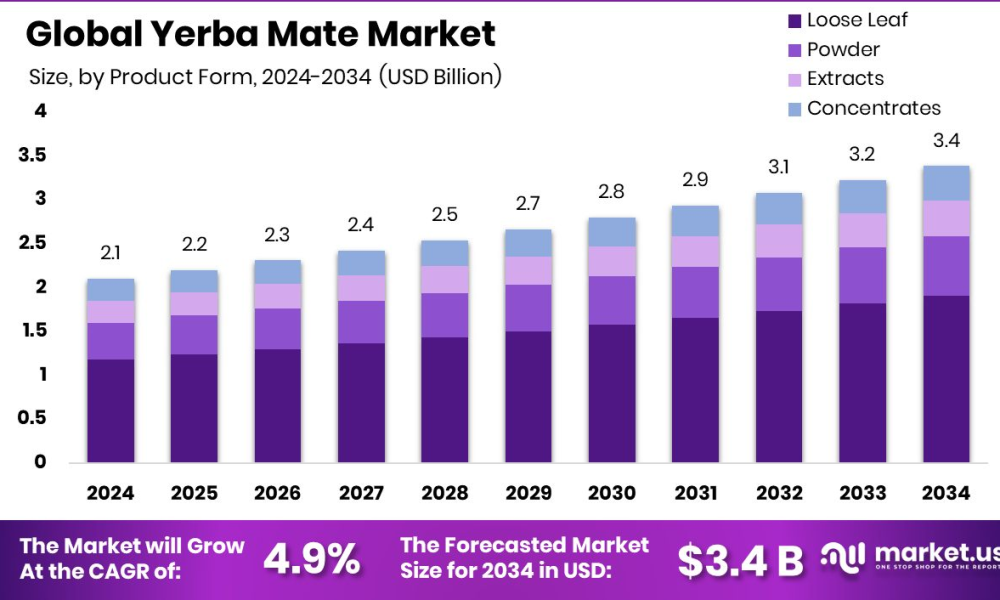
According to market.us, The global yerba mate market is projected to reach approximately USD 3.4 billion by 2034, rising from USD 2.1 billion in 2024, and is expected to grow at a compound annual growth rate (CAGR) of 4.9% between 2025 and 2034. This steady growth is largely supported by increasing global demand for natural wellness products and functional beverages. In 2024, the Asia-Pacific region emerged as a key player, capturing 45.9% of the global yerba mate market, driven by rising health awareness and growing interest in clean-label energy drinks.
Yerba mate, a traditional beverage made from the dried leaves of the Ilex paraguariensis plant, is deeply rooted in the culture of South American countries such as Argentina, Paraguay, Uruguay, and southern Brazil. Typically consumed from a shared gourd, yerba mate offers a natural blend of caffeine, theobromine, and antioxidants—providing an energy lift without the overstimulation often associated with coffee. Its distinct earthy and mildly bitter flavor appeals to a wide range of consumers, whether served hot, cold, plain, or sweetened.
The market encompasses various product formats including loose-leaf, tea bags, ready-to-drink beverages, and dietary supplements. Originally popular in regional South American markets, yerba mate has gained international recognition as a healthy and energizing alternative to synthetic caffeinated drinks. With growing consumer preference for plant-based, functional beverages, yerba mate continues to expand its global footprint across North America, Europe, and Asia, reflecting broader shifts toward holistic wellness and natural energy sources.
Key Takeaways
- Global Yerba Mate Market is expected to be worth around USD 3.4 billion by 2034, up from USD 2.1 billion in 2024, and grow at a CAGR of 4.9% from 2025 to 2034.
- Loose leaf yerba mate dominates with 56.3%, preferred for its authentic brewing and traditional preparation experience.
- Unflavoured yerba mate leads at 68.1%, reflecting growing preference for natural, unaltered herbal beverage profiles.
- Residential end-use accounts for 74.9%, showing strong household consumption driven by daily wellness routines.
- Supermarkets and hypermarkets lead distribution with 38.6%, offering wide accessibility and variety for everyday shoppers.
- The Yerba Mate Market in Asia-Pacific reached USD 0.9 billion in 2024.
Access a Complimentary Sample of This Premium Report: https://market.us/report/global-yerba-mate-market/free-sample/
Factors Affecting the Growth of the Yerba Mate Market
- Rising Demand for Natural and Functional Beverages: As global consumers shift towards healthier lifestyles, yerba mate has gained popularity as a natural energy drink alternative to coffee and synthetic caffeinated beverages. Its rich blend of caffeine, theobromine, and antioxidants supports mental alertness and metabolic health, aligning with the rising preference for clean-label, plant-based wellness products.
- Expansion Beyond Traditional Markets: While yerba mate has long been a staple in South American countries such as Argentina, Uruguay, Paraguay, and Brazil, its popularity is rapidly growing in North America, Europe, and Asia-Pacific. Increasing awareness of traditional herbal drinks, coupled with globalization of wellness trends, has introduced yerba mate to new markets and consumer groups.
- Product Diversification and Innovation: Manufacturers are increasingly offering yerba mate in diverse formats, including ready-to-drink bottles, tea bags, flavored infusions, carbonated variants, and dietary supplements. This innovation broadens consumer appeal and provides convenient options that suit modern lifestyles, thus boosting retail penetration and overall market growth.
- Influence of Fitness and Sports Nutrition Trends: Yerba mate is being increasingly marketed as a pre-workout supplement or recovery beverage due to its natural stimulant and antioxidant properties. Its perceived benefits in enhancing stamina and reducing fatigue make it a favored choice among fitness enthusiasts, contributing to its rising demand in the sports nutrition segment.
- Increasing Penetration in Asia-Pacific Markets: The Asia-Pacific region accounted for 45.9% of the global market share in 2024, primarily due to the rising adoption of herbal and functional beverages. Growing urbanization, disposable income, and demand for non-traditional teas in countries such as China, Japan, South Korea, and India are further supporting market growth in the region.
Report Segmentation:
By Product Form Analysis: In 2024, loose leaf yerba mate emerged as the leading product form, holding a significant 56.3% share of the market. This dominance reflects strong consumer preference for traditional brewing techniques and the full-bodied flavor that loose-leaf formats provide. Popular in countries such as Argentina, Uruguay, and Paraguay, this form has gained global acceptance for its authenticity and perceived natural quality. Health-conscious consumers and eco-aware buyers are increasingly opting for loose leaf due to its minimal processing and reduced packaging waste. Additionally, the ritual of preparing loose-leaf yerba mate appeals to younger consumers embracing wellness routines, mindfulness, and customization in beverage preparation.
By Category Analysis: Unflavoured yerba mate led the market by category in 2024, capturing 68.1% of total sales. This clear preference underscores a widespread consumer inclination toward maintaining the beverage’s traditional earthy and grassy profile. Long-time users and cultural purists continue to favor unflavoured variants for their authenticity and medicinal properties, avoiding additives and artificial flavorings. The dominance of this segment also aligns with the global shift toward clean-label products. Many consumers prefer the versatility of unflavoured yerba mate, allowing them to personalize their drink with natural additions such as citrus or herbs rather than relying on pre-infused versions.
By End-Use Analysis: The residential segment dominated the yerba mate market in 2024, accounting for 74.9% of total consumption. This reflects the beverage’s deep-rooted presence in household consumption, particularly in regions where yerba mate is culturally significant and shared socially. Consumers favor brewing yerba mate at home using traditional accessories like gourds and bombillas, often viewing it as a ritual. Additionally, growing health consciousness has led to increased home-based consumption among individuals seeking natural caffeine alternatives to coffee. The growth of online retail and broader product availability in physical stores has further facilitated access to loose-leaf and unflavoured variants for home use.
By Distribution Channel Analysis: In 2024, supermarkets and hypermarkets led the yerba mate distribution segment, contributing 38.6% to total market sales. Their dominance is driven by consumer preference for in-person shopping experiences, where they can evaluate product variety, pricing, and freshness. These retail outlets often stock popular yerba mate forms such as loose leaf and unflavoured variants in natural or organic sections. Mass retailers also attract both loyal and new buyers through promotional offers and multi-pack deals, increasing product affordability. As these retail chains expand into suburban markets, yerba mate’s visibility and accessibility continue to rise, strengthening consumer trust and supporting sustained volume growth.
To Purchase this Premium Report@ https://market.us/purchase-report/?report_id=147544
Key Market Segments
By Product Form
- Loose Leaf
- Powder
- Extracts
- Concentrates
By Category
- Flavoured
- Unflavoured
By End-Use
- Residential
- Commercial
By Distribution Channel
- Supermarkets/Hypermarkets
- Convenience Stores
- Online Retailers
- Health and Wellness Stores
- Others
Regional Analysis
In 2024, the Asia-Pacific region held the leading position in the global yerba mate market, capturing 45.9% of the total market share and reaching a value of USD 0.9 billion. This regional dominance is primarily driven by the increasing popularity of herbal and functional beverages across key countries such as China, Japan, and Australia.
Consumers in these markets are showing heightened interest in natural sources of caffeine and products rich in antioxidants, positioning yerba mate as a favored alternative to conventional teas and synthetic energy drinks. The region’s health-focused trends and expanding wellness beverage segment continue to support the strong demand for yerba mate.
Market Key Players
- Honest Tea (The Coca‑Cola Company)
- ECOTEAS
- Yerba Crew
- Tata Consumer Products
- Aguantadora
- Unilever Plc
- Guayakí
- Santo Pipo SRL
- ROSAMONTE Hreñuk S.A
- Kraus SA
- Other Key Players
Refer More Related Reports:
- Biostimulant Market
- Methyl Methacrylate Market
- Plant-Based Energy Drink Market
- Azelaic Acid Market
- Food Grade Carbon Dioxide Market
Get in Touch with Us:
Market.us (Powered By Prudour Pvt. Ltd.)
Address: 420 Lexington Avenue, Suite 300, New York City, NY 10170, United States.
Contact No: +1 718 874 1545 (International), +91 78878 22626 (Asia).
Email: [email protected]



