
Market Overview:
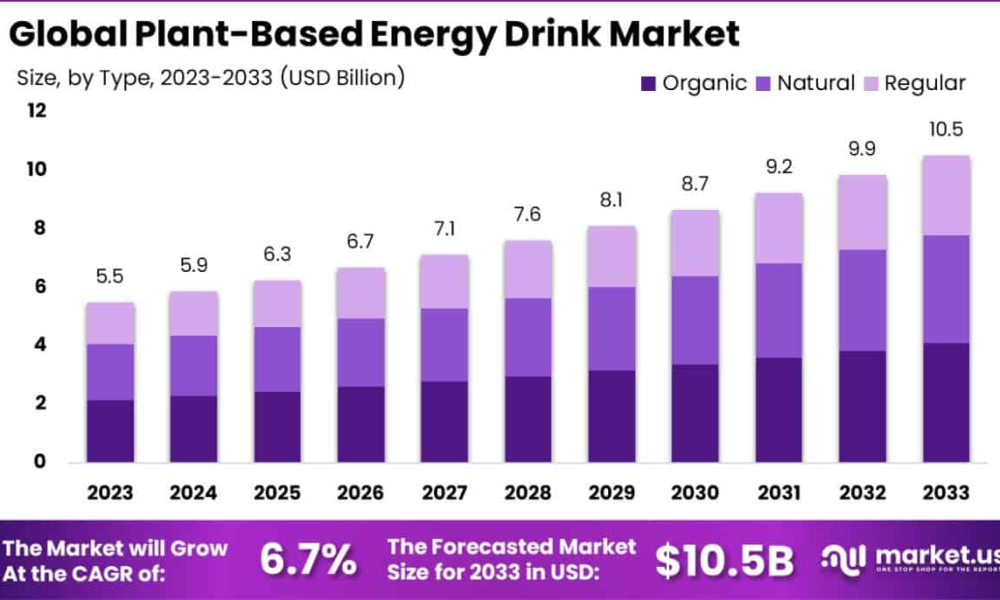
The global plant-based energy drink market is projected to reach approximately USD 10.5 billion by 2033, growing from USD 5.5 billion in 2023, at a compound annual growth rate (CAGR) of 6.7% between 2024 and 2033. North America currently dominates the market, accounting for 42.6% of the USD 2.3 billion valuation in 2023.
plant-based energy drink market are beverages primarily made from natural, plant-derived ingredients that aim to boost physical energy and mental focus without relying on synthetic additives. Commonly used components include herbal extracts like ginseng, guarana, and yerba mate, as well as added vitamins and minerals for enhanced functionality. This market segment represents a niche within the broader beverage industry, catering to consumers who prioritize health and sustainability. These drinks offer a natural alternative to traditional energy beverages, which often contain artificial additives and high sugar content.
Market growth is being driven by rising health awareness among consumers and a growing preference for clean-label, organic products. Innovations in flavor development and sustainable packaging are also playing a vital role in widening the consumer base. Demand is particularly strong among millennials and Gen Z consumers, who are increasingly embracing wellness-focused lifestyles and avoiding synthetic ingredients. Their purchasing behaviors are fueling the rise of plant-based functional beverages.
Opportunities in this market include the expansion into emerging economies and the creation of new, exotic flavor profiles that appeal to adventurous, health-conscious consumers. Brands also stand to gain by leveraging ethical and wellness-focused branding to enhance customer appeal and differentiate in a crowded market. Recent developments underscore the momentum in this space. For instance, Odyssey Elixir, a functional mushroom-based energy drink, raised $6.3 million in Series A funding to support product innovation and market expansion. This investment reflects growing investor interest in functional, plant-forward beverages.
Important Revelation:
- The global plant-based energy drink market is projected to reach USD 10.5 billion by 2033, growing at a CAGR of 6.7% from USD 5.5 billion in 2023.
- North America dominates the market with a 42.6% share, valued at USD 2.3 billion in 2023.
- These drinks use natural ingredients like ginseng and yerba mate to boost energy without synthetic additives.
- The market caters to health-conscious consumers seeking clean-label, sustainable alternatives to traditional energy drinks.
- Rising health awareness and demand for organic products are key drivers of market expansion.
- Innovations in flavors and eco-friendly packaging are attracting a broader range of consumers.
- Millennials and Gen Z are leading demand, prioritizing wellness and clean ingredients.
- Growth potential lies in developing regions and offering unique, exotic flavor options.
- Ethical branding and health-focused messaging enhance competitiveness in a crowded market.
Download Exclusive Sample Of This Premium Report (Including Full TOC, Table & Figures):
https://market.us/report/plant-based-energy-drink-market/free-sample/
Factors Affecting the Growth of the Plant-Based Energy Drink Market
1. Rising Health and Wellness Awareness
- Consumers are increasingly seeking clean label, natural alternatives to synthetic energy drinks, driving demand for plant-based options.
- The growing awareness about the negative effects of sugar, artificial caffeine, and preservatives in traditional energy drinks boosts the preference for natural, organic beverages.
2. Increasing Vegan and Flexitarian Population
- A global shift toward veganism and plant-based diets, especially in North America and Europe, has accelerated demand for plant-derived energy drinks.
- The flexitarian trend where consumers reduce meat and animal based consumption without going fully vegan also supports growth.
3. Expansion of Functional Beverages Market
- Plant based energy drinks are often infused with functional ingredients like matcha, green tea extract, yerba mate, ginseng, and B vitamins.
- The multifunctional nature (hydration + energy + health benefits) makes them appealing to athletes, fitness enthusiasts, and millennials.
4. Clean Label and Transparency Trends
- Brands offering transparency in ingredient sourcing, sustainable packaging, and “free-from” labels (e.g., gluten-free, non-GMO) attract eco conscious and health-aware consumers.
- Consumers prefer drinks with natural caffeine sources and minimal additives, aligning with holistic wellness movements.
5. Innovation in Flavors and Formulations
- Flavor innovations using superfoods (acai, maca, turmeric) and novel plant-based sweeteners (stevia, monk fruit) are capturing consumer interest.
- Ready to drink (RTD) formats and convenient packaging drive impulse buys and on the go consumption.
6. Rising Demand from Fitness and Sports Segments
- The growing number of gym goers, athletes, and yoga practitioners has expanded the customer base for plant powered energy drinks as pre workout or recovery options.
- Endorsements from sports influencers and partnerships with fitness events amplify brand visibility.
Report Segmentation:
By Type Analysis
In 2023, organic plant-based energy drink market led the market by type, capturing 39.7% of the segment share. This dominance reflects a growing consumer shift toward healthier and environmentally conscious choices. Rising awareness about the negative impacts of synthetic ingredients has fueled demand for organic alternatives.
Natural variants followed with a 32.1% market share, supported by the appeal of clean-label products and transparency in production. Consumers favor these minimally processed drinks for their nutritional value and ingredient authenticity.
The regular segment maintained a solid 28.2% share, indicating that despite the trend toward natural formulations, traditional energy drinks still appeal to a notable portion of consumers. However, the momentum is clearly with organic and natural products, which are reshaping the segment landscape.
By Product Type Analysis
Non-alcoholic plant-based energy drink market dominated the product type segment in 2023, accounting for 79.7% of the market. This overwhelming preference aligns with rising health consciousness and the demand for energy-boosting beverages that support active lifestyles without alcohol.
Alcoholic variants held a 20.3% share, serving a niche group of consumers seeking hybrid drinks that combine energy-boosting properties with social beverage appeal. While smaller in share, this segment highlights opportunities for innovation in adult-oriented functional drinks.
By Ingredients Analysis
Caffeine emerged as the most common ingredient in plant-based energy drink market in 2023, featured in 31.2% of formulations. Its well-known energizing effects and consumer trust make it a staple in the segment.
Taurine followed with a 21.8% share, valued for its support of neurological function and hydration. Guarana, contributing 18.6%, is favored for its natural caffeine content and sustained energy release. Other notable ingredients include Vitamin B (12.4%), L-Carnitine (9.5%), and Antioxidants (6.5%), each offering functional benefits aligned with health and wellness trends.
By End-User Analysis
Adults were the primary consumers of plant-based energy drink market in 2023, making up 62.3% of the market. Their preference is driven by health-focused lifestyles and the need for clean energy solutions in professional and fitness routines.
Teenagers accounted for 25.4%, often drawn to trendy flavors and branding. Kids represented 12.3%, reflecting limited product targeting and parental caution regarding stimulant use among younger age groups. The adult segment’s dominance emphasizes the need for tailored marketing toward wellness-driven consumers.
By Distribution Channel Analysis
Supermarkets and hypermarkets led the distribution of plant-based energy drink market in 2023, with a 44.4% market share. Their broad product range, frequent promotions, and strong shelf presence drive high volume sales and consumer convenience.
E-commerce followed with a 27.8% share, gaining popularity among digital-savvy shoppers seeking convenience, variety, and detailed product information. Grocery stores (13.6%) and convenience stores (9.2%) continue to serve immediate and local demand. The remaining 5% comes from other channels, including specialty health stores and direct to consumer models, which cater to niche buyers seeking premium offerings.
To Purchase this Premium Report@ https://market.us/purchase-report/?report_id=134900
Market Key Segmentation
By Type
- Organic
- Natural
- Regular
By Product Type
- Non-Alcoholic
- Alcoholic
By Ingredients
- Taurine
- Caffeine
- Guarana
- Vitamin B
- L-Carnitine
- Antioxidants
- Others
By End-User
- Kids
- Teenagers
- Adults
By Distribution Channel
- Supermarkets/Hypermarkets
- E-commerce
- Grocery Stores
- Convenience Stores
- Others
Regional Analysis:
North America currently leads the global plant-based energy drink market, holding a dominant 42.6% share, valued at USD 2.3 billion. This strong market position is driven by a rising consumer shift toward health conscious and sustainable beverage options. The region benefits from well established distribution channels and high per capita spending on premium wellness products.
Europe ranks as the second largest market, supported by strict regulatory frameworks that promote plant-based alternatives and a growing population of health-focused consumers. Environmental awareness and the popularity of fitness lifestyles further contribute to the region’s demand for natural and organic energy drinks.
The Asia Pacific region is experiencing the fastest growth, propelled by increasing health awareness and rising disposable incomes in countries like China and India. Local availability of diverse plant-based ingredients and culturally aligned flavors also drive demand in this region.
The Middle East & Africa and Latin America, while currently smaller in market size, are showing steady growth. Urbanization, expanding middle class populations, and the growing influence of Western dietary trends are gradually boosting interest in plant-based energy drinks across these regions.
Competitive Landscape:
- BA Sports Nutrition, LLC.
- Clean Cause
- Garden of Life
- Guayakí
- Guru Energy
- Muci
- Nestlé
- Nightwatchdrink
- OCA Beverages
- Ocean Beverages
- PepsiCo
- Proper Wild, Inc.
- RIOT Energy
- Runa Energy Drink
- Tenzing Natural Energy Ltd
- Thin Energy Hydration
- ToroMatcha
- Yerbaé
Get in Touch with Us
Market.us (Powered By Prudour Pvt. Ltd.)
Address: 420 Lexington Avenue, Suite 300 New York City, NY 10170, United States
Send Email: [email protected]
Refer More Related Reports



