
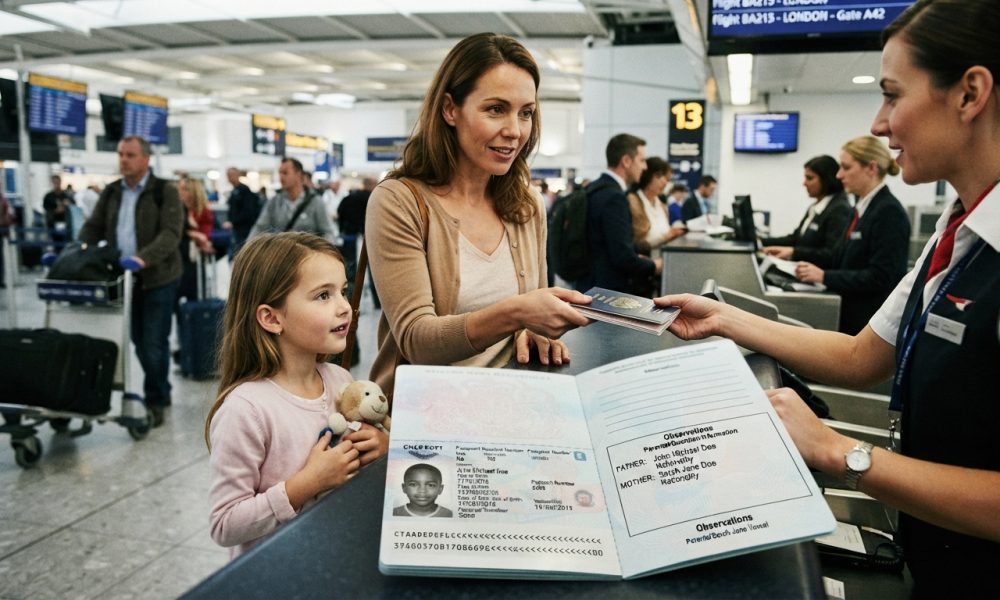
Family Information printed inside a passport can help establish relationships, although travel consent and supporting document requirements remain separate considerations.
WASHINGTON, DC, October 13, 2026 – Children’s passports issued by different governments can include significantly different family Information, with some countries printing parents’ or legal guardians’ names directly in the document while others keep those details primarily in separate civil registration and passport Application records.
Although passports primarily establish the holder’s identity and nationality for international travel, some issuing authorities include parental Information to support administrative Identification, link minors to registered family relationships, and provide additional details that immigration officers may review during border inspections.
The practice reflects differences in national passport legislation, civil registration systems, family law, and government Identification procedures, not a universal international requirement that every child’s passport display the names of their mother, father, or legal guardian.
For families undertaking international journeys, understanding the purpose and limitations of this Information matters because parental names on passports do not automatically establish custody rights, show permission to travel, or replace supporting documents required by foreign immigration authorities.
Children’s Passport Designs Differ Between Countries
National passport authorities determine which personal details appear within their travel documents, subject to international standards governing machine-readable passports, identity verification, document security, and the Information necessary to identify individuals crossing international borders.
Most modern passports display the holder’s full name, photograph, nationality, date of birth, document number, and expiration date. At the same time, additional observations or family Information may appear elsewhere within the booklet according to national administrative requirements.
Some governments incorporate parental names because their passport issuance procedures rely on civil registration records that identify family relationships, particularly when the applicant is a minor whose identity documentation was originally established through parental declarations.
Other countries keep comparable parental Information in government Application files without reproducing it in the passport, showing that identical family relationships can be documented through different administrative methods without changing the child’s nationality or legal status.
India Provides a Clear Example of Parental Information
India operates a passport issuance framework in which parental Information may appear within the document, with government procedures addressing the Identification of mothers, fathers, and legally recognized guardians under various family circumstances.
The Indian government’s Passport Seva documentation provides specific Application procedures and declarations for minors, including single parents, separated families, legal guardians, and situations where parental consent or identifying Information requires special consideration.
Indian passport instructions recognize that family circumstances vary widely, including divorce, remarriage, adoption, and guardianship arrangements that may affect how parental Information is recorded during issuance.
Authorities may therefore require additional declarations, civil records, or legal evidence before deciding which family details should appear in the passport, reflecting the need to keep Identification Information accurate without treating every household arrangement the same.
Parental Names Can Help Establish Family Relationships
When a child’s passport lists a mother or father, that Information can give immigration officers an additional reference when determining whether an accompanying adult has a documented family relationship with the minor.
For example, an officer reviewing a child’s passport may compare a printed parent’s name with Identification presented by an accompanying adult, which may help preliminary verification when the individuals have different surnames or travel documents issued by different countries.
However, matching names do not independently establish current parental responsibility because legal relationships and custody arrangements can change through adoption, guardianship decisions, judicial proceedings, or other events occurring after the passport was issued.
Consequently, parental Information should be understood as supplementary identifying evidence rather than a definitive legal determination concerning every adult authorized to make decisions about a child’s international travel or residence.
American Children’s Passports Follow a Different Approach
The United States generally issues individual passports to children without routinely printing both parents’ names as dedicated family-information fields on the principal biographical Information page, instead relying on Application procedures to verify relevant parental relationships.
American passport authorities establish those relationships by reviewing birth certificates, adoption records, court orders, guardianship documentation, and other acceptable evidence showing the applicant’s legal connection to the adults participating in the Application.
According to the United States Department of State’s official child passport instructions, children younger than sixteen generally must apply in person, with both parents or legal guardians providing approval unless an applicable exception permits a different procedure.
This approach lets American authorities verify parental involvement before issuing the document while keeping the passport focused on identifying the child, rather than displaying comprehensive family Information during subsequent international journeys.
A Parent’s Signature Is Different From Printed Information
American passport procedures include special instructions for children too young to sign their own passports, allowing a parent or legal guardian to complete the signature section in the prescribed format.
The adult typically prints the child’s full name, signs their own name, and identifies their relationship to the minor, creating a handwritten notation that meets the passport’s signature requirements.
However, this notation should not be confused with parental Information printed by the issuing government because the signature serves a separate administrative purpose and does not independently establish legal custody or unrestricted international travel authorization.
This distinction shows how identifying a parent in a passport can serve different functions, none of which necessarily resolves questions about consent, guardianship, or permission to remove a child from a particular jurisdiction.
Birth Certificates Remain Important Supporting Documents
Birth certificates frequently provide more comprehensive evidence of parentage than passports because civil registration records may identify the child’s parents, birthplace, date of birth, and other Information officially recorded under the relevant jurisdiction’s legislation.
For American families traveling internationally, these records can become particularly important when parents and children have different surnames, when an accompanying adult is a guardian, or when the passport contains no Information identifying family relationships.
A certified adoption decree or other legally recognized civil document may also establish relationships that ordinary passport Information cannot fully explain, particularly when family circumstances have changed since the original birth registration.
Nevertheless, a birth certificate records parentage rather than automatically showing that everyone with parental rights has approved a particular journey or that no court-imposed restriction affects the child’s international movements.
Travel Consent Is Separate From Proof of Parentage
An important distinction in international travel is the difference between proving that an adult is a child’s parent and showing that the adult has legal authority to undertake a particular international journey.
A passport displaying a father’s or mother’s name may assist Identification. Still, it does not necessarily show that the other parent has consented to the departure or that the accompanying adult has unrestricted legal authority.
The United States does not generally require proof of both parents’ permission for every minor departing internationally. However, individual foreign governments may impose additional consent requirements under their immigration and family legislation.
Families should therefore distinguish parental approval obtained during passport issuance from the documentation required for subsequent travel, because passport issuance permission does not necessarily replace authorization demanded by another country’s border authorities.
Traveling With One Parent Can Require Additional Documentation
Children traveling internationally with only one parent may face additional immigration scrutiny, especially when destination countries maintain procedures designed to prevent unauthorized parental removal or violations of existing custody arrangements.
Some jurisdictions require written permission from the non-traveling parent, while others recognize court orders establishing sole legal custody or alternative documentation demonstrating that the accompanying adult has sufficient authority.
Requirements may depend on the child’s nationality, country of residence, destination, family circumstances, and whether existing judicial decisions restrict international travel or allocate parental decision-making responsibilities between different adults.
Parents should therefore review the rules governing their intended journeys rather than assuming that a parent’s name appearing in the child’s passport automatically satisfies every applicable consent requirement.
Different Surnames Can Prompt Additional Questions
Parents and children often have different surnames because of marriage, divorce, remarriage, adoption, cultural naming conventions, or decisions about retaining or changing family names after major life changes.
If a passport identifies an accompanying parent, the Information may help immigration officers understand the relationship, but authorities can still request independent documentation if additional verification is needed.
A birth certificate, marriage certificate, adoption order, or legally recognized name-change document may help explain differences between surnames and establish the family relationship recorded within the relevant government’s civil registration system.
Such requests do not necessarily indicate suspected wrongdoing because immigration officials must sometimes resolve ordinary documentary inconsistencies arising from legitimate family arrangements, particularly when passengers hold documents issued under different national naming conventions.
Adoption Can Change Passport Family Information
Adopted children may possess passports issued before or after adoption proceedings, creating situations in which parental Information appearing in an existing document differs from the child’s current legally recognized family relationships.
Governments may establish specific procedures to update passport records after adoption, particularly when the child’s name, nationality, parental Information, or other identifying details change through a recognized judicial or administrative decision.
An adoption order may therefore be necessary to demonstrate current legal parentage even when an older passport identifies biological parents or previous guardians whose legal responsibilities have subsequently changed.
Families should obtain appropriate replacement documentation when required, rather than trying to alter existing passport Information or assuming historical family details necessarily establish current parental authority.
Custody Orders May Override Passport Information
Legal custody and parental responsibility are determined under applicable family legislation, so a parent’s name on a passport does not automatically grant unrestricted authority to remove the child internationally.
A parent named in the document may be subject to court-imposed restrictions, while another legally recognized guardian may have decision-making authority that the passport does not disclose.
Immigration authorities may therefore request custody orders, guardianship decisions, or other supporting records when circumstances create uncertainty about whether an accompanying adult has the legal authority needed for international travel.
Parents involved in custody disputes should obtain qualified legal advice before departure, particularly when proposed travel could conflict with judicial orders or applicable laws addressing international parental child abduction.
Children Traveling With Grandparents Need Preparation
Minors often travel with grandparents, other relatives, teachers, coaches, or family friends, creating situations where the accompanying adult may not have a parental relationship listed in the passport.
Some countries require written permission from parents or guardians that identifies the accompanying adult and confirms the scope of authorized travel, while other jurisdictions require different documentation or notarization procedures.
A passport listing parents’ names may help authorities identify the individuals responsible for granting permission. Still, it does not independently prove that those individuals authorized the accompanying adult to undertake the journey.
Families organizing these trips should prepare appropriate supporting records and emergency contact Information, ensuring that transportation providers and immigration authorities can establish the relevant relationships and permissions when required.
Dual Citizenship Can Complicate Children’s Travel
Children with more than one nationality may face different entry and departure requirements depending on which countries recognize them as citizens and which passports they present at different stages of international travel.
A child with American citizenship and another nationality may need different travel documents, especially if the second country requires its own citizens to enter or depart using nationally issued passports.
Some governments also impose parental consent requirements on their minor citizens that differ from those applicable to foreign visitors, creating potential complications when families assume American passport privileges govern every crossing.
Parents should review each child’s nationality status and applicable documentation requirements before departure, especially when citizenship acquired through descent or family relationships affects the country’s requirements for minor travelers.
Child Protection Influences Passport Procedures
Government efforts to prevent international parental child abduction have influenced passport issuance and border documentation practices, particularly where authorities seek to ensure that minors do not receive travel documents without appropriate parental participation.
The United States generally requires both parents or legal guardians to approve passport issuance for children younger than sixteen, subject to procedures recognizing sole authority, special family circumstances, or other qualifying exceptions.
American authorities also administer the Children’s Passport Issuance Alert Program, allowing eligible parents and guardians to request notification when certain passport applications involving their children are submitted for consideration.
These protective arrangements operate independently of whether parental names appear inside passports, demonstrating that effective safeguards rely on legal authority, government records, and appropriate consent procedures rather than document design alone.
Electronic Passport Chips Do Not Establish Parental Consent
Modern electronic passports contain digitally structured identity Information and Authentication features, but reading a chip does not automatically establish family relationships, current custody arrangements, or permission for a minor to travel internationally.
Information available through ordinary electronic passport inspection generally concerns the document holder’s biographical identity, facial Image, and relevant document Authentication records rather than comprehensive Information concerning family law or parental responsibilities.
A smartphone Application successfully reading a child’s electronic passport may therefore confirm access to identity data without establishing whether an accompanying adult is legally recognized as the child’s parent or guardian.
Immigration authorities must distinguish digital document Authentication from verification of family relationships because these procedures address different legal questions and may require entirely separate supporting evidence.
Family Information Raises Privacy Considerations
Printing parental names inside children’s passports introduces privacy considerations because Information concerning family relationships becomes visible whenever an organization or authorized official examines or copies the document during an international journey.
Governments must balance the administrative usefulness of displaying parental details against disclosing potentially sensitive Information that may be unnecessary for routine Identification or inappropriate under certain family circumstances.
These considerations can become especially important for children affected by adoption, separation, domestic violence, or legal changes in parentage, where historical details may no longer accurately reflect present family arrangements.
Appropriate government procedures for correcting or updating parental Information can therefore provide important protections, provided the changes are supported by lawful documentation and comply with the issuing authority’s requirements.
International Relocation Requires Accurate Family Records
Families relocating internationally may need more extensive documentation than ordinary tourists because residence applications, school enrollment, healthcare registration, and citizenship procedures can require formal evidence of parentage and guardianship.
A child’s passport may establish identity and nationality. At the same time, separate civil records demonstrate the relationships needed for dependent residence permissions, school enrollment, or family immigration benefits under the destination country’s legislation.
Professional international mobility advisers, including Amicus International Consulting, emphasize lawful identity documentation, accurate family records, and compliance with immigration requirements when evaluating international relocation and second citizenship arrangements involving children.
Families should prepare certified documents and translations when needed, recognizing that a passport identifying parents may help with preliminary verification but does not replace the formal evidence required for immigration or civil registration.
Families Should Verify Requirements Before Departure
International travel preparation for minors should start by confirming passport validity, citizenship status, destination entry requirements, and any special rules on parental consent, custody documentation, or proof of family relationships.
Parents should also determine whether authorities require original records, certified copies, translations, notarized statements, or other formalities, because requirements can differ by departure country, transit jurisdiction, and final destination.
When family circumstances involve adoption, guardianship, custody disputes, or multiple nationalities, advance verification becomes especially important because general travel instructions may not address the specific legal circumstances.
The objective is to ensure that accompanying adults can establish both the child’s identity and the legal basis for the journey whenever competent immigration authorities request supporting documentation.
Parental Names Are Helpful but Not Conclusive
Including parents’ names in certain children’s passports reflects national administrative decisions intended to link identity documents to family records. Still, the practice is not universal and cannot independently establish every legal relationship.
A passport may identify a child’s recorded parent without resolving current custody rights, guardianship responsibilities, travel restrictions, or the consequences of family circumstances that have changed since the document was issued.
American families should therefore treat printed parental information as potentially useful supplementary evidence while keeping birth certificates, adoption records, court orders, and consent documents appropriate to their specific international travel arrangements.
Ultimately, lawful international travel involving children depends on accurate passports, current family documentation, and compliance with applicable immigration and consent requirements, rather than relying exclusively on the parental names printed inside a travel document.




