
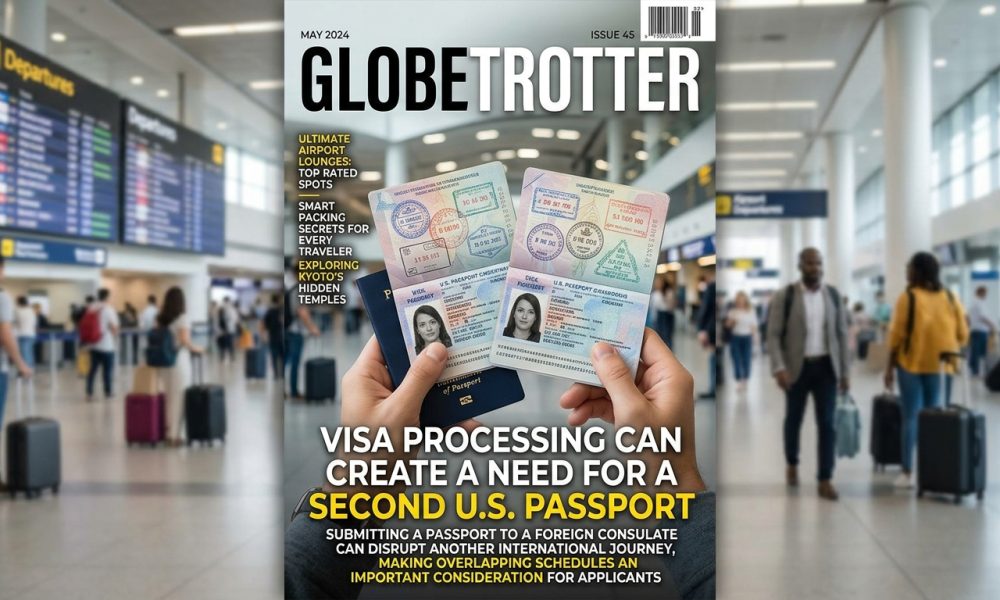
Submitting a passport to a foreign consulate can disrupt another international trip, so American business travelers, international consultants, and other eligible citizens seeking an additional passport book through official government procedures should consider overlapping schedules.
WASHINGTON, DC, October 23, 2026: American citizens who travel frequently for business, professional assignments, or international obligations may encounter significant scheduling problems when a foreign embassy or consulate retains their passport during visa processing while another overseas journey requires the same document.
Although most United States citizens ordinarily hold one valid passport book, the Department of State recognizes specific circumstances in which a second passport can help eligible travelers manage overlapping commitments without abandoning legitimate visa applications or postponing unrelated international travel.
The additional document offers a practical solution to certain administrative conflicts, especially when consular processing schedules are hard to predict. Still, it does not create a separate identity, guarantee foreign visa approval, or eliminate existing passport and immigration requirements.
For multinational employers, international consultants, airline professionals, and individuals with complex overseas schedules, understanding when a second passport may be appropriate can reduce unnecessary disruptions while ensuring applications comply with established federal eligibility standards.
Foreign Visa Processing Can Temporarily Remove a Passport From Service
Many foreign governments require applicants to submit their original passports when applying for certain visas, allowing consular officials or authorized processing centers to examine the document and complete administrative procedures associated with issuing the requested permission.
Depending on the destination and visa category, an embassy may retain the passport while reviewing supporting documents, conducting additional verification, or preparing a visa endorsement, leaving the applicant temporarily unable to present that passport for another journey.
This difficulty becomes especially significant when a business executive must attend meetings in several countries in a short period, especially when one destination requires lengthy processing and another demands immediate international travel.
A second passport can help qualifying citizens address this overlap by providing another valid travel document. At the same time, the first remains with the foreign consulate, provided the Department of State approves the additional issuance.
The U.S. Government Recognizes Overlapping Visa Applications
The United States Department of State’s official second passport book guidance identifies several qualifying circumstances, including situations where a foreign embassy or consulate cannot return an applicant’s existing passport before another planned international departure.
The same guidance recognizes frequent travelers who must apply for multiple foreign visas on an ongoing basis, offering examples involving international airline employees and people working for multinational businesses with substantial overseas responsibilities.
These provisions show that a second passport is not an ordinary travel accessory, because the government expects applicants to establish a specific need tied to recognized circumstances rather than relying solely on personal convenience.
The Department also identifies other qualifying situations, including certain conflicting entry markings and specialized passport endorsement requirements. However, visa processing conflicts remain one of the clearest practical reasons to request another book.
Second Passport Books Are Valid for Up to Four Years
Unlike a standard adult United States passport book, which ordinarily carries a ten-year validity period, a second passport book is issued for four years or less under the Department of State’s current policy.
The shorter validity period reflects the document’s specialized purpose. It requires frequent travelers to monitor expiration dates carefully, especially when foreign destinations require a minimum remaining validity before granting visas or admitting visitors.
A second passport receives a different passport number. It includes a special endorsement identifying its issuance category, while still representing the same American citizen and the same legally recognized personal identity.
Therefore, having two valid books does not create two independent nationalities or unrelated personal histories, and travelers remain responsible for providing accurate Information about their identities whenever airlines or government authorities request it.
Business Travel Schedules Can Become Difficult to Coordinate
International business assignments often involve short-notice meetings, client negotiations, industrial inspections, conferences, and other professional commitments that cannot always be postponed. At the same time, a foreign consulate processes a separate visa Application.
An executive might need to submit a passport for a planned assignment several weeks away while also preparing for another business engagement requiring international departure before the consulate expects to return the document.
Without an additional passport, the traveler may face a difficult choice: withdraw the pending visa Application, try to recover the original document, or cancel an unrelated business trip.
For individuals who satisfy the government’s criteria, a second passport can provide administrative flexibility by allowing one document to remain in the consular process. At the same time, another supports an otherwise authorized journey.
Visa Delays Have Wider Consequences for International Employers
Recent reporting shows how immigration processing delays can shape corporate travel decisions, especially when overseas appointments and document procedures create uncertainty about whether employees can complete scheduled international movements.
In December 2025, Reuters reported that Google and Apple warned certain employees about international travel because U.S. visa appointment delays could leave workers abroad longer than expected while they wait for necessary visa stamps.
Those reports concerned foreign nationals seeking U.S. visa documentation, not Americans requesting second U.S. passports. Still, they illustrated the broader business consequences when consular processing schedules interfere with planned international journeys.
For American passport holders applying for foreign visas, the administrative problem can differ because the physical passport itself may become the obstacle preventing travel to another destination.
A Second Passport Can Support Multiple Visa Applications
Some professionals must obtain visas for several countries during the same period, creating logistical complications when different diplomatic missions require the original passport for processing or endorsement.
A qualifying traveler may use a second passport to coordinate legitimate applications, where the relevant consulates accept it. However, individual foreign governments set their own documentation requirements and are not obligated to process applications simultaneously.
Before submitting either document, applicants should determine whether the relevant embassy accepts the proposed arrangement and whether visas already issued in another passport affect the eligibility or documentation requirements of the new Application.
This distinction matters because U.S. authorization to hold two passport books does not automatically require foreign governments to recognize every proposed document combination or accept applications under procedures that conflict with their own regulations.
Applicants Must Explain Why Another Passport Is Necessary
The State Department requires applicants to provide a signed statement explaining the need for a second passport, making the accuracy and relevance of the stated travel circumstances an important part of the Application.
A useful explanation describes the actual conflict, such as a passport retained for foreign visa processing when another international journey is approaching, or repeated overseas assignments requiring multiple applications during overlapping periods.
Applicants should avoid vague assurances of frequent travel when more specific circumstances are needed to establish eligibility, especially when the government must distinguish a legitimate operational requirement from ordinary convenience.
The statement should reflect genuine circumstances and comply with applicable requirements, because intentionally inaccurate Information on federal passport applications can create legal problems extending beyond the denial or delay of an additional document.
The Application Procedure Depends on Passport Availability
Applicants with a valid ten-year United States passport who can submit it with their second-passport Application may follow the applicable renewal procedure using Form DS-82 and the required signed statement.
However, individuals who cannot surrender their primary passport because it remains necessary for international travel may need to apply in person using Form DS-11, along with appropriate Identification and supporting documentation.
The Department of State provides separate instructions for these circumstances, recognizing that travelers seeking another passport may face precisely the difficulty of being unable to surrender the existing document.
Applicants should confirm which procedure applies before preparing forms or scheduling appointments, because using an incorrect Application method can create delays that further complicate an already demanding international travel calendar.
Travelers Should Plan Before Submitting Original Documents
The most effective approach to overlapping visa applications starts before you submit a passport to a foreign diplomatic mission, especially when you already know or can reasonably anticipate upcoming travel commitments.
Applicants should review expected processing times, confirm whether the foreign Authority requires physical possession of the passport, and consider whether the document will be available before other scheduled departures.
Where a genuine conflict exists, an eligible traveler can investigate the second-passport Application process before the original document becomes unavailable, reducing the risk of making urgent administrative decisions under unnecessary pressure.
Early planning does not guarantee government approval or a specific processing time, but it helps applicants gather the right documents and avoid relying on unrealistic assumptions about consular schedules.
Consular Processing Times Are Not Universal
Foreign visa processing periods vary by nationality, destination, Application category, appointment availability, security screening, and administrative workload, as the embassy or consulate reviews the request. establishes
An Application completed quickly for one destination may take much longer to examine elsewhere, making broad promises of guaranteed visa turnaround times unreliable unless supported by official procedures applicable to the circumstances.
Travelers should also anticipate the time needed to secure an appointment, the time spent processing the Application, and any additional requirements necessary to return the physical passport.
For business travelers maintaining demanding schedules, these uncertainties strengthen the case for evaluating legitimate documentation alternatives before submitting travel papers to a process whose completion date cannot be assured.
A Second Passport Does Not Guarantee Faster Visa Approval
Although another valid passport may let a traveler continue certain international activities during consular processing, it does not speed up the review of an individual visa Application or change foreign eligibility requirements.
Consular officers remain responsible for determining whether applicants meet the laws and procedures governing the requested visa, including requirements related to travel purpose, supporting evidence, personal history, and admissibility.
A second passport therefore addresses the availability of a travel document rather than the substantive reasons why a government approves, refuses, delays, or requests further Information concerning a visa.
Travelers should remain cautious about commercial offers claiming another passport automatically secures faster immigration decisions, especially when those claims aren’t supported by the responsible foreign government’s published procedures.
Passport Numbers Must Be Matched to Travel Reservations
Because the second passport differs from the primary passport, travelers must carefully manage the Information supplied to airlines, visa authorities, electronic travel authorization systems, and other organizations that require accurate travel details.
An international reservation may be associated with one passport. At the same time, a separate visa Application remains associated with the other, making it important to know which document must be presented for each journey.
Errors involving passport numbers, expiration dates, or identifying Information can cause boarding complications or require additional verification, especially when a destination’s electronic authorization is linked to a specific document.
Frequent travelers should keep accurate records of their valid documents and confirm that the passport they present meets the requirements of the airline reservation and the destination’s entry procedures.
Existing Visas Require Special Attention
A traveler with two valid passports may hold foreign visas in one document while planning to use the other for an unrelated international journey, raising practical questions about whether the permissions will be recognized.
Foreign governments set their own rules on whether visas in an older or different passport can be used with another valid document, and those requirements vary by country and visa category.
Travelers should confirm requirements before departure rather than assuming a valid visa can automatically transfer between passport numbers or be presented in any combination without additional documentation.
This preparation becomes especially important when one passport remains with a foreign consulate, because the traveler’s other book may not contain the authorization required for the intended destination.
The Additional Passport Is Not a Replacement for the Primary Book
A second passport supplements an existing valid passport under recognized circumstances, rather than replacing the ordinary document simply because the traveler prefers another Identification number or booklet.
The State Department’s eligibility framework begins with the applicant possessing a valid United States passport book, together with an appropriate qualifying reason for seeking another document.
Travelers whose passports have expired, been lost, or become damaged may need to follow different government procedures, since those circumstances do not automatically qualify them for a second concurrently valid book.
Understanding this distinction can keep applicants from choosing the wrong process when their need is a standard replacement, renewal, or correction of existing passport Information.
A Passport Card Does Not Solve the Same Problem
United States passport cards provide a convenient travel credential for certain eligible land and sea crossings. Still, they are not valid for international air travel and do not provide visa pages.
For an executive needing to board an international flight while the primary passport remains with a foreign consulate, the passport card generally cannot substitute for the required passport book.
Under the specialized policy for overlapping travel and other qualifying circumstances, the Department of State issues second passport books rather than second passport cards, reinforcing the different functions of these credentials.
Applicants should therefore evaluate their actual transportation and visa requirements rather than assuming that having multiple forms of United States Identification automatically resolves international document availability.
Large Passport Books Address a Different Travel Problem
Frequent international travelers sometimes need additional visa pages because numerous entry stamps, full-page visas, and other endorsements can exhaust a standard passport’s available space before the document expires.
A larger passport book can address page-capacity concerns where available. Still, it does not solve the difficulty created when a foreign consulate temporarily retains the physical document during an Application.
The distinction is important because a traveler with many international stamps may not need two passports. In contrast, a professional whose relatively new passport is unavailable during overlapping visa processing may have a legitimate second-book requirement.
Applicants should therefore identify whether their difficulty concerns insufficient pages, overlapping visa schedules, or another recognized circumstance before choosing the government procedure most appropriate to their needs.
Employers Can Improve International Travel Coordination
Corporate travel departments can reduce disruptions by maintaining accurate Information about employees’ anticipated destinations, visa requirements, passport expiration dates, and the practical availability of documents during planned international assignments.
When multiple business trips overlap, administrative personnel can identify potential consular conflicts and help eligible employees prepare appropriate second-passport applications before scheduling problems create urgent operational difficulties.
Employers should nevertheless preserve employees’ personal Information appropriately and avoid assuming that a corporate travel requirement overrides federal passport eligibility standards or the independent responsibilities of foreign immigration authorities.
A well-organized travel program combines reliable document planning, secure communications, accurate reservations, and realistic scheduling expectations rather than depending exclusively on emergency passport processing after an avoidable conflict develops.
Independent Consultants May Face Greater Administrative Pressure
Independent business consultants, international contractors, and self-employed professionals may face particularly complicated passport scheduling problems because they often coordinate overseas assignments without the dedicated administrative resources large corporations have.
A consultant serving clients in several countries might need to submit a passport for one visa while another customer requires attendance at an unrelated meeting during the same processing period.
If the consultant meets the State Department’s eligibility criteria, a second passport may reduce the administrative conflict and support the continuation of legitimate professional activities without interrupting an existing Application.
However, the additional document still requires a proper Application, accurate supporting Information, and careful compliance with each destination’s visa and entry requirements, rather than serving as a universal travel authorization.
Legal Name Changes Require Additional Passport Planning
Individuals who legally change their names may face separate documentation requirements when updating an existing passport or replacing a second passport previously issued under another recognized legal name.
The Department of State provides specific instructions concerning name changes affecting second passport books, with the appropriate procedure depending partly on how recently the document was issued and when the legal change occurred.
Applicants should preserve authentic supporting evidence and ensure that current Identification remains consistent with official records, particularly when foreign visas or electronic travel permissions are associated with earlier passport Information.
A lawful name change does not automatically create eligibility for a second passport, nor does it eliminate the requirement to establish a continuing need under the government’s recognized criteria.
Second Passports Do Not Create Separate Legal Identities
Although two passport books have different numbers and expiration dates, both documents identify the same American citizen and remain associated with the person’s legally recognized identity under the relevant government records.
The arrangement should not be confused with obtaining a second citizenship or creating an unrelated personal history, because those matters involve entirely different legal procedures and eligibility considerations.
Travelers considering additional identity-related services can review the New Identity Services offered by Amicus International Consulting, while independently verifying all proposed legal procedures and government documentation requirements.
A second United States passport cannot legitimately erase existing debts, criminal proceedings, immigration records, or other legal responsibilities, and it must never be presented as a means of avoiding lawful Identification.
Private Travel Arrangements Still Require Accurate Identification
Executives using private aviation, exclusive accommodation, or confidential travel advisers may appreciate the convenience of an additional passport, particularly when overlapping visa applications interfere with a complicated international itinerary.
Nevertheless, discreet travel arrangements do not eliminate immigration inspections, passenger Information requirements, or the need to present accurate Identification to transportation operators and competent government authorities.
A second passport may provide legitimate scheduling flexibility without creating anonymity, because officials can continue examining nationality, document validity, visas, and other relevant Information under the laws governing international travel.
Privacy-conscious travelers should therefore distinguish professional confidentiality from attempts to misrepresent identity, ensuring they obtain and use any additional documents through recognized procedures.
International Travel Restrictions Remain Independently Applicable
An applicant may meet ordinary second-passport eligibility requirements while still facing separate legal circumstances affecting passport issuance, possession, or international travel, so individualized assessment matters when court orders or other restrictions exist.
An additional passport does not automatically modify criminal court release conditions, authorize travel prohibited by a valid order, or eliminate the consequences of failing to comply with applicable government requirements.
Individuals with unresolved legal matters should seek qualified advice before submitting passport applications or planning international travel, especially when existing restrictions involve surrendering documents or permission to leave a jurisdiction.
The Department of State retains Authority over passport issuance. At the same time, other competent courts and agencies exercise their own legal responsibilities, so another document’s availability cannot resolve every travel restriction.
Emergency Travel Requires Its Own Administrative Assessment
Unexpected family emergencies, urgent commercial assignments, and changes in international schedules can create legitimate reasons to seek rapid passport assistance. Still, emergency circumstances do not automatically satisfy the separate rules governing second passport issuance.
The State Department maintains different procedures for routine, expedited, and urgent passport services, so applicants should identify whether they need a replacement document, accelerated processing, or a second valid book.
Travelers should avoid assuming that a foreign consulate will release a passport immediately upon request, because its document-handling procedures may involve administrative requirements beyond the traveler’s preferred departure date.
When an unexpected conflict develops, applicants should communicate through appropriate official channels and seek advice concerning available options rather than relying on unsupported commercial promises of guaranteed immediate approval.
Document Security Remains Essential When Holding Two Passports
Having two valid passport books increases the number of important government documents a traveler must protect, especially when one stays with a consulate and the other travels with the individual.
Travelers should keep accurate records of which passport was submitted for processing, where the original documents are held, and whether any replacement or return arrangements require further administrative confirmation.
Lost or stolen passports raise separate security and reporting concerns, so comply promptly with government instructions rather than treating the second book as a reason to ignore issues affecting the original.
Appropriate document management supports both personal security and reliable travel administration, helping prevent unnecessary confusion when several governments or commercial organizations require Information from different passport records.
Second Passport Approvals Remain Subject to Government Review
A qualifying circumstance does not eliminate the need for a properly completed Application or authorize a private provider to guarantee issuance before the Department of State completes its review.
Applicants must meet applicable documentation requirements, submit the relevant forms, provide a signed explanation of need, and follow government instructions on photographs, fees, and supporting materials.
Incompletdelaycan interfere with processing, while inaccurate Information can raise more serious concerns, making case escalation particularly important when another international departure is approaching.
Professional advisers may assist with organizing legitimate travel arrangements, but the legal decision to issue a second passport belongs to the authorized United States government agency.
Future Visa Technology May Change Some Administrative Pressures
Electronic visas and digital Application platforms may reduce the need to submit physical passports in certain jurisdictions, potentially changing how often travelers face conflicts caused by consular retention of original documents.
However, digital processing does not operate uniformly across countries, and some visa categories still require physical passports, appointments, additional verification, or other procedures set by the responsible foreign government.
Travelers should therefore assess the destination’s actual requirements rather than assume that the growing availability of electronic visas has eliminated the practical need for all second-passport applications.
For internationally active professionals, the most reliable approach remains careful preparation based on current official requirements, realistic scheduling, and accurate documentation appropriate to each planned journey.
The Future of Overlapping Travel Depends on Better Passport Planning
As multinational companies, international consultants, and other professionals maintain demanding overseas schedules, the practical challenges of simultaneous visa processing and international departures will remain relevant to travelers who qualify for additional documentation.
A second United States passport book can help resolve specific conflicts by allowing one genuine government document to support a visa Application while another remains available for separate authorized travel.
This arrangement requires ongoing attention to validity periods, passport numbers, foreign visa requirements, and applicable Identification procedures to ensure administrative flexibility does not create unnecessary inconsistencies across official travel records.
Ultimately, visa processing can create a legitimate need for a second United States passport when overlapping international commitments make a single document unavailable. Still, successful planning depends on verified eligibility, truthful applications, accurate records, and compliance with the separate requirements established by foreign governments.




