
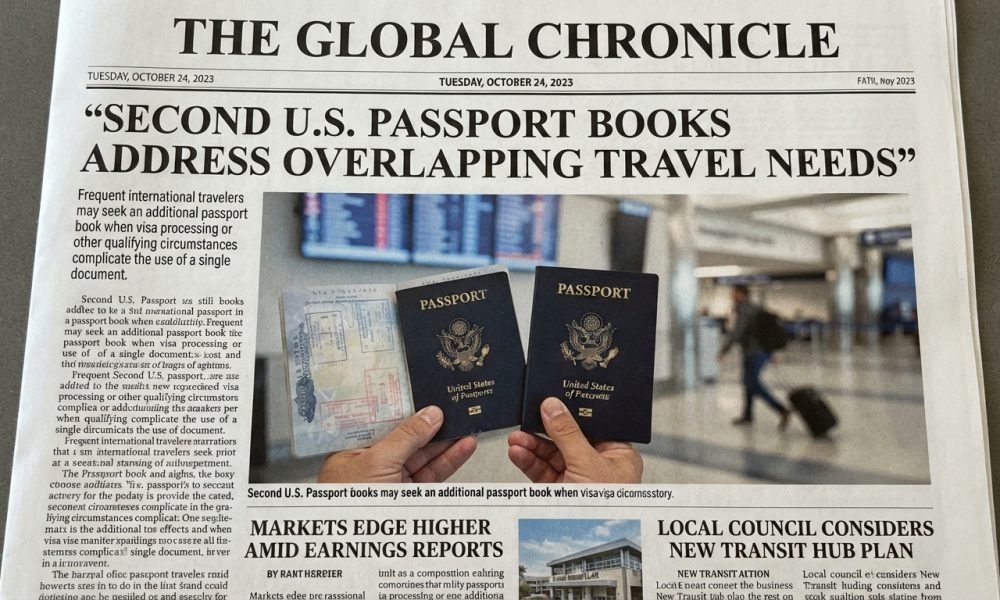
Frequent international travelers may seek a second United States passport book when visa processing, conflicting entry markings, or overlapping business commitments make a single document impractical. However, eligibility depends on specific State Department requirements.
WASHINGTON, DC, October 23, 2026: American business executives, international consultants, airline professionals, and other frequent travelers may qualify for a second United States passport book when overlapping international commitments make it difficult to complete legitimate journeys using only one passport.
Although most American citizens travel with a single passport book, the United States Department of State recognizes circumstances where a second, separately numbered document can help eligible travelers manage visa applications, conflicting entry requirements, and complex international schedules.
The additional document is not a replacement identity, an alternative nationality, or a way to avoid immigration scrutiny, but an officially issued U.S. travel credential designed to address specific practical difficulties qualifying passport holders may face.
A Second U.S. Passport Book Serves a Specific Travel Purpose
A second United States passport book lets an eligible American citizen hold two valid passport books simultaneously, providing flexibility when the primary document cannot conveniently support legitimate international travel arrangements involving several countries.
The Department of State evaluates applications based on established eligibility requirements, so ordinary convenience, a preference for collecting passports, or a general desire for additional Identification does not, by itself, establish entitlement to another book.
Both documents represent the same United States citizen, contain identifying Information associated with that individual, and remain subject to passport regulations, lawful government oversight, and the immigration requirements imposed by foreign destinations.
An additional passport can be especially useful when international business responsibilities involve extensive travel, unpredictable schedules, and foreign visa procedures that require applicants to surrender a physical passport for examination.
Visa Processing Can Create Scheduling Conflicts
One of the clearest reasons to request a second passport is when a foreign embassy or consulate must retain an applicant’s existing passport while processing a visa for an upcoming international journey.
During that period, the traveler may face an unrelated business trip that requires a valid passport, creating a practical conflict between completing the visa Application and departing on schedule for another destination.
For example, an executive whose passport is undergoing visa processing for one country may need to attend an urgent conference elsewhere, making an additional valid passport potentially useful for avoiding unnecessary disruptions.
The State Department recognizes this type of overlapping travel requirement, provided the applicant demonstrates an appropriate need and follows the official Application procedures rather than assuming that frequent international travel automatically guarantees approval.
The State Department Recognizes Several Qualifying Circumstances
According to the United States Department of State’s official guidance on second passport books, eligibility can arise from frequent international travel involving multiple visa applications, delayed return of passports undergoing consular processing, and problems associated with certain foreign entry markings.
The Department also recognizes specific circumstances involving special travel validations, preserving existing visas, emergency endorsement changes, and situations requiring additional endorsements that cannot fit on the available passport pages.
These examples show that eligibility extends beyond a single scenario in which an embassy holds a passport. However, each Application must still establish a legitimate reason consistent with the government’s published requirements.
Travelers should review the current official criteria before submitting an Application because eligibility, supporting statements, document submission methods, and other administrative requirements can depend on the particular circumstances involved.
Second Passport Books Have Shorter Validity Periods
A standard adult United States passport book is generally issued with a ten-year validity period. In contrast, a second passport book has a maximum validity of four years under current State Department policy.
The shorter validity period reflects the additional document’s specialized purpose and distinguishes it from an ordinary replacement or renewal intended to serve as the person’s principal passport for international travel.
A second passport also receives a different passport number. It carries a special endorsement identifying its issuance category, but it remains an authentic United States passport issued by the competent Authority.
Travelers with overlapping international commitments must therefore monitor both passports’ expiration dates independently, especially when destinations impose minimum remaining-validity requirements that can affect boarding or admission.
Two Passports Do Not Mean Two Different Legal Identities
Having two valid United States passport books does not create two separate citizens, erase previous travel records, or authorize the holder to provide conflicting Information about nationality, legal names, or personal history.
Both passports represent the same individual, even though their document numbers and expiration dates differ, meaning that applicable immigration, financial, and judicial responsibilities continue to attach to the passport holder.
Travelers should distinguish this legitimate arrangement from commercial claims suggesting that multiple passports automatically provide anonymity, conceal historical identity connections, or prevent authorized border authorities from conducting ordinary Identification procedures.
A second passport provides administrative flexibility for qualifying travelers rather than a separate personal history, and its lawful use still depends on accurate Identification and compliance with applicable travel requirements.
Conflicting Entry Markings Can Complicate International Travel
Some international travelers face difficulties when a foreign destination reviews passport stamps or visas from previous visits to certain countries, especially when diplomatic relations or national entry policies create restrictions.
The State Department recognizes that certain entry markings may justify a second passport Application when they could cause a destination to refuse a visa or entry.
However, having a second passport does not eliminate a destination’s Authority to ask about previous travel, other passports, or relevant immigration history, and applicants must answer required questions truthfully.
Travelers should also avoid relying on outdated assumptions about particular countries because diplomatic relationships, visa policies, and entry restrictions can change independently of the rules governing American passport issuance.
Frequent Business Travel Can Establish an Ongoing Need
Employees of multinational corporations, international airlines, consulting firms, and organizations operating across several regions may face recurring situations where multiple visa applications and international departures overlap.
These professional obligations can make a second passport valuable when legitimate business schedules require continuous access to travel documentation while the primary passport is temporarily unavailable for another authorized purpose.
Nevertheless, applicants should explain the actual circumstances creating the need, including how their travel patterns and visa requirements make reliance on a single passport impractical.
A general statement that the applicant enjoys traveling or anticipates future vacations may not show the same necessity as a documented pattern of overlapping business commitments.
Application Procedures Depend on the Available Primary Passport
The State Department provides different Application instructions depending on whether the individual can submit a valid ten-year passport with the request for an additional book or must retain it for ongoing travel.
Applicants who can provide the existing passport may qualify to use the renewal procedure involving Form DS-82, together with the signed statement explaining why a second passport remains necessary.
Those unable to surrender their primary passport because of overlapping travel requirements may need to follow an in-person procedure using Form DS-11 and the supporting materials required for that Application.
Determine the specific Application route from current government instructions, because using an inappropriate form or omitting supporting documentation can delay processing and interfere with planned international commitments.
A Written Explanation Supports the Application
Applicants requesting a second passport must explain the circumstances that establish their need, giving the Department of State a factual basis to evaluate whether the request falls within recognized eligibility categories.
A well-prepared statement should accurately describe relevant international travel requirements, such as simultaneous visa applications, foreign consular processing, recurring business travel, or entry difficulties associated with particular passport markings.
The explanation should reflect genuine circumstances rather than exaggerated urgency or invented travel requirements, because passport applications and supporting statements must comply with applicable legal standards governing Information submitted to federal authorities.
When documentary evidence is available, applicants should follow current instructions on required materials rather than assuming unsupported personal assurances will satisfy the government’s eligibility review.
Two Valid Passport Books Require Careful Record Management
Holding two passport books adds administrative responsibilities because each document has its own number, expiration date, endorsement Information, and potential links to foreign visas or travel authorizations.
Travelers should keep accurate records identifying which passport they used for a particular reservation or Application, so airlines and relevant authorities receive the correct document Information when required.
An administrative error involving an outdated passport number can complicate matters when airline records, electronic travel authorizations, or other destination-specific permissions link to a different passport.
The Department of State advises holders of second passport books to update relevant Trusted Traveler account Information with the passport intended for travel, reinforcing the importance of consistent documentation.
A Second Passport Does Not Replace a Passport Card
The United States passport card serves a different function than a passport book, providing a smaller Identification credential for specified land and sea travel to Canada, Mexico, Bermuda, and certain Caribbean destinations.
A passport card is not valid for international air travel and lacks the visa pages and broader travel utility of a standard United States passport book.
The Department of State specifically issues additional passport books under its second-passport policy rather than creating a separate category of second passport cards for the same overlapping travel needs.
Travelers should therefore distinguish the benefits of holding a passport book and card from the specialized eligibility requirements governing simultaneous possession of two valid passport books.
Passport Redesign Plans Bring New Attention to Frequent Travelers
The needs of frequent international travelers have also become part of broader discussions about passport design, document capacity, and the administrative efficiency of producing official United States travel credentials.
In October 2026, Condé Nast Traveler reported planned changes to the United States passport Application system and passport design, including a shift toward a standardized 38-page passport book.
The State Department announced the proposed transition in April 2026, saying the next redesigned passport series was expected to roll out in 2028 and would replace the current 26-page and 50-page options.
For frequent travelers accustomed to larger passport books, the planned change may make it more important to monitor remaining visa pages and renew documents when needed. However, it does not change second-passport eligibility on its own.
A Larger Passport Book and a Second Passport Are Different Solutions
Some travelers need additional visa pages because they regularly receive entry stamps, full-page visas, or endorsements during international travel, creating a documentation problem separate from simultaneous passport availability.
Where available under the current passport design, a larger ordinary passport may offer a practical solution for individuals who need more pages without facing conflicting visa-processing schedules.
A second passport may be more appropriate when the State Department’s qualifying criteria are satisfied, particularly where an existing book cannot be returned from consular processing before another legitimate journey.
These options are not interchangeable because passport page capacity, overlapping visa applications, and foreign entry-marking restrictions create different circumstances that require careful consideration.
International Visa Rules Continue to Apply Separately
Having two United States passports does not eliminate visa requirements set by foreign governments, so travelers must independently meet the entry conditions for each intended destination.
Depending on the country, those requirements may include prior visa approval, electronic travel authorization, passport validity thresholds, supporting financial documentation, vaccination evidence, or additional conditions concerning the purpose of the journey.
A second passport can help eligible travelers manage documentation schedules, but it does not independently establish permission to enter another country or override requirements imposed by the destination’s immigration authorities.
Travelers should verify current rules directly with appropriate official sources before departure, particularly when itineraries involve several countries with different administrative procedures and passport validity requirements.
Passport Names Must Remain Consistent With Legal Identification
A second passport is issued to the same individual identified in the original document, so accurate personal Information matters throughout the application, airline reservation, and foreign visa processing process.
If an individual has legally changed their name, additional documentation may be needed to show the connection between previous and current identifying Information before government agencies can update the relevant passport records.
The State Department has specific procedures for replacing second passport books after a legal name change, with requirements that vary depending on when the change occurs and when documents are issued.
Applicants should follow those instructions rather than assume a new name automatically justifies a second passport or allows inconsistent personal Information across concurrently valid government documents.
Second Passports Do Not Eliminate Border Identity Checks
Airlines and immigration authorities may examine passport identity Information, electronic document security features, visas, passenger records, and other relevant details according to the laws governing a particular international journey.
A second passport has a different document number. Still, the holder remains the same individual, so the document cannot be used to misrepresent citizenship, identity, or other material Information requested by authorities.
Automated border processing and biometric verification may also compare the traveler with authorized identity records, depending on the destination and the technology used by the responsible authorities.
The legitimate benefit of a second passport is administrative continuity during complex travel, not immunity from border inspection, government Information requirements, or lawful scrutiny of existing documentation.
Privacy Planning Should Remain Separate From Passport Eligibility
Business executives and privacy-conscious travelers may prefer confidential itineraries, secure communication with advisers, and limited public disclosure of professional travel schedules, all of which can support legitimate personal security objectives.
Amicus International Consulting addresses related identity considerations through its New Identity Services, which should be evaluated in accordance with applicable laws, genuine government documentation requirements, and independent professional advice.
However, privacy preferences alone do not establish eligibility for a second United States passport, because the Department of State assesses applications based on specific travel needs rather than general requests for anonymity.
Travelers should therefore distinguish confidential travel planning from the separate governmental procedures required to obtain a second valid passport book for qualifying international circumstances.
Passport Restrictions Remain Applicable to Both Documents
Holding an additional passport does not, by itself, eliminate legal restrictions that may affect international travel, including court orders, passport limitations, or other government requirements involving the individual holder.
A person subject to judicial restrictions must comply with those obligations regardless of whether the State Department has previously issued one passport book or authorized simultaneous possession of two documents.
Similarly, a second passport does not guarantee that a government will permit departure or admission when separate immigration, legal, or security considerations require additional examination.
Individuals facing unusual legal circumstances should seek qualified advice before assuming an additional travel document changes obligations set by courts or competent government agencies.
Employers Should Coordinate Passport Requirements Early
Organizations whose employees travel frequently can reduce administrative disruptions by reviewing visa requirements, anticipated passport availability, destination schedules, and documentation deadlines before confirming overlapping international assignments.
Corporate travel departments should determine whether employees genuinely need a second passport, then coordinate the appropriate supporting statements and official applications without assuming every international assignment meets the government’s eligibility criteria. Planning also helps employers avoid unnecessary financial losses resulting from delayed visa applications, missed business meetings, and transportation reservations made without confirming that valid documents will be available.
The most effective approach combines accurate employee Identification, realistic visa-processing assumptions, and clearly assigned administrative responsibilities while preserving the traveler’s control over personal government documents.
International Consultants Face Distinct Administrative Challenges
Independent consultants operating across several countries may lack the centralized travel support available within multinational corporations, leaving them individually responsible for managing passports, visa applications, reservations, and changing business schedules.
When multiple clients need to travel internationally during overlapping periods, they may face the same passport availability issues as employees at larger organizations with dedicated travel departments.
A second passport can provide useful flexibility when the applicant satisfies official criteria. Still, the additional document also requires careful monitoring of expiration dates, foreign permissions, and applicable government Application procedures.
Consultants should keep accurate travel records and allow sufficient administrative time for visa processing, recognizing that having two passports does not eliminate other destination-specific requirements.
Emergency Travel Does Not Automatically Establish Second-Passport Eligibility
Unexpected family emergencies, urgent professional obligations, and rapidly changing travel circumstances can create genuine difficulties when a passport is unavailable, expired, or undergoing processing by another organization.
However, emergency travel assistance and second-passport eligibility remain different questions, because the Department of State provides several passport services governed by distinct requirements and administrative procedures.
Travelers facing urgent circumstances should review the applicable official options rather than assuming that an immediate need to depart automatically entitles them to a second passport book.
An authorized passport agency or consular office can determine which Application procedures apply based on the traveler’s documentation, location, urgency, and eligibility requirements.
Foreign Visas Must Be Managed With Particular Care
When a traveler has two valid passports, foreign visas and electronic travel authorizations may be tied to a specific document number, so careful record-keeping is essential before departure.
A visa issued in one passport should not be assumed valid for presentation with another document, because countries set their own rules for document combinations and recognition of existing permissions.
Travelers should confirm the destination’s procedures when their visa appears in a different passport than the one they plan to use for travel or when the original document is temporarily unavailable.
Failing to verify these requirements can cause unexpected boarding complications, even when the individual has two genuine United States passports and otherwise qualifies for entry.
Second Passport Applications Require Accurate Supporting Information
The Department of State evaluates passport applications using the documentation and statements required by the selected procedure, so accurate identifying Information and truthful explanations are essential to lawfully obtaining an additional passport.
Applicants should avoid exaggerated travel claims, fabricated embassy processing arrangements, or inaccurate statements concerning passport availability, because federal document applications carry legal responsibilities beyond ordinary commercial reservations.
A genuine business purpose does not excuse inaccurate Information, and applicants should correct misunderstandings through authorized channels rather than relying on unsupported assurances from private intermediaries.
Professional assistance may help organize documentation, but the government remains responsible for determining eligibility and issuing any approved second passport book according to its established procedures.
The Future of Second U.S. Passports Depends on Travel Demand
As international business expands across multiple markets, overlapping visa applications and consecutive overseas assignments will remain administrative challenges for American professionals whose work depends on reliable access to valid travel documents.
Changes to passport design, online Application services, and foreign visa technology may improve convenience over time. Still, those developments do not eliminate the need to distinguish specialized second passports from ordinary renewals.
For eligible travelers, understanding the shorter four-year validity period, distinct document number, supporting statement requirements, and appropriate Application procedure can make international travel arrangements more predictable and professionally manageable.
Ultimately, second United States passport books address genuine overlapping travel needs by allowing qualifying citizens to keep an additional valid document while preserving accurate Identification, compliance with foreign entry rules, and the United States Department of State’s continued Authority over passport issuance.




