
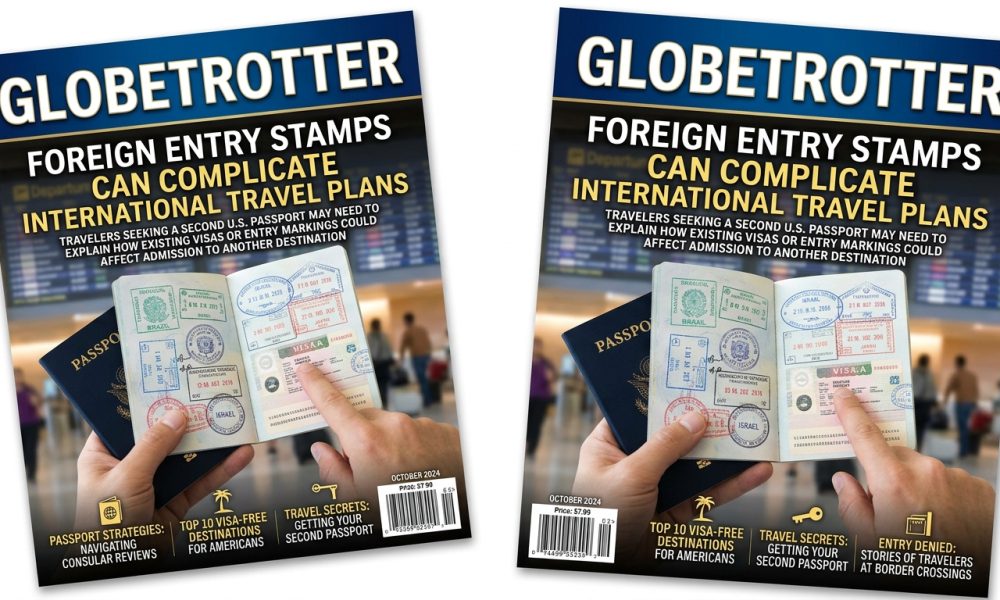
Travelers seeking a second United States passport may need to explain how existing visas, entry stamps, and international travel markings could affect admission to another destination, particularly when foreign governments maintain different restrictions concerning previous journeys.
WASHINGTON, DC, October 23, 2026: American citizens traveling internationally for business, professional assignments, humanitarian activities, or personal reasons may face unexpected immigration difficulties when their passports include entry stamps or visas from destinations with conflicting diplomatic or admission policies.
Although most passport stamps document previous journeys, some foreign governments review travel markings when determining visa eligibility or admission, which can create practical complications for an otherwise valid United States passport.
The United States Department of State recognizes these difficulties in its second-passport program, allowing qualifying citizens to request an additional passport book when certain travel markings could lead to visa refusal or denied entry.
For frequent international travelers, the key is understanding which destination-specific restrictions apply, how to document a legitimate second-passport request, and why an additional passport does not eliminate truthful disclosure obligations or government Identification requirements.
Passport Stamps Can Carry Consequences Beyond Travel History
Immigration stamps traditionally record a traveler’s arrival, departure, or admission to a foreign jurisdiction. However, modern electronic border systems increasingly keep these records without physical markings inside passport books.
While such stamps generally serve routine administrative purposes, they may become significant when another country maintains diplomatic restrictions, security concerns, or entry policies that restrict travel to particular foreign destinations.
A passport showing earlier travel can therefore raise questions unrelated to the holder’s United States citizenship, particularly when the destination’s admission rules consider previous visits to countries with which it maintains restricted relations.
These circumstances differ substantially from ordinary visa eligibility questions because the difficulty may arise from Information already visible in a valid passport rather than the applicant’s qualifications for the intended journey.
The State Department Recognizes Conflicting Travel Markings
The United States Department of State’s official second passport book guidance identifies certain foreign travel stamps as a potential reason for visa refusal or denial of entry. This is one reason an eligible American citizen may need another passport.
The government specifically acknowledges that Israeli visas and entry or exit stamps associated with certain Middle Eastern destinations can create difficulties, illustrating why passport markings may affect travel planning across countries with different admission policies.
The State Department does not issue an additional passport merely because an applicant dislikes the appearance of earlier stamps, since the recognized justification requires a genuine restriction or reasonably established immigration difficulty connected with specific destinations.
Applicants must explain their actual circumstances through the prescribed procedure, allowing the State Department to determine whether the request satisfies current eligibility requirements rather than relying on unsupported claims about regional political differences.
Lebanon Provides a Documented Example of Entry Restrictions
Lebanon illustrates the practical importance of examining destination-specific requirements because current United States travel guidance identifies restrictions affecting travelers whose passports contain Israeli visas or entry and exit stamps.
The State Department also warns that prior travel to Israel can have consequences even when the relevant passport shows no visible Israeli markings, showing that document appearance and underlying travel history are separate considerations.
This distinction matters because holding a second passport does not erase earlier travel or guarantee admission when the destination maintains restrictions based on an individual’s actual movements.
Travelers considering Lebanon must additionally account for the State Department’s current warning against travel there because of significant security risks, which remain separate from the administrative questions surrounding passport stamps.
A Second Passport Does Not Guarantee Admission
A second United States passport may address a recognized difficulty involving visible document markings. Still, the foreign government retains the Authority to determine admission under its own immigration laws and procedures.
Border officers may examine travel history, visa eligibility, nationality, intended activities, and other Information lawfully requested during an inspection, regardless of whether particular stamps appear in the passport presented.
An applicant who obtains an additional passport must therefore continue answering relevant official questions truthfully, recognizing that the document provides legitimate travel flexibility rather than authorization to misrepresent historical movements.
Travelers should avoid relying on commercial assurances that a passport lacking certain markings automatically ensures entry, because destination-specific laws can impose substantive restrictions that extend beyond the physical evidence in the document.
Foreign Entry Policies Can Change Over Time
Diplomatic developments, security conditions, regional agreements, and changes in immigration legislation can shape how governments assess past travel, making Information accurate several years earlier potentially unreliable for a current journey.
Travelers should consequently verify entry requirements shortly before departure and consult the appropriate foreign embassy or consulate when unusual passport markings raise questions about eligibility for admission.
A historical restriction does not mean every country in a region has identical rules, nor does it mean all travelers with the same stamps will face the same outcomes.
An accurate second-passport Application should therefore identify the actual destinations involved and explain the relevant immigration difficulty rather than relying on broad characterizations of entire regions or outdated online travel advice.
News Reporting Highlights the Importance of Passport Integrity
Physical passport markings can also create problems unrelated to diplomatic disagreements, particularly when travelers add handwritten notes, unofficial stamps, or other alterations that immigration officials consider inconsistent with document integrity requirements.
In January 2025, the Associated Press reported that authorities refused an American traveler admission to Poland after they found handwritten notes identifying locations and airports beneath existing passport stamps.
The incident involved unauthorized writing rather than conflicting diplomatic entry restrictions, but it illustrates how a passport’s physical condition and contents can influence an immigration inspection.
Travelers should distinguish ordinary official entry markings from unauthorized alterations, because a second-passport Application addressing diplomatic restrictions does not substitute for the separate procedures governing damaged or improperly modified documents.
Travelers Should Never Alter Existing Passport Stamps
Removing, concealing, overwriting, or otherwise altering official passport markings can compromise the integrity of a government-issued document and create serious difficulties during international travel or immigration inspection.
A traveler concerned about conflicting entry stamps should explore legitimate documentation options rather than modify the passport, because physical alteration may raise additional concerns beyond the original destination-specific restriction.
United States passport guidance prohibits unofficial markings outside designated areas, reinforcing the principle that travelers must preserve the document as issued rather than make unauthorized changes intended to influence foreign inspections.
Keeping an authentic passport protects the holder’s ability to present valid Identification while allowing competent authorities to evaluate the document under applicable laws and established inspection procedures.
Second Passport Requests Require a Written Explanation
American citizens seeking another passport must provide a signed statement explaining the circumstances that establish their need, including situations where travel markings may affect visa eligibility or admission to another country.
The explanation should accurately identify the relevant immigration issue and explain why the applicant is requesting the additional document, without inventing planned journeys or misrepresenting the applicant’s prior travel history.
When supporting documentation is available, applicants can follow official instructions on presenting relevant materials, ensuring the request aligns with the circumstances described in the signed statement.
A persuasive Application depends on genuine eligibility rather than elaborate wording, because the State Department independently determines whether the traveler’s circumstances justify issuing a second concurrently valid passport book.
Employer Letters Can Help Explain Business Travel Requirements
International business executives may receive assignments involving countries with conflicting entry policies, creating practical difficulties when earlier professional journeys leave passport markings that become relevant to a subsequent destination.
An employer can help explain these professional commitments through accurate correspondence describing the intended travel, the employee’s responsibilities, and the documentation issue affecting the proposed itinerary.
Such correspondence may provide useful context but does not replace the applicant’s required signed statement or guarantee that the State Department will approve the request for another passport.
Corporate travel departments should avoid overstating the problem, particularly where a restriction remains uncertain, or the employee has not yet confirmed the destination’s current requirements through authoritative sources.
Independent Consultants May Encounter Similar Complications
Self-employed professionals working across multiple international markets can face conflicting passport requirements without the administrative support available to employees of multinational corporations or organizations maintaining dedicated travel departments.
A consultant may have completed legitimate work in one destination before receiving an assignment elsewhere, creating an unexpected conflict when the new destination examines certain visas or historical entry markings.
Relevant client correspondence and genuine travel schedules may help establish the circumstances behind the request, provided the supporting Information accurately reflects actual professional commitments and applicable immigration requirements.
The key consideration remains the recognized passport need, not the applicant’s employment classification, because both corporate employees and independent professionals must meet the same federal eligibility framework.
Second Passport Books Carry Different Document Numbers
When the Department of State approves an additional passport, the new book receives a different number from the original document while still identifying the same American citizen.
This distinction creates practical responsibilities because airline reservations, electronic travel authorizations, foreign visas, and trusted traveler profiles may contain Information linked to a specific passport number.
Travelers should ensure that the document Information supplied for a particular journey matches the passport presented, especially when they made previous travel arrangements before the additional book was issued.
Manage an extra passport as a separate physical credential rather than a separate personal identity to preserve consistency across authorized records and avoid unnecessary complications during check-in or immigration procedures.
The Additional Passport Has a Shorter Validity Period
A standard adult United States passport generally remains valid for ten years, while a second passport book is issued for no more than four years under the State Department’s current policy.
The shorter validity period reflects the document’s specialized purpose: to address qualifying international travel difficulties rather than serve as an unrestricted duplicate of an ordinary passport.
Travelers should carefully monitor both documents’ expiration dates, especially when destination countries require passports to remain valid for several months beyond an anticipated arrival or departure date.
A second passport with insufficient remaining validity may not meet foreign entry requirements, even if it was originally issued to resolve a legitimate conflict involving visas or historical travel markings.
Applicants Must Choose the Appropriate Application Procedure
The State Department provides separate Application procedures depending on whether the individual can submit an existing valid ten-year passport with the request or must retain that document for ongoing travel.
Applicants who can surrender their existing passport may generally follow the applicable renewal process using Form DS-82, together with the signed explanation of the need for another book.
Those who cannot submit the primary passport may need to apply in person using Form DS-11 and the supporting Identification materials required under the government’s published instructions.
Choosing the right procedure matters because incomplete documentation, incorrectly submitted forms, or misunderstandings about the availability of the existing passport can delay an Application meant to address upcoming travel commitments.
Historical Visas May Still Be Important After Another Passport Is Issued
Some travelers have unexpired foreign visas in their original passports, raising questions about whether those visas remain valid when a second document becomes available for another international journey.
Foreign governments set their own requirements for visa validity, passport numbers, and the recognition of authorizations tied to specific travel documents, so assumptions about interchangeability may be unreliable.
Before traveling, individuals should verify which passport contains the required authorization and whether the destination permits presenting the intended documents under its current immigration procedures.
An additional passport can improve administrative flexibility without automatically transferring existing visas, extending their validity, or requiring another government to recognize permissions issued for a different document.
An Absence of Stamps Does Not Establish an Absence of Travel
Modern border systems increasingly employ electronic entry records, airline passenger Information, digital visas, and other administrative tools that can preserve travel-related Information independently of physical stamps inside passport books.
As a result, a document containing fewer visible markings should not be understood as proof that the holder has never visited particular countries or lacks previous immigration records.
Government authorities may maintain relevant Information according to their own laws and authorized systems, although the availability of historical data and the procedures for accessing it differ among jurisdictions.
Travelers must therefore distinguish the practical concerns created by visible passport markings from the broader legal responsibility to provide truthful Information concerning travel history when competent authorities require disclosure.
Multiple Passports Do Not Create Multiple U.S. Citizens
A second United States passport book represents the same nationality and legally recognized individual as the original passport, even when the two documents carry different numbers and expiration dates.
Do not confuse this arrangement with dual citizenship, which involves nationality recognized by more than one country and may create separate legal responsibilities for immigration, residence, taxation, or document use.
Nor does holding two books establish unrelated personal identities, erase prior government records, or exempt you from standard border verification procedures under applicable law.
Responsible international travel planning requires maintaining this distinction, particularly when commercial descriptions of multiple passports imply broader benefits than those authorized through the State Department’s legitimate second-passport program.
Privacy Concerns Should Remain Separate From Immigration Eligibility
Some internationally mobile individuals value discretion because their professional activities, family circumstances, or public visibility make it undesirable to disclose personal Information during business and private travel.
Amicus International Consulting offers identity-related advisory services through its New Identity Services, which prospective clients should evaluate in light of applicable law, genuine government documentation requirements, and independent professional advice.
However, a preference for confidentiality does not, by itself, establish eligibility for another United States passport, because the relevant policy addresses specific administrative issues involving valid documents and qualifying international travel circumstances.
Travelers can pursue legitimate commercial privacy while complying with mandatory Identification, truthful immigration declarations, and the legal responsibilities associated with official passport issuance.
Destination Risk Assessments Must Extend Beyond Passport Stamps
A traveler evaluating admission restrictions should also review current safety conditions, visa procedures, diplomatic developments, and official warnings affecting the proposed destination, rather than focusing only on the passport’s visible markings.
This broader assessment matters, especially when a country faces significant security risks, because an additional passport does not make the destination safer or eliminate concerns identified in government travel advisories.
Professional travel planning should consider whether the journey is necessary, which documentation is legally required, and whether legitimate travel alternatives exist when immigration restrictions or security conditions create substantial complications.
The objective is to support informed decision-making through accurate requirements and realistic risk assessments, without suggesting that another passport can resolve every problem associated with entering a country experiencing diplomatic or security difficulties.
Responsible Travel Planning Begins With Accurate Documentation
As American professionals continue traveling across countries with different diplomatic relationships and immigration policies, passport markings will remain a practical consideration when previous journeys affect eligibility for subsequent visas or admission.
The State Department’s second-passport program offers a recognized administrative option for eligible citizens. Still, approval depends on genuine circumstances, an accurate, signed explanation, and compliance with the government’s Application requirements.
Travelers should clearly distinguish conflicting entry stamps from broader immigration restrictions, remembering that an additional passport changes the document available for presentation without changing the individual’s underlying travel history.
Ultimately, foreign entry stamps can complicate international travel plans when destination governments maintain restrictions based on previous journeys, making accurate documentation, current official guidance, and well-justified second-passport applications essential to lawful international mobility.




