
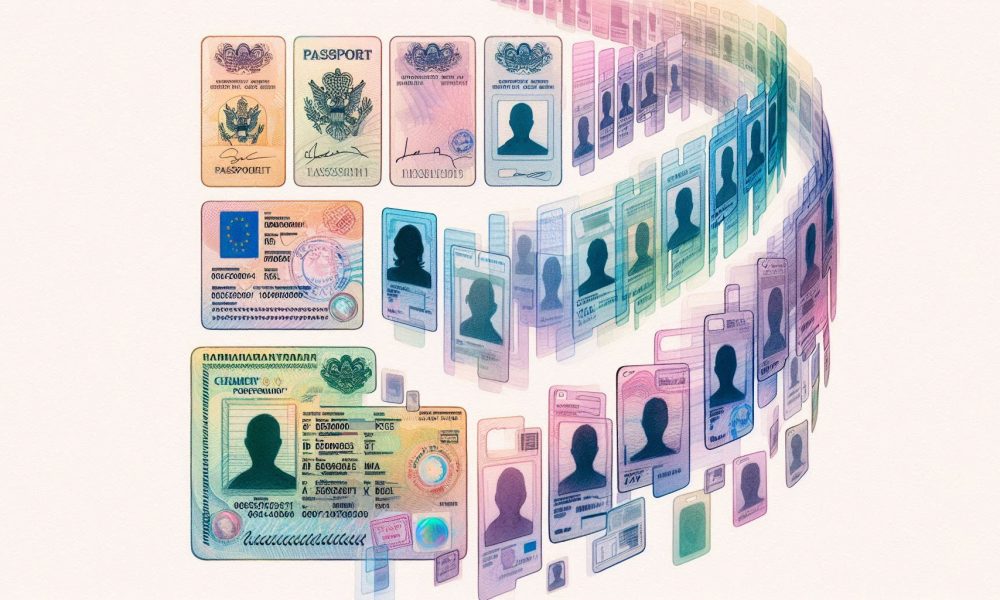
A step-by-step identity continuity problem, with pitfalls that trigger travel delays, banking holds, and benefit interruptions.
WASHINGTON, DC — January 28, 2026.
A court order can change a name in a single moment. Real life takes longer. The part most applicants underestimate is not the judge, the filing fee, or the hearing. It is what comes next: updating the three identity anchors that every other system depends on, the passport, the driver’s license or provincial ID, and the health card. In 2026, these updates are no longer just “paperwork.” They are an identity continuity project, and when the sequence is wrong or the timing is rushed, the consequences show up fast: travel delays at airports, banking holds during routine verification, payroll mistakes, benefit interruptions, and background checks that suddenly require manual review.
The popular narrative around name changes still leans on the word “fresh start.” In practice, the goal is continuity. A lawful name change is designed to preserve the link between the old name and the new one while ensuring institutions can still verify the same person. That link is exactly what protects applicants from fraud accusations later, but it also creates a new burden: you must actively update the ecosystem so that databases, IDs, and records converge again.
Amicus International Consulting, which advises on documentation integrity and cross-border identity continuity, says most of the pain that clients report after a name change is self-inflicted by timing and sequence. People assume the court order is the finish line, then they discover it is the starting gate for three separate systems that do not move at the same speed. The firm’s guidance emphasizes stepwise planning and record alignment because mismatches are what trigger institutional friction, as outlined at Amicus International Consulting.
Why these three documents matter more than everything else
Most identity systems are built around an anchor document and a supporting trail. The anchor is what you show at a counter or upload into a portal. The trail is what proves the anchor is legitimate. After a name change, the trail is the court order. The anchor must be reissued under the new name.
The passport is the travel anchor. It is also the gold standard identity document in many financial settings. The driver’s license or provincial ID is the domestic anchor for daily life, police interactions, age verification, residence proof, and most in-person banking. The health card is the benefits anchor. It gates access to insured care and ties into insurance eligibility, billing, prescriptions, and provider records.
When these anchors disagree, the applicant gets stuck living between two identities. That is where friction starts.
The 2026 environment makes mismatches more expensive
Two trends make post name change updates harder than people expect.
First, identity checks are more automated. Airline systems, border control screening, employer verification, and bank onboarding tools are designed to flag discrepancies because discrepancies can indicate fraud. That same logic catches innocent mistakes.
Second, institutions are less willing to “eyeball” a story. A name mismatch that used to be solved by a clerk’s discretion now often triggers a rule-based workflow: upload more documents, wait for review, or accept a temporary restriction. Even if the applicant is fully legitimate, the system treats ambiguity as risk.
This is why a name change can feel smooth for one person and chaotic for another. The difference is almost always planning, not eligibility.
Step one: get your proof right before you touch anything else
Before updating any ID, applicants should secure what institutions actually require, not what people assume they require.
Start with multiple certified copies of the name change order or certificate. Many agencies and financial institutions want a certified copy, not a photocopy, and some will not return it quickly. If you only have one certified copy and you mail it to the wrong office, your project stalls.
Then build a single “identity packet” that you keep consistent across every update: certified name change proof, current government photo ID under the old name, a stable proof of address, and any supporting document the jurisdiction requires.
In 2026, the number one mistake is sending different versions of the story to different institutions. One office sees a middle name one way, another office sees it another way, and now you have created two new records that do not reconcile.
Step two: update the driver’s license or provincial ID first, in most cases
For most people, the driver’s license or provincial ID should come first because it is the ID used to update everything else locally: banks, employers, insurers, utilities, and even some passport processes. It is also the easiest anchor to replace compared with a passport, because it is issued domestically and often processed faster.
Common pitfalls at this stage look small but cause outsized harm.
Address mismatches. If your address is outdated in the system, the office may refuse the update or issue the card with an old address, which then undermines every proof of residence workflow later.
Name formatting. Hyphens, spaces, accents, and middle names matter because systems treat them differently. If the court order changes the name but the licensing authority standardizes it into a different format, you can end up with a “legal name” that does not match your intended name, and it can be difficult to fix.
Temporary documents. Many jurisdictions issue a temporary paper license while the card is produced. That is fine for driving. It is often not fine for banking, travel, or any place that expects a card with security features. Applicants should plan for the gap.
The goal is to obtain an updated government photo ID that is reliable enough to serve as the new anchor for day-to-day verification.
Step three: plan the passport update around travel, not around optimism
The passport update is where many projects break. People schedule a name change, then they book travel, then they discover that airline tickets must match the passport name precisely. In 2026, “close enough” is not a strategy. It is an avoidable travel disruption.
If you have an upcoming international travel, the safe rule is simple: do not change your passport name until you can also change your bookings, your visas or travel authorizations, and any loyalty profiles that auto-fill the wrong name. If travel is urgent, delay the passport update or delay the name change filing so you do not create a conflict you cannot resolve.
Applicants should also treat passport processing timelines as real constraints, not suggestions. The official instructions for updating a U.S. passport after a name change show how specific the requirements are, and how the process varies depending on circumstances and timing, which is why applicants should follow the government’s own step-by-step guidance rather than relying on informal advice: U.S. Department of State passport name change instructions.
Pitfalls that trigger airport problems tend to be predictable.
Booking name mismatch. Even a missing middle name can matter if it causes the reservation name to differ materially from the passport.
Document mismatch at check-in. Airline staff are trained to avoid carrier liability and can refuse boarding if they believe the document story is inconsistent.
Visa or authorization mismatch. If your visa is under the prior name and your passport is under the new name, you may be forced into a manual resolution process. Sometimes it works. Sometimes it does not, and it is rarely fast.
For people who travel frequently, a better strategy is to plan the passport change during a window of low travel, then rebuild the travel identity stack in one controlled sequence: passport, visas or authorizations, airline profiles, and booking templates.
Step four: Treat the health card like a benefits system, not a plastic card
Many people update their health card last because it feels less urgent than travel and banking. That is a mistake for anyone who relies on ongoing care, prescriptions, or insurance billing.
Health systems often involve multiple linked entities: a government payer, a provider network, a pharmacy system, and sometimes a private insurer layered on top. You can update the card and still have mismatches inside provider systems that cause claim denials or prescription issues.
The safest approach is to update the health card, then immediately notify your primary providers, pharmacy, and any insurers of the new name and provide the name change proof if requested. If you have upcoming procedures or specialist appointments, do this well in advance.
The most common harm here is not a dramatic denial. It is the slow grind of administrative misalignment: appointments booked under one name, lab results under another, prescriptions under a third. The patient becomes the human bridge between systems. That is exhausting, and in urgent care moments, it can become dangerous.
The sequence most people should use in 2026
There is no single perfect order because jurisdictions vary, but for most applicants, a stable sequence looks like this: driver’s license or provincial ID first, then passport if relevant, then health card, while updating banks and payroll immediately after the photo ID is updated.
Why that sequence works is simple. The domestic photo ID is the anchor used to change other records quickly. The passport then becomes consistent with the new anchor, which prevents travel disruption. The health card update prevents benefit gaps and reduces confusion in provider systems.
If someone never travels internationally, the passport can be de-prioritized. If someone travels constantly, the passport strategy should dominate the timeline. The sequence is a decision, not a fixed rule.
The banking friction point, why holds happen, and how to prevent them
Banking holds after a name change are not personal. They are procedural. Financial institutions are trained to reconcile identity changes without allowing account takeover fraud. A name change is a known risk event in that context because fraudsters sometimes try to use name changes, or fake name change documents, to move assets.
The prevention tactic is not complicated: update the bank in person when possible, bring your updated photo ID plus the certified name change proof, and ask the bank to confirm how it will reflect the change across all products, checking, savings, credit cards, mortgages, investment accounts, and safe deposit access.
A frequent oversight is updating one product but not another. An applicant updates checking but leaves a credit card untouched. Now the bank has two profiles. Later, a fraud system sees inconsistent names and restricts access until it is resolved.
Another oversight is failing to update linked systems. Payroll direct deposit might be under the old name, insurance premium payment under another, and investment account under a third. The bank sees a mismatch pattern and asks questions. The applicant feels accused. The bank feels cautious. The conflict is unnecessary if the identity packet is used consistently and updates are done as a coordinated set.
Employment and payroll, where the error shows up as money
Payroll systems are unforgiving. A name mismatch can result in delayed pay, incorrect tax documents, or benefit enrollment errors. Even if a pay deposit arrives, the tax reporting can be wrong later.
Applicants should update their employers as soon as they have the updated photo ID and name change proof. They should also request written confirmation that payroll, benefits, and any internal access credentials will be updated.
For regulated fields, licensing alignment matters too. A professional license under the old name can create compliance issues when the employer’s credentialing system expects the new name. This is another reason to treat the process as a project rather than a casual update.
Background checks and credit files, the hidden delays
A name change can temporarily fragment a credit file if reporting systems do not link the old name and new name quickly. That can cause surprises when applying for a rental, a mortgage, a job, or a professional credential.
The best prevention is completeness. Update major accounts that report to credit bureaus, confirm the new name appears consistently, and keep your certified proof accessible. When a screening vendor asks why two names appear, you can respond quickly.
Do not assume the court order will be found automatically. Many screening systems rely on database matching that can be incomplete. The applicant often has to bridge the gap.
Reputation and privacy, why the “paper trail” is not the enemy
People often fear that updating documents makes them more visible. In reality, mismatches are what create scrutiny. Institutions do not like fragmented identity trails. A clean, documented change is safer than a messy one because it produces consistent records that can be verified without escalation.
That said, applicants with legitimate safety concerns should consider confidentiality options where available, and they should think about their disclosure strategy. Not everyone needs to know immediately. Employers and banks do. Casual contacts do not.
The wider public conversation about identity continuity, travel friction, and verification burdens has been increasing as more people encounter automated screening and administrative mismatches, and readers can track the evolving discussion through this topic search: updates and reporting on name change document updates, travel delays, and verification holds.
The step-by-step plan that actually works
A realistic plan in 2026 is built around control and sequencing.
First, create your identity packet and obtain multiple certified copies.
Second, update your domestic photo ID, driver’s license, or provincial ID, and confirm the exact spelling and formatting.
Third, update your employer payroll and your primary bank immediately after the photo ID is updated, using the same packet.
Fourth, update your passport during a low travel window, then rebuild your travel identity stack so bookings match the new passport name.
Fifth, update your health card and notify providers and pharmacies to prevent care disruptions.
Sixth, update the long tail: insurers, schools, professional licenses, utilities, property records, and digital accounts.
The critical habit is documentation discipline. Save confirmations. Keep copies. Track which institutions were updated, what name format they used, and when the change was applied. The more complex your life, multiple countries, multiple banks, multiple employers, the more you need this tracking.
Why this is an identity continuity problem, not a paperwork chore
A name change succeeds when all major systems tell the same story. The court order creates the lawful bridge. The applicant’s job is to make sure every institution crosses it.
When the sequence is wrong, people live in a split reality. They have one name in court, another in travel, another in banking, another in healthcare. Those split increases friction, not privacy. It triggers holds, delays, and repeated verification because institutions are doing what they were designed to do: flag inconsistency.
Amicus International Consulting frames this as the central truth of 2026 identity management: the most durable “fresh start” is built on consistency and verifiable continuity, not on speed or improvisation, a principle the firm applies in its compliance-forward professional services supporting lawful documentation alignment at Amicus International Consulting.
A name change can be a meaningful legal and personal milestone. The part that determines whether it feels liberating or exhausting is what happens afterward. If applicants plan the passport, license, and health card updates as a coordinated identity continuity project, they avoid the friction points that derail travel, freeze accounts, and interrupt benefits. If they do not, the “fresh start” can become a long season of small crises that were never required in the first place.




