
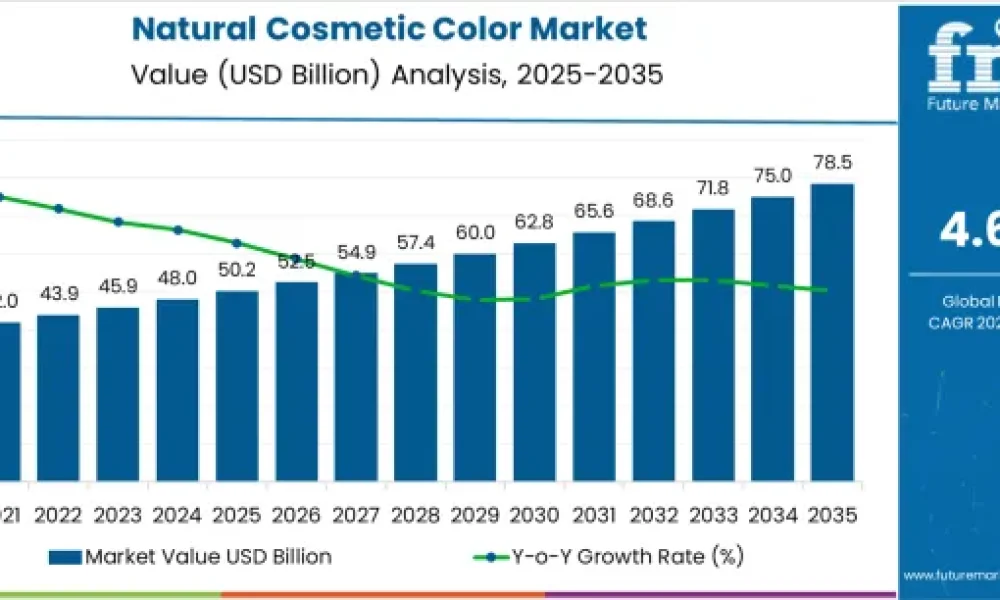
The global Natural Cosmetic Color Market is poised for remarkable growth, with its valuation projected to rise from USD 50.2 billion in 2025 to an impressive USD 78.5 billion by 2035. This steady expansion represents a compound annual growth rate (CAGR) of 4.6% during the forecast period, fueled by evolving consumer preferences, technological innovations, and growing environmental consciousness.
Subscribe for Year-Round Insights → Stay ahead with quarterly and annual data updates: https://www.futuremarketinsights.com/reports/sample/rep-gb-9440
Growing Consumer Preference for Clean and Sustainable Beauty
The rising demand for clean-label, plant-derived, and sustainable beauty products is at the core of the market’s expansion. Increasing consumer awareness regarding the potential adverse effects of synthetic pigments in cosmetics has triggered a widespread shift towards natural colorants. Customers today actively seek formulations that are gentle, toxin-free, and environmentally responsible, prompting manufacturers to innovate with botanical, mineral, and organic pigments.
This shift is reinforced by regulatory bodies that encourage the use of natural ingredients, promoting safer and eco-friendly cosmetic solutions. Additionally, technological advancements such as bio-based extraction and micro-encapsulation techniques have improved the stability, longevity, and overall performance of natural pigments, further accelerating their adoption.
Market Segmentation and Leading Categories
Among the different product types, skin care leads the natural cosmetic color market, accounting for approximately 27.4% of the total market share in 2025. This dominance stems from the extensive use of natural pigments in creams, lotions, and facial products that promise both aesthetic appeal and therapeutic benefits. The rising consumer preference for toxin-free, anti-aging, and skin-brightening formulations continues to drive the segment’s growth, supported by innovative extraction and stabilization technologies.
The female demographic remains the primary consumer base, representing over 54.8% of the market by application. Increased disposable income and greater workforce participation among women have fueled their demand for natural cosmetic products. Brands are heavily targeting this segment through diverse product portfolios and marketing strategies emphasizing ethical consumption, cruelty-free ingredients, and ingredient transparency.
When it comes to end-use, the personal care (household) segment dominates with 63.2% market share. Consumers increasingly prefer natural colorants in everyday products like soaps, shampoos, and daily-use cosmetics. This is bolstered by a growing awareness of long-term health benefits and safety associated with natural ingredients. The penetration of e-commerce and enhanced retail availability further supports volume growth in this segment.
Regional Outlook and Market Drivers
Geographically, the Asia-Pacific region stands out with significant growth potential, driven by a large young population, rising disposable incomes, and booming beauty and personal care sectors. Countries such as India and China are witnessing some of the highest CAGRs — 9.8% and 9.0% respectively — thanks to their traditional preference for herbal remedies and natural ingredients.
In North America, the market is influenced by social media trends and an increased focus on natural beauty by younger generations. Canada’s natural cosmetic color market is growing steadily with a CAGR of 4.5%, aided by harsh climatic conditions that promote the use of gentle, natural formulations.
Europe also contributes to market growth with its premium beauty products segment and growing eco-conscious consumer base.
Competitive Landscape and Innovations
Leading players such as L’Oréal, Burt’s Bees, 100% Pure, Avon, Charlotte Tilbury, MAC, ILIA Beauty, RMS Beauty, KOSAS, and JUICE Beauty are actively expanding their natural cosmetic color portfolios. These companies are investing in online brand presence, influencer collaborations, and geographic expansions to capitalize on rising demand.
Recent innovations include L’Oréal’s new platform for consumer color needs and Revlon’s launch of a natural vegan hair color range. Moreover, new bio-based ingredients like Lubrizol Life Science Beauty’s Sensomer Tara polymer offer improved performance with eco-friendly benefits.
Key Trends Shaping the Market
Several important trends underscore the natural cosmetic color market’s growth trajectory:
- Clean beauty movement: Consumers increasingly favor products with natural ingredients and transparency in labeling.
- Personalized and multifunctional products: Integration of natural colors in skincare, haircare, and makeup tailored to individual needs.
- Herbal and traditional remedies: Renewed interest in Ayurvedic and other traditional herbal products enriches the demand for natural pigments.
- Sustainability and ethical consumption: Growing consumer responsibility toward environmental impact boosts demand for plant-based, cruelty-free colors.
- Digital influence: Social media and influencer marketing amplify awareness and adoption of natural cosmetic colors, especially among younger demographics.
Challenges and Market Restraints
Despite its growth potential, the natural cosmetic color market faces challenges. Consumer skepticism due to false or misleading labeling restricts trust and adoption. Additionally, while natural pigments reduce risks associated with synthetic ingredients, they are not entirely free of potential side effects, which limits market reach.
Future Outlook
The long-term outlook for the natural cosmetic color market remains positive. Increasing incorporation of natural pigments into a wider range of cosmetic and personal care products, combined with rising consumer demand for safe and ethical beauty solutions, will drive continuous market growth globally.
Brands focusing on innovation, sustainability, and consumer education will be well-positioned to lead this evolving market. The global shift toward wellness and environmental responsibility ensures that natural cosmetic colors will become an integral part of the beauty industry’s future.
Have a specific Requirements and Need Assistant on Report Pricing or Limited Budget please contact us – [email protected]
About Future Market Insights (FMI)
Future Market Insights, Inc. (FMI) is an ESOMAR-certified, ISO 9001:2015 market research and consulting organization, trusted by Fortune 500 clients and global enterprises. With operations in the U.S., UK, India, and Dubai, FMI provides data-backed insights and strategic intelligence across 30+ industries and 1200 markets worldwide.



