
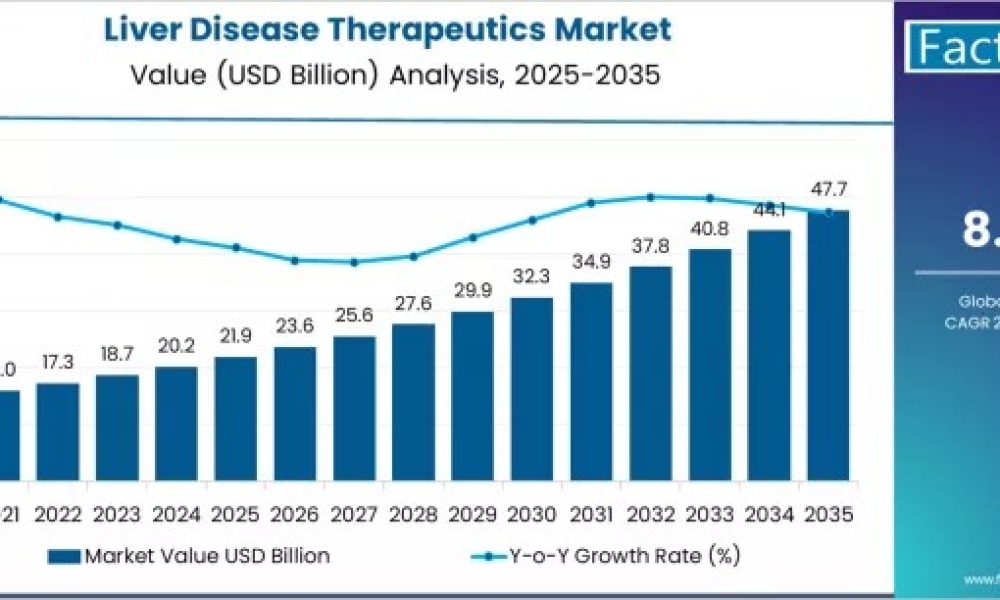
The U.S. liver disease therapeutics market is expected to witness steady and long-term expansion from 2025 to 2035, supported by rising prevalence of chronic liver diseases, rapid advancements in targeted therapies, and increased focus on early diagnosis. With liver disorders such as non-alcoholic fatty liver disease (NAFLD), non-alcoholic steatohepatitis (NASH), viral hepatitis, cirrhosis, and liver cancer on the rise, demand for innovative and effective treatment options is accelerating across the region. This press release provides an in-depth view of market size projections, key drivers, technology trends, competitive dynamics, and strategic priorities for industry stakeholders.
Market Growth Outlook
The U.S. market for liver disease therapeutics is projected to grow significantly between 2025 and 2035, driven by the increasing disease burden and strong pipeline activity. While NAFLD and NASH continue to be the most rapidly growing segments, chronic viral hepatitis, autoimmune liver diseases, and oncology-related liver conditions further support consistent market demand.
Pharmaceutical innovation—particularly in anti-fibrotic drugs, immunotherapies, gene therapies, metabolic pathway inhibitors, and biologics—is expected to reshape treatment frameworks over the coming decade. Improved diagnostic capabilities, especially in non-invasive testing methods such as elastography and fibrosis scoring, will further support earlier disease detection and subsequent therapeutic uptake.
To access the complete data tables and in-depth insights, request a Discount On The Report here: https://www.factmr.com/connectus/sample?flag=S&rep_id=12209
Key Growth Drivers
- Rising Prevalence of NAFLD & NASH
The United States has one of the highest rates of metabolic disorders globally, including obesity, diabetes, and cardiovascular diseases. These conditions significantly contribute to NAFLD and NASH, which have now become primary causes of liver transplantation. With millions of Americans affected, pharmaceutical companies are intensifying clinical research, accelerating FDA approvals, and introducing new therapeutic classes to combat these conditions.
- Increase in Alcohol-Associated Liver Disease
Following shifts in lifestyle patterns and behavioral health trends, alcohol-associated liver disease (ALD) is rising sharply. This is boosting demand for pharmacological interventions targeting inflammation, oxidative stress, and fibrosis.
- Advancements in Novel Therapeutics
The market is benefitting from breakthroughs in:
- Gene and cell-based therapy
- RNA interference (RNAi) treatments
- Immunomodulators
- Next-generation antiviral drugs for hepatitis
- Precision oncology for liver cancer
These targeted therapies offer improved clinical outcomes, fewer side effects, and higher treatment adherence.
- Enhanced Screening & Early Diagnosis
Public health awareness, improved diagnostic imaging, and expanded screening for hepatitis and metabolic diseases are enabling earlier detection, leading to timely intervention and higher therapeutic adoption.
Competitive Landscape & Technology Trends
The U.S. market is highly competitive, with global pharmaceutical companies, biotech innovators, and emerging startups investing heavily in clinical development. Key trends include:
- Shift from broad-spectrum to targeted therapies, emphasizing precision medicine.
- Combination therapy models for NASH and liver fibrosis.
- Adoption of non-invasive diagnostic tools paired with digital monitoring platforms.
- Expansion of biologics and biosimilars in hepatitis and autoimmune liver diseases.
- Growing investment in AI-driven drug discovery for metabolic liver conditions.
Companies actively pursuing strategic approvals, partnerships, and regional expansions are expected to maintain strong market positions through 2035.
Market Challenges
Despite strong growth prospects, the industry faces several hurdles:
- High development costs and complex clinical trials, especially for NASH therapies.
- Regulatory uncertainty surrounding novel drug classes.
- Variability in therapeutic efficacy across patient populations due to metabolic diversity.
- Limited treatment options for advanced-stage cirrhosis and fibrotic conditions.
- Access and affordability concerns, particularly for high-priced biologics and specialty therapeutics.
Addressing these challenges will be essential to ensuring sustainable market growth and widespread patient access.
Strategic Implications for Stakeholders
- Pharmaceutical companies: Focus on targeted therapies, combination approaches, and patient segmentation strategies.
- Healthcare providers: Expand early screening programs and integrate non-invasive diagnostic tools.
- Investors: High-growth opportunities exist in NASH, oncology, and gene therapy pipelines.
- Policy makers: Continued support for liver disease research, early detection programs, and reimbursement for advanced therapeutics will be critical.
Market Outlook Summary
From 2025 to 2035, the U.S. liver disease therapeutics market is set to expand steadily, propelled by rising disease prevalence, breakthrough innovations, improved diagnostics, and strengthening clinical pipelines. While challenges persist—particularly in high-cost therapies and regulatory hurdles—the market offers substantial opportunities for drug developers, healthcare providers, and investors focused on improving liver health outcomes across the United States.
Have a specific Requirements and Need Assistant on Report Pricing or Limited Budget please contact us – [email protected]
About Fact.MR
Fact.MR is a global market research and consulting firm, trusted by Fortune 500 companies and emerging businesses for reliable insights and strategic intelligence. With a presence across the U.S., UK, India, and Dubai, we deliver data-driven research and tailored consulting solutions across 30+ industries and 1,000+ markets. Backed by deep expertise and advanced analytics, Fact.MR helps organizations uncover opportunities, reduce risks, and make informed decisions for sustainable growth.



