
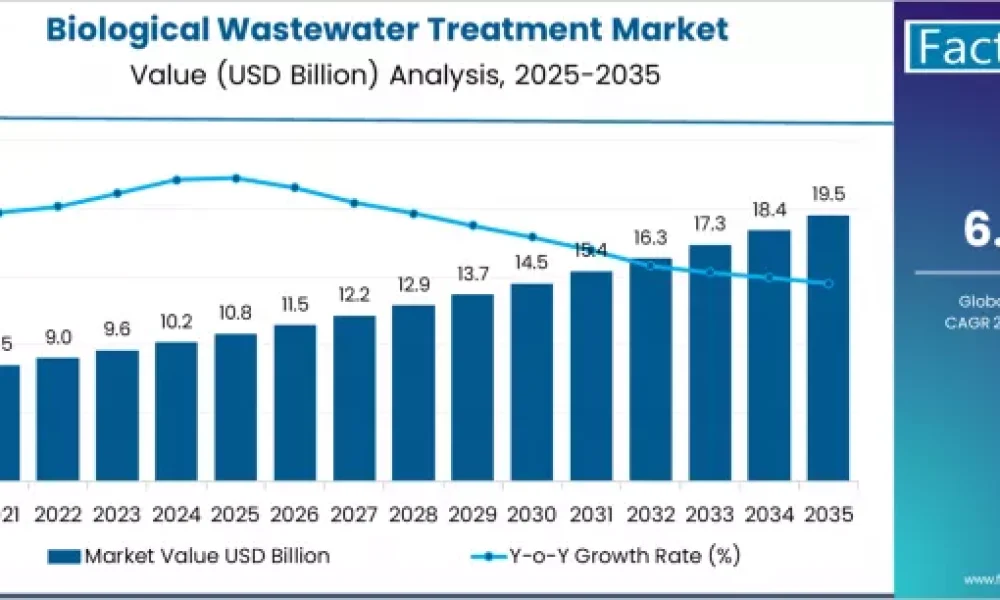
The U.S. biological wastewater treatment market is poised for steady growth from 2025 to 2035, driven by rising municipal wastewater volumes, increasing industrial effluent generation, and stringent environmental regulations on water quality and effluent discharge. Biological wastewater treatment systems—including aerobic, anaerobic, and anoxic processes—play a crucial role in reducing organic loads, nutrient content, and pathogens in wastewater while promoting energy efficiency and resource recovery. This report provides insights into market size, growth drivers, technology trends, and strategic implications for industry stakeholders.
Market Size and Growth
The U.S. biological wastewater treatment market is projected to grow from approximately USD 10.8 billion in 2025 to USD 19.5 billion by 2035, reflecting a compound annual growth rate (CAGR) of 6.1%. Aerobic treatment processes dominate the market with a 50.8% share, while municipal applications remain the largest end-use segment at 55%. This growth underscores the continued investment in advanced biological systems, including integrated fixed film activated sludge (IFAS) and membrane bioreactors (MBR), which enhance treatment efficiency and footprint reduction.
To access the complete data tables and in-depth insights, request a Discount On The Report here: https://www.factmr.com/connectus/sample?flag=S&rep_id=11971
Key Growth Drivers
- Increasing Municipal Wastewater Volumes:Rapid urbanization and aging infrastructure in U.S. cities drive demand for modernized biological wastewater treatment systems. Municipal plants are upgrading traditional systems to meet stricter nitrogen and phosphorus discharge standards.
- Industrial Effluent Management:Industries such as food and beverage, pharmaceuticals, pulp and paper, chemicals, and textiles generate high-strength wastewater requiring advanced biological treatment. Anaerobic digestion and UASB reactors allow energy recovery while ensuring compliance with environmental regulations.
- Technological Advancements:Innovations in aeration optimization, biofilm carriers, membrane bioreactors, and sludge minimization improve treatment efficiency, reduce operational costs, and support integration with smart water management and AI-enabled process control systems.
- Sustainability and Resource Recovery:The emphasis on circular economy principles encourages adoption of systems that enable biogas production, water reuse, and energy-efficient operations, aligning wastewater treatment with environmental and cost-saving objectives.
Regional Insights
The U.S. remains a key growth market, driven by regulatory enforcement, aging municipal infrastructure, and industrial demand. Regions facing water scarcity increasingly focus on treated wastewater reuse for landscaping, industrial cooling, and groundwater recharge. Investments in modern treatment systems across North America ensure compliance with evolving discharge regulations and enhance water sustainability initiatives.
Technology Trends and Competition
Key market players include Veolia Environment SA, Xylem Inc., Aquatech International, Ecolab Inc., Pentair plc, Samco Technologies Inc., and Evoqua Water Technologies LLC. The competitive landscape is shaped by:
- Adoption of advanced aerobic and anaerobic systems for municipal and industrial applications.
- Development of membrane bioreactors and integrated nutrient removal solutions.
- Implementation of AI and automation for real-time monitoring and operational stability.
- Focus on sustainable and energy-efficient biological treatment processes.
Challenges
Market expansion faces challenges including technical complexity, high capital investment requirements, and specialized operational expertise. Smaller municipalities and industrial sites may experience barriers to deploying advanced systems due to infrastructure or budget constraints.
Strategic Implications
For manufacturers: Focus on R&D for energy-efficient and high-performance biological treatment technologies, expand service capabilities, and establish partnerships with municipalities and industrial clients.
For water utilities and industrial operators: Implement advanced biological systems to achieve regulatory compliance, reduce operational costs, and enable resource recovery.
For investors: The market presents resilient growth opportunities with long-term demand in municipal upgrades, industrial wastewater management, and sustainable water treatment solutions.
Outlook Summary
From 2025 to 2035, the U.S. biological wastewater treatment market is expected to grow steadily, fueled by urbanization, industrialization, and stringent environmental regulations. Technological innovation, sustainability initiatives, and energy-efficient biological processes will drive market expansion, offering significant opportunities for manufacturers, water utilities, and investors focused on improving wastewater management, resource recovery, and environmental compliance.
Purchase Full Report for Detailed Insights
For access to full forecasts, regional breakouts, company share analysis, and emerging trend assessments, you can purchase the complete report here: https://www.factmr.com/checkout/11971
Have a specific Requirements and Need Assistant on Report Pricing or Limited Budget please contact us – [email protected]
About Fact.MR
Fact.MR is a global market research and consulting firm, trusted by Fortune 500 companies and emerging businesses for reliable insights and strategic intelligence. With a presence across the U.S., UK, India, and Dubai, we deliver data-driven research and tailored consulting solutions across 30+ industries and 1,000+ markets. Backed by deep expertise and advanced analytics, Fact.MR helps organizations uncover opportunities, reduce risks, and make informed decisions for sustainable growth.



