
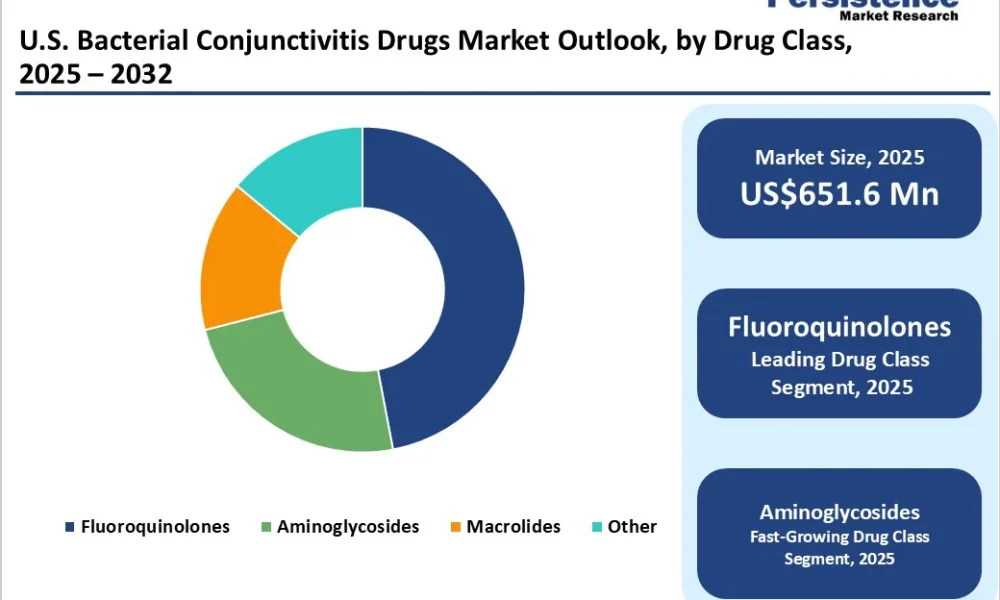
Bacterial conjunctivitis, also known as “pink eye,” is one of the most prevalent and frequently treated eye infections in the United States. As the market for bacterial conjunctivitis drugs continues to evolve, it is witnessing significant growth driven by several factors, including the increasing incidence of conjunctivitis, rising antimicrobial resistance (AMR), and the growing demand for next-generation topical antibiotics and innovative ocular therapies. With projections suggesting that the U.S. bacterial conjunctivitis drugs market will reach $900.3 million by 2032, growing at a compound annual growth rate (CAGR) of 4.7% from 2025, the market is poised for continued expansion.
Overview of the Market
The U.S. bacterial conjunctivitis drugs market is experiencing a period of steady growth, propelled by the high prevalence of bacterial eye infections, particularly acute bacterial conjunctivitis, which represents the majority of cases. Acute bacterial conjunctivitis remains the most common form of eye infection in the U.S., with approximately 135 cases per 10,000 people annually. This condition causes significant discomfort and, if left untreated, can lead to serious complications, including permanent eye damage. Consequently, the demand for effective antibiotic treatments, especially topical formulations, remains high. The increasing number of outpatient visits and antibiotic prescriptions continues to support market growth.
In addition to the increasing prevalence of bacterial conjunctivitis, rising concerns over antimicrobial resistance are encouraging the development of more advanced and effective therapies. The growing awareness about the ineffectiveness of older antibiotics, such as fluoroquinolones and macrolides, against resistant strains of bacteria is fueling the demand for next-generation antibiotics. As the U.S. market is witnessing a shift toward more effective and innovative treatments, manufacturers are responding with novel formulations designed to address resistant strains and improve patient outcomes.
Download Your Free Sample & Explore Key Insights: https://www.persistencemarketresearch.com/samples/5192
Market Statistics and Key Growth Drivers
As of 2025, the U.S. bacterial conjunctivitis drugs market is valued at approximately $651.6 million, with a forecasted growth to $900.3 million by 2032, at a CAGR of 4.7%. The market is expected to grow steadily due to the rising prevalence of bacterial eye infections and increasing concerns regarding antimicrobial resistance (AMR). The growing use of topical antibiotics, such as fluoroquinolones, which remain the dominant drug class, is expected to drive the market in the coming years.
Key growth drivers include:
Rising incidence of bacterial conjunctivitis across all age groups, particularly in children due to school and daycare settings, and in adults due to factors like workplace exposure and contact lens use.
Increasing antimicrobial resistance which is prompting the development of novel antibiotics to combat resistant strains.
Tele-ophthalmology adoption, which improves patient access to care and reduces the need for in-person visits, thereby promoting the utilization of remote diagnosis and prescription for bacterial conjunctivitis.
Leading Segment and Geographical Region
The acute bacterial conjunctivitis segment is anticipated to dominate the U.S. market, accounting for approximately 74.3% of the total market share in 2025. This is due to the high incidence of the condition and its common treatment with topical antibiotics, which are in high demand to address the immediate symptoms and prevent complications. Fluoroquinolones, a class of broad-spectrum antibiotics, are expected to lead with a market share of 52.1% in 2025, driven by their broad-spectrum efficacy and physician preference for rapid symptom resolution.
Geographically, the U.S. remains the leading region in the bacterial conjunctivitis drugs market. The U.S. has a large healthcare infrastructure that supports high levels of outpatient visits and quick access to treatment, thereby driving strong demand for both branded and generic treatments. The growing adoption of telemedicine platforms, particularly in rural and underserved areas, is also boosting market expansion, as it enables patients to access treatment from home, improving adherence to therapy.
Key Highlights from the Report
• U.S. bacterial conjunctivitis drugs market is projected to reach $900.3 million by 2032.
• Acute bacterial conjunctivitis is expected to hold 74.3% of the market share in 2025.
• Fluoroquinolones are predicted to lead the drug class segment with a 52.1% market share.
• Topical formulations are anticipated to dominate the market with a 68.8% market share.
• Tele-ophthalmology adoption is facilitating remote diagnosis and treatment.
• The U.S. market is witnessing significant growth driven by rising antimicrobial resistance and increasing prevalence of conjunctivitis.
Market Segmentation
The U.S. bacterial conjunctivitis drugs market is primarily segmented based on drug class, route of administration, and indication.
Drug Class Segmentation
Fluoroquinolones remain the dominant drug class in the market, with a projected market share of 52.1% in 2025. These antibiotics are highly effective against both Gram-positive and Gram-negative bacteria, making them the preferred choice for treating bacterial conjunctivitis. Fluoroquinolones, such as moxifloxacin and ciprofloxacin, are commonly prescribed due to their broad-spectrum activity, lower dosing frequency, and high patient compliance.
Macrolides and aminoglycosides also play significant roles in the market, although their use is limited by the growing concerns over antimicrobial resistance. These drug classes are typically prescribed when fluoroquinolones are ineffective or when the pathogen is resistant to commonly prescribed antibiotics.
Route of Administration
Topical formulations, which include eye drops and ointments, are expected to dominate the market, accounting for 68.8% of the share by 2025. These formulations offer rapid relief by delivering the drug directly to the site of infection, improving patient adherence and clinical outcomes. Given their convenience, low invasiveness, and effectiveness, topical antibiotics are preferred over oral or intravitreal treatments for most cases of bacterial conjunctivitis.
Indication
Acute bacterial conjunctivitis is the leading indication in the market, with the highest number of cases and treatments. This condition is especially prevalent in children, where it accounts for over 50% of all conjunctivitis cases. Acute bacterial conjunctivitis is typically treated with topical antibiotics, and its rapid onset of symptoms and high transmission rates underscore the need for prompt treatment.
Regional Insights
The U.S. market is the largest for bacterial conjunctivitis drugs, primarily due to the high prevalence of the condition and the well-established healthcare infrastructure. The adoption of telemedicine and tele-ophthalmology has further boosted accessibility to diagnosis and treatment, especially in underserved regions. In particular, the COVID-19 pandemic accelerated the growth of virtual consultations, leading to a surge in the use of online prescriptions for bacterial conjunctivitis.
In addition, the U.S. benefits from a strong pharmaceutical landscape, with numerous key players driving innovation in drug development. The country’s focus on combating antimicrobial resistance through the development of next-generation antibiotics and novel drug delivery systems positions it as a leader in the global market for bacterial conjunctivitis drugs.
Get Custom Insights Designed for Your Business: https://www.persistencemarketresearch.com/request-customization/5192
Market Drivers
The U.S. bacterial conjunctivitis drugs market is witnessing robust growth driven by several factors. First and foremost, the rising prevalence of bacterial eye infections, particularly acute bacterial conjunctivitis, is a significant driver. Conjunctivitis is a leading cause of outpatient visits and antibiotic prescriptions in the U.S., with the incidence rate remaining high across all age groups. Children, in particular, are at a greater risk due to their close proximity in school and daycare settings, where bacteria are easily transmitted.
Another major driver is the growing issue of antimicrobial resistance. As common antibiotics such as fluoroquinolones and macrolides lose their effectiveness against resistant strains of bacteria, there is a critical need for next-generation antibiotics with novel mechanisms of action. This demand for innovative treatments is fostering considerable research and development in the sector.
Lastly, the growing adoption of tele-ophthalmology is revolutionizing the way patients access care. Virtual consultations not only offer greater convenience for patients but also improve adherence to treatment, contributing to market growth.
Market Restraints
Despite the strong growth drivers, several factors pose challenges to the U.S. bacterial conjunctivitis drugs market. The expiration of patents for key branded antibiotics, particularly fluoroquinolones, has led to an influx of generic alternatives. While this benefits patients by reducing costs, it exerts downward pressure on branded revenues and reduces market value.
Additionally, the rise of antimicrobial resistance is not just a driver but also a restraint. Resistant strains of bacteria are making it increasingly difficult to treat bacterial conjunctivitis with traditional antibiotics, leading to a growing demand for more advanced and costly therapies. This creates a need for ongoing innovation but also presents a barrier to rapid market expansion.
Market Opportunities
The increasing adoption of tele-ophthalmology platforms presents significant opportunities for growth in the bacterial conjunctivitis drugs market. These platforms allow for remote diagnosis and prescription, making it easier for patients in underserved areas to access treatment. As telemedicine infrastructure continues to evolve and reimbursement frameworks improve, tele-ophthalmology is expected to become a more integral part of the healthcare system, leading to a broader market for bacterial conjunctivitis drugs.
Furthermore, the need for next-generation antibiotics that can address antimicrobial resistance represents a significant market opportunity. Pharmaceutical companies investing in novel drug delivery systems, synthetic biology, and genome mining could open new avenues for growth and improve patient outcomes.
Checkout Now & Download Complete Market Report: https://www.persistencemarketresearch.com/checkout/5192
Company Insights
The U.S. bacterial conjunctivitis drugs market is competitive, with a mix of established brands and emerging players. Key companies operating in the market include:
• Novartis AG
• AbbVie
• AdvaCare Pharma
• Bausch + Lomb
• Pfizer Inc.
• Thea Pharma Inc.
• SAVAL Pharmaceuticals
• Harrow, Inc
• Lupin
• STERI-MED PHARMA
• Innoviva Specialty Therapeutics
Recent Developments
In December 2024, NTC announced positive Phase II results for NTC014, an eye drop that combines a quinolone antibiotic with an NSAID, showing promising results in treating bacterial conjunctivitis.
In April 2025, a study published in Scientific Reports analyzed 6,603 FAERS records, highlighting the pharmacovigilance importance of ocular treatments for conjunctivitis.
Conclusion
The U.S. bacterial conjunctivitis drugs market is positioned for steady growth, driven by factors such as the increasing prevalence of bacterial eye infections, the rise of antimicrobial resistance, and the growing adoption of telemedicine platforms. With fluoroquinolones leading the drug class segment and topical formulations dominating the market, the outlook for this market remains positive. However, challenges such as patent expiries, rising resistance, and the need for innovative therapies require ongoing attention. As the market continues to evolve, opportunities for growth, particularly in the development of next-generation antibiotics, present significant potential for pharmaceutical companies.




