
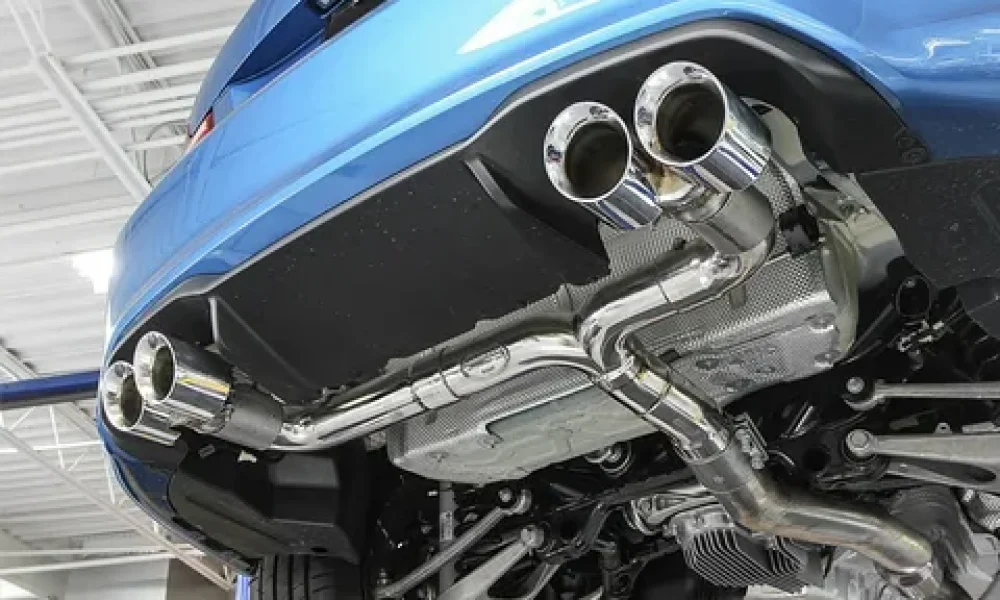
The global automotive exhaust systems market is projected to expand from USD 126.82 billion in 2025 to USD 229.26 billion by 2035, growing at a CAGR of 6.1% over the forecast period, according to the latest market insights. The surge is attributed to increasingly stringent emission regulations, rising global vehicle production, and the sustained demand for aftermarket replacements and performance upgrades.
Exhaust systems play a critical role in vehicle performance, directing reaction gases away from engines, reducing noise, controlling emissions, and enhancing fuel efficiency. These systems are now integrating advanced sensor-based feedback loops and real-time engine management technologies, ensuring compliance with both gasoline and diesel engine requirements.
Market Drivers and Key Trends
The global market growth is primarily driven by regulatory enforcement such as BS-VI, Euro 6d, and China VI emission standards, which have prompted OEMs and suppliers to enhance exhaust efficiency and thermal durability. While the transition toward electrification continues, internal combustion engine (ICE) vehicles remain dominant, particularly in commercial and hybrid segments, sustaining the relevance of advanced exhaust technologies.
Catalytic Converters: Retain their dominance, particularly three-way converters for gasoline vehicles, and dual-bed systems for hybrids. Approximately 85% of vehicles in 2023 were equipped with advanced catalytic converters, with 75% using precious metal-based substrates. Retrofit programs in cities such as Delhi and Paris are driving aftermarket adoption.
Oxygen Sensors: Critical for air-fuel ratio optimization and emission monitoring, with annual sales exceeding 50 million units in North America alone. Both pre- and post-catalyst sensors are now standard across gasoline and diesel powertrains.
Subscribe for Year-Round Insights → Stay ahead with quarterly and annual data updates
https://www.futuremarketinsights.com/reports/sample/rep-gb-706
Sales Channel Insights
OEM Segment: OEMs are prioritizing lightweight, compact, and modular exhaust assemblies integrating catalytic converters, mufflers, and sensors. Collaboration between OEMs and Tier-1 suppliers such as Tenneco, Faurecia, and Eberspächer is driving innovations for hybrid and plug-in hybrid applications.
Aftermarket Segment: Replacement demand remains robust due to corrosion, wear, and emissions compliance upgrades. Enthusiast-driven modifications and the rise of e-commerce for direct-fit kits further fuel aftermarket growth, particularly in light trucks, SUVs, and performance vehicles.
Regional Outlook
North America: The USA and Canada lead due to strict EPA and CARB regulations, a large on-road fleet, and retrofit programs. Lightweight stainless steel and coated alloys are increasingly used for better corrosion resistance and fuel efficiency.
Europe: Germany, France, and Italy spearhead the adoption of high-efficiency catalytic converters, light-weight mufflers, and modular exhaust designs. Retrofit programs for public transport and municipal fleets have surged, particularly in low-emission zones.
Asia-Pacific: The fastest-growing market driven by China, India, Japan, and South Korea, where stricter emission policies (China VI, BS-VI) and rapid vehicle production boost demand. The region also leads in compact and high-flow exhaust designs suitable for onboard diagnostic systems.
Rest of the World: Latin America, the Middle East, and Africa are experiencing growing demand for emissions-compliant replacement systems, particularly in older diesel fleets and urban commercial vehicles.
Market Challenges
Regulatory Complexity: Integration of multi-stage filtration, dual catalytic converters, and SCR systems increases design complexity and cost. OEMs must balance durability, performance, and affordability.
Electrification Threat: The rising penetration of battery electric vehicles (BEVs), expected to reach 40% of global sales by 2035, may reduce the long-term demand for conventional exhaust systems.
Market Opportunities
Commercial Diesel Fleet Upgrades: Retrofitting older diesel vehicles with advanced exhaust systems is creating strong aftermarket opportunities, supported by government incentives.
Material Innovation: Adoption of stainless steel, aluminized steel, titanium alloys, and composite coatings improves heat resistance, corrosion protection, and durability while enabling lightweight designs for hybrid vehicles.
Sensor-Enabled Systems: Oxygen, NOx, and temperature sensors enable real-time emissions monitoring, predictive maintenance, and regulatory compliance, driving adoption in modern ICE and hybrid vehicles.
Country-Specific Insights
United States: CAGR of 6.3% (2025–2035), supported by federal and state emissions regulations and strong aftermarket demand.
United Kingdom: CAGR of 5.7%, with high demand for mid-size and luxury vehicles and aftermarket replacements.
European Union: CAGR of 6.0%, driven by Euro 6/7 regulations and hybrid-compatible exhaust technologies.
Japan: CAGR of 5.8%, reflecting domestic compact vehicles and strict emission standards.
South Korea: CAGR of 5.9%, led by SUV and micro-commercial vehicle segments and export-focused compliance.
Personalize Your Experience: Ask for Customization to Meet Your Requirements!
https://www.futuremarketinsights.com/customization-available/rep-gb-706
Competitive Landscape
Leading market players include Faurecia SA (14–18%), Tenneco Inc. (12–15%), Eberspächer Group (9–12%), Benteler Automotive (6–9%), and Bosal Group (4–7%), with the remainder split among regional suppliers and component manufacturers. These companies are focusing on emission control, lightweight materials, acoustic tuning, and sensor integration to maintain regulatory compliance and enhance vehicle efficiency.
Faurecia SA leads with modular exhaust and after-treatment systems emphasizing low-emission compliance and weight reduction. Tenneco Inc. delivers wide-ranging exhaust solutions for both OEM and aftermarket needs. Eberspächer Group focuses on Euro 6/7 compliant thermal and exhaust systems, while Benteler Automotive and Bosal Group specialize in tailored, durable, and cost-effective solutions.
Conclusion
The automotive exhaust systems market is poised for steady growth through 2035, fueled by regulatory mandates, aftermarket demand, and technological innovations in lightweight materials and sensor integration. While electrification poses a long-term challenge, hybrid vehicles and ICE applications in commercial and passenger vehicles will ensure the market remains relevant, particularly in emission-sensitive regions such as Europe, North America, and Asia-Pacific.
About Future Market Insights (FMI)
Future Market Insights, Inc. (FMI) is an ESOMAR-certified, ISO 9001:2015 market research and consulting organization, trusted by Fortune 500 clients and global enterprises. With operations in the U.S., UK, India, and Dubai, FMI provides data-backed insights and strategic intelligence across 30+ industries and 1200 markets worldwide.
Why Choose FMI: Empowering Decisions that Drive Real-World Outcomes:
https://www.futuremarketinsights.com/why-fmi



