
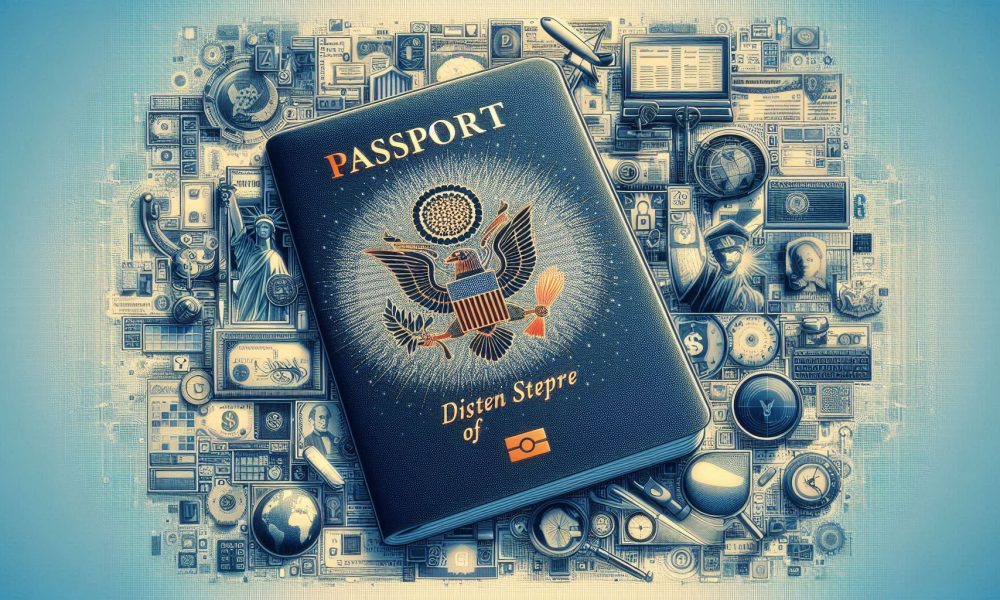
VANCOUVER, British Columbia, September 3, 2025 — In a world where borders are increasingly digital, identity has become one of the most critical and contested constructs of the modern era. Governments, businesses, and individuals are confronting unprecedented challenges in proving, protecting, and at times, lawfully reshaping who they are.
Amicus International Consulting reports that requests for legal pathways to new identities are rising steadily, driven by regulatory shifts, cultural dynamics, and the rapid adoption of digital identification technologies. For many, the process is less about deception and more about navigating legitimate compliance frameworks that allow for reinvention while staying firmly within the rule of law.
The Legal Foundations of Identity Creation
At its core, creating a new identity requires an understanding of legal authority. Identity documents such as birth certificates, passports, driver’s licenses, and national identification cards are issued under the sovereignty of a state. This means that any new identity must be anchored in a lawful administrative process.
In countries such as Canada and the United States, courts and vital statistics registries hold the power to approve legal name changes, update gender markers, and amend foundational documents. In civil law jurisdictions like France and Germany, the judiciary plays an even more central role, requiring not only personal justification but also proof of necessity, such as protection from persecution, religious freedom, or rehabilitation.
Identity creation is therefore less about fabrication and more about transformation through existing statutes. Compliance professionals stress that lawful identity restructuring must always pass the test of transparency with government agencies, meet evidentiary requirements, and leave behind a verifiable administrative trail that can withstand audits and cross-border scrutiny.
Compliance Across Borders
For individuals who relocate internationally, the challenge multiplies. The United States, Canada, the European Union, and Gulf States all have unique frameworks governing how a newly created or amended identity interacts with immigration systems, tax authorities, and financial institutions.
A legal name change in California, for example, does not automatically update records in Mexico or the United Kingdom. Similarly, a nationality acquisition in a Caribbean state under a citizenship-by-investment program must still align with due diligence requirements set by the Financial Action Task Force (FATF) and Interpol.
In recent years, compliance has become the decisive factor in whether a new identity is sustainable. Banks require consistent records to comply with anti-money laundering rules. Border agencies cross-reference biometric markers such as fingerprints and facial recognition. Tax authorities demand Tax Identification Numbers that match the individual’s updated records. A new identity that is not carefully synchronized across jurisdictions risks triggering red flags, account freezes, or travel delays.
Lessons From the Law
Legal precedent offers instructive lessons. In the United States, courts have upheld the right to change names as long as the change is not for fraudulent purposes. Immigration boards in Canada have accepted petitions to update names and birth details when backed by documentary proof, affidavits, and, in some cases, witness testimony. European courts have ruled in favor of individuals seeking new identities to protect themselves from honor-based violence or political reprisals.
At the same time, regulators have cracked down on misuse. The case of U.S. v. Doe in 2018, where an individual attempted to obscure a criminal record through layered identity filings, illustrates that non-disclosure to authorities can lead to charges of fraud, perjury, and obstruction. Compliance, therefore, is not optional but the very cornerstone of lawful identity restructuring.
Culture and Identity Reinvention
While law provides the structure, culture shapes the acceptance of identity change. In North America, the freedom to reinvent oneself is often celebrated, whether through a legal name change, a new career, or a fresh start after personal hardship. In contrast, some Middle Eastern societies tie identity more firmly to family lineage, tribe, or religious affiliation, making formal identity changes less common but not impossible when permitted by Sharia-informed legal systems.
Japan, known for its emphasis on family registration through the koseki system, allows name changes under limited circumstances but requires rigorous justification for such changes. By contrast, the Philippines and India have progressively widened access to gender marker changes and other forms of personal identity recognition, responding to cultural shifts and human rights advocacy.
Understanding cultural context is vital. A legal right that exists on paper may still be difficult to exercise in practice if community or institutional norms resist acceptance. Conversely, in societies that prize individual autonomy, legal identity change can be more straightforward and less stigmatized.
Technology’s Role in Identity Transformation
Technology has emerged as both an enabler and an obstacle in the art of identity creation. Digital ID systems, such as Estonia’s e-Residency, Singapore’s Singpass, and the UAE’s Emirates ID, are redefining what it means to “hold” an identity. These platforms link citizens and residents to secure government databases, making updates to personal information more efficient but also more heavily monitored.
Blockchain-based identity solutions are also gaining momentum. By creating immutable, cryptographically secured records, these systems promise portability and resilience. Yet, they also raise questions of permanence. Once a blockchain ledger contains an identity, the ability to “recreate” oneself may be constrained by technical immutability, requiring legal frameworks to reconcile flexibility with technological rigidity.
Biometrics further complicates matters. Facial recognition, iris scans, and fingerprint databases create continuity that transcends legal documents. While a court can authorize a change of name or gender, biometric systems often still match individuals to existing records. This means that compliance strategies must anticipate not only legal filings but also the technological persistence of identifiers.
U.S. Versus EU Approaches
The United States and the European Union illustrate contrasting philosophies on identity restructuring. In the U.S., the process is largely decentralized, with state courts overseeing name changes and gender amendments. Federal recognition follows once agencies such as the Social Security Administration and the Department of State update their records. The emphasis is on procedural compliance and affidavits.
The European Union, by contrast, overlays national processes with the General Data Protection Regulation (GDPR). This means that identity changes must also align with data protection rights, including the right to rectification and, in some cases, the right to erasure. The GDPR empowers individuals to demand corrections across both government and private-sector databases. For those creating a new identity lawfully, this offers broader protection and enforceability, though it also requires strict compliance with privacy disclosures and cross-border data-sharing agreements.
Middle Eastern and Asian Perspectives
In Gulf states like Saudi Arabia and the United Arab Emirates, identity restructuring is possible but heavily conditioned by religious and legal norms. Courts approve name changes, but applicants often must demonstrate compelling reasons and, in some cases, secure the consent of family or community members. Once approved, updates are transmitted directly into national digital identity systems, enabling immediate integration and traceability.
In Asia, approaches vary. India has developed robust mechanisms for name and gender changes, publishing notices in gazettes and allowing amendments in Aadhaar, the world’s most extensive biometric ID system. Japan, in contrast, places greater emphasis on continuity of family registration, limiting the grounds for change. South Korea permits name changes with judicial approval, reflecting a balance between cultural continuity and modern individual rights.
Case Study 1: North American Legal Name Change and Banking Compliance
A Canadian entrepreneur sought to change her name and gender marker after a personal transition. While the court approved her petition within three months, complications arose when updating her financial accounts. Several banks flagged inconsistencies between her old name, as listed in tax filings, and her New Legal Identity.
With the support of compliance consultants, she submitted certified court orders, updated her Social Insurance Number record, and synchronized her filings with the Canada Revenue Agency. Within six months, her accounts reflected the new identity, and cross-border travel to the United States proceeded without incident. The case highlights the importance of aligning legal procedures with financial and tax compliance to ensure continuity and avoid suspicion of fraud.
Case Study 2: Caribbean Citizenship and FATF Due Diligence
A South American investor acquired a new nationality through a Caribbean citizenship-by-investment program. While the process was entirely legal, global banks applied enhanced due diligence in accordance with FATF guidelines. The investor faced delays opening accounts in London until he provided certified copies of his naturalization certificate, tax residency documentation, and an affidavit declaring the origin of funds. The eventual acceptance underscored the reality that lawful identity acquisition must still satisfy global compliance standards, which can be as rigorous as the legal process itself.
Case Study 3: Technology and Identity Synchronization in the Gulf
An expatriate in the United Arab Emirates legally changed his name as part of a family decision. Although the courts approved the petition, he faced challenges updating his Emirates ID, which was tied to multiple government and private services. His medical insurance, residence visa, and even telecom records were connected to the old details. With legal representation, he secured amendments across agencies, but the case illustrates how digital ecosystems demand a systematic and technology-aware approach to identity restructuring.
Case Study 4: EU Data Protection in Action
A German professional pursued a lawful name change after marriage and sought to have her new details reflected across professional databases. Under GDPR, she invoked her right to rectification, compelling not only banks but also private-sector service providers to update her information.
When one foreign-owned platform refused to recognize the change, she filed a complaint with Germany’s data protection authority. The authority ruled in her favor, ordering the company to comply with the request. This case underscores how European legal frameworks extend beyond documentation to digital enforcement, offering individuals robust tools to synchronize new identities across multiple spheres.
Risks and Ethical Considerations
Creating a new identity carries inherent risks if not pursued through lawful channels. Attempting to obscure criminal records, evade debts, or mislead authorities can result in severe legal penalties. Ethical considerations also matter. Societies rely on stable identity systems to prevent fraud, ensure accountability, and maintain trust. Therefore, the art of creating a new identity must be framed not as an escape but as a lawful adaptation to changing personal, professional, or security circumstances.
Compliance experts stress that lawful identity restructuring should always be disclosed where required, backed by legitimate evidence, and managed through professional channels. This ensures that the individual’s reinvention does not undermine institutional integrity or public trust.
The Future of Identity Creation
As digital identity systems expand, the intersection of law, culture, and technology will define the future of identity creation. Governments will likely impose more rigorous cross-border verification, linking tax, travel, and biometric systems. At the same time, cultural acceptance of personal reinvention will continue to grow, particularly in areas of gender identity, migration, and global mobility.
Artificial intelligence will also play a role. Predictive analytics may allow governments to detect anomalies in identity histories, while blockchain solutions may ensure immutability of core records. For individuals, this means that legal strategies will need to be increasingly sophisticated, integrating compliance with both traditional bureaucracies and next-generation technologies.
For those considering a lawful identity change, preparation is key. Legal petitions must be carefully structured, compliance with financial and immigration authorities must be synchronized, and technological persistence must be anticipated. The art of creating a new identity is therefore not about hiding but about building a secure, transparent, and future-proof personal framework.
Amicus International Consulting continues to advise clients on navigating these complex processes with professionalism and compliance at the forefront. The firm emphasizes that each case is unique, requiring a tailored approach that respects both the letter of the law and the spirit of cultural and technological realities.
Contact Information
Phone: +1 (604) 200-5402
Signal: 604-353-4942
Telegram: 604-353-4942
Email: [email protected]
Website: www.amicusint.ca




