
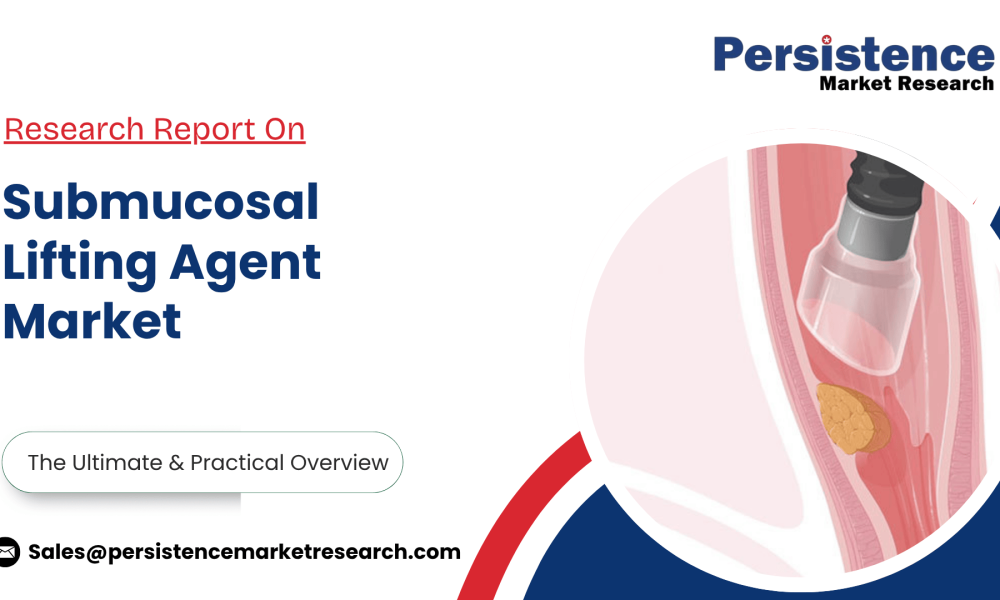
The global submucosal lifting agent market is projected to experience steady growth, driven by the increasing demand for minimally invasive endoscopic procedures. With an anticipated compound annual growth rate (CAGR) of 7.0%, the market is expected to rise from a value of US$ 1.1 billion in 2023 to US$ 1.8 billion by 2030. This surge in demand is primarily attributed to the growing prevalence of gastrointestinal diseases and the advancement of endoscopic techniques. Submucosal lifting agents, essential for enhancing the efficacy and safety of procedures like endoscopic mucosal resection (EMR) and endoscopic submucosal dissection (ESD), are integral tools in gastrointestinal healthcare.
Key Highlights of the Submucosal Lifting Agent Market
Market Size and Growth
The global submucosal lifting agent market is valued at US$ 1.1 billion in 2023 and is projected to reach US$ 1.8 billion by 2030, growing at a CAGR of 7.0% from 2023 to 2030.
Increasing Prevalence of Gastrointestinal Diseases
Rising incidences of gastrointestinal conditions, particularly colorectal cancer and early-stage tumors, are driving the demand for submucosal lifting agents in endoscopic procedures like EMR and ESD.
Technological Advancements
Continuous innovation in endoscopic procedures and equipment is boosting the adoption of submucosal lifting agents, improving the precision, safety, and outcomes of gastrointestinal interventions.
Regulatory Compliance Challenges
Stringent regulatory frameworks for product approval and commercialization are a significant restraint, with companies needing to navigate complex regulatory requirements to ensure safety and efficacy.
Get a Sample Copy of Research Report (Use Corporate Mail id for Quick Response): https://www.persistencemarketresearch.com/samples/33848
Market Dynamics
Drivers
Rising Prevalence of Gastrointestinal Diseases
The increasing incidence of gastrointestinal conditions, particularly colorectal cancer and early-stage gastrointestinal tumors, is a key driver behind the demand for submucosal lifting agents. These conditions often require advanced endoscopic procedures for diagnosis and treatment. Submucosal lifting agents aid in creating a cushion between the mucosal and submucosal layers, facilitating the precise and safe removal of abnormal tissue. This not only improves patient outcomes but also reduces the risk of complications such as perforation during endoscopic procedures.Technological Advancements in Endoscopic Procedures
The continuous evolution of endoscopy is another driving factor for the growth of the submucosal lifting agent market. Advancements in endoscope designs and the refinement of endoscopic techniques have increased the demand for submucosal lifting agents that enable better visualization, precision, and safety during interventions. These innovations help meet the growing needs for more effective and minimally invasive procedures in gastroenterology.
Restraints
Regulatory Compliance Challenges
One significant restraint affecting the submucosal lifting agent market is the stringent regulatory framework governing the approval and commercialization of medical devices. Companies must navigate complex regulatory requirements to ensure product safety and efficacy, which can delay market entry. Regulatory compliance is crucial, as it ensures the safety of patients and the efficacy of the lifting agents used in endoscopic procedures.Technical and Procedural Complexities
Submucosal lifting agents must be carefully formulated to ensure optimal performance during procedures. Achieving the correct balance between lifting capacity and tissue safety remains a technical challenge. Variations in endoscopic techniques across healthcare providers further complicate the standardization of procedures. Overcoming these challenges is essential for wider adoption and acceptance of submucosal lifting agents in clinical practice.
Opportunities
Innovations in Formulation Techniques
There is significant potential for innovation in the formulation of submucosal lifting agents. Developing agents with improved viscosity, longer-lasting effects, and fewer adverse side effects could substantially enhance their market appeal. By improving the lifting capabilities of these agents while maintaining safety standards, manufacturers can address growing demand for more efficient and safer endoscopic interventions.Collaborations with Endoscopy Equipment Manufacturers
Strategic collaborations between submucosal lifting agent manufacturers and endoscopic device companies present an opportunity for integrated solutions. Such partnerships can lead to the creation of advanced lifting agents that are tailored to work with specific endoscopic equipment. This could result in bundled offerings that enhance the user experience and accelerate the adoption of both endoscopic tools and lifting agents.
Request for Customization of the Research Report: https://www.persistencemarketresearch.com/request-customization/33848
Category-wise Analysis
By Ingredient
Poloxamer 188 and Polyoxyl-15-hydroxystearate
Gellan gum and Polysaccharide
Sodium Hyaluronate
Cellulose
Absorbable Starch Polymers
Poloxamers
By Type
Normal saline
Dextrose water
Hydroxypropyl methylcellulose
Hydroxyethyl starch
Hyaluronic acid
Fibrinogen mixture
Succinylated gelatin
Eleview and ORISE gel
By Application
Polyps
Adenomas
Early-stage cancers
Gastrointestinal mucosal lesions
Others
By End-Use
Hospitals
Specialty clinics
Surgical centers
Others
Regional Insights
Europe: A Dominant Force in the Market
Europe is currently the dominant region in the submucosal lifting agent market, thanks to its robust healthcare infrastructure and a high prevalence of endoscopic procedures. European countries have well-established healthcare systems that support the widespread use of advanced medical technologies. The region’s commitment to preventive healthcare and early-stage intervention, combined with a proactive approach to medical innovation, makes Europe a key player in the development and adoption of submucosal lifting agents.
South Asia & Pacific: The Fastest-Growing Region
South Asia & Pacific is poised to emerge as the fastest-growing region in the submucosal lifting agent market. This growth is fueled by an increasing burden of gastrointestinal diseases and the expansion of healthcare infrastructure in the region. As access to modern healthcare improves, the adoption of advanced medical technologies, including submucosal lifting agents, is accelerating. The combination of rising disease rates and better healthcare accessibility creates an environment ripe for market expansion in this region.
Competitive Landscape
The submucosal lifting agent market is characterized by intense competition, with several key players leading the charge in product innovation and market penetration. Prominent players in the market include:
Laborie
STERIS
Olympus America
Medtronic
Boston Scientific Corporation
Omnimed Ltd™
COSMO Pharmaceuticals
Micro-Tech Endoscopy
Ovesco Endoscopy AG
These companies are focused on developing cutting-edge lifting agents with improved safety profiles and enhanced efficacy. Strategic collaborations, acquisitions, and partnerships are common tactics used by these players to expand their market reach, enhance product offerings, and maintain a competitive edge.
Key Recent Developments
AscentX Medical: A new entrant in the market, AscentX Medical has developed minimally invasive endoscopic injection procedures for treating various medical conditions. Their G25 bulking agent offers a promising new approach for treating Gastroesophageal reflux disease (GERD), potentially reshaping the submucosal lifting agent landscape.
Boston Scientific: In October 2022, Boston Scientific’s ORISE Gel Submucosal Lifting Agent underwent a recall in several countries. While the recall raised concerns regarding product safety and regulatory compliance, it underscores the importance of stringent quality control in the industry. This event is likely to influence market dynamics, leading to heightened focus on product safety and regulatory adherence.
Future Outlook
The future of the submucosal lifting agent market looks promising, with continued advancements in formulation technologies and endoscopic procedures expected to drive growth. As the incidence of gastrointestinal diseases continues to rise, the demand for minimally invasive endoscopic treatments will likely increase. Submucosal lifting agents will continue to play a critical role in improving the precision and safety of these procedures, positioning them as indispensable tools in the field of gastroenterology.
Furthermore, the growing emphasis on early-stage cancer detection and polyp removal will spur demand for more effective and specialized submucosal lifting agents. Innovations that enhance the duration and effectiveness of lifting, while minimizing side effects, will likely lead to greater market acceptance and growth.
The ongoing efforts to streamline regulatory processes and improve the integration of submucosal lifting agents with endoscopic devices will also contribute to market expansion. With increasing collaboration between manufacturers, healthcare providers, and endoscopy equipment companies, the submucosal lifting agent market is poised to play an integral role in shaping the future of gastrointestinal healthcare.
As technology continues to evolve and demand rises, the submucosal lifting agent market will likely see significant advancements, offering new opportunities for innovation, growth, and global market penetration.




