
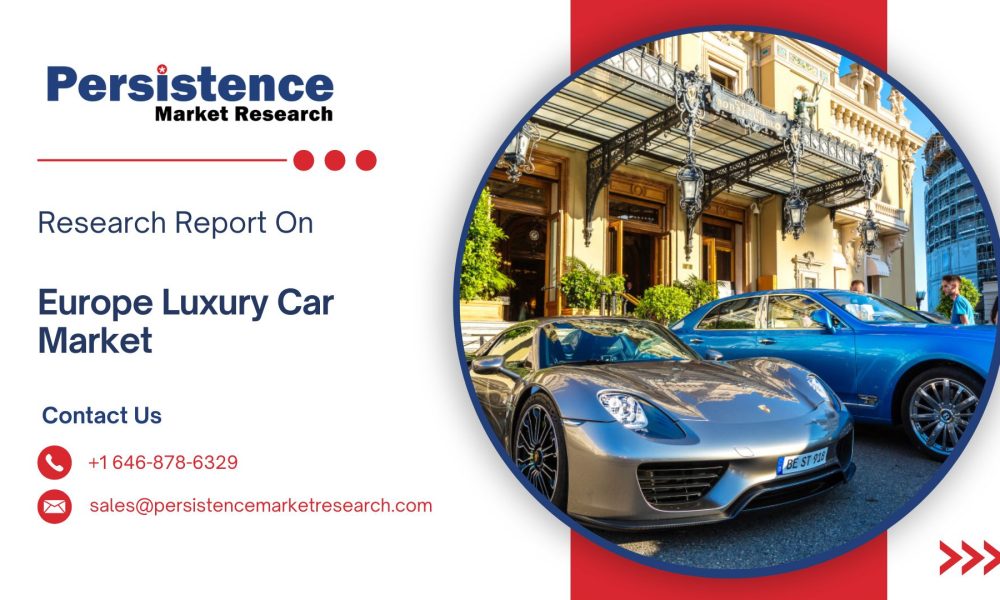
The Europe luxury car market is poised for substantial growth over the coming decade, with market valuation projected to reach US$287.7 billion by 2031, up from an anticipated US$160.5 billion in 2024. The market is expected to maintain a robust compound annual growth rate (CAGR) of 8.7% during the forecast period of 2024 to 2031. This growth trajectory is underpinned by several factors, including rising disposable incomes, increasing consumer preference for premium vehicles, and the growing demand for advanced automotive technologies. Additionally, the region’s strong automotive manufacturing infrastructure, coupled with the presence of globally renowned luxury car brands, continues to reinforce Europe as a significant hub for luxury automobile consumption.
The market expansion is further driven by changing consumer lifestyles and aspirations, with luxury vehicles increasingly seen as symbols of status and sophistication. Evolving urbanization trends, improved infrastructure, and the emergence of digital retail platforms for automobile purchases are also contributing to higher market penetration. Moreover, regulatory incentives for cleaner, more efficient vehicles, alongside technological advancements in electric and hybrid propulsion systems, are opening new avenues for growth in the luxury automotive segment.
Request Sample Copy of Report: https://www.persistencemarketresearch.com/samples/34494
Segmentation Analysis
By Type
The European luxury car market is segmented primarily by vehicle type, including sedans, SUVs, coupes, convertibles, and hatchbacks. Among these, SUVs have emerged as the fastest-growing segment, driven by consumer demand for versatile, high-performance vehicles that combine luxury with practicality. The premium sedan segment continues to dominate the market, benefiting from brand loyalty, established market presence, and a strong focus on comfort, safety, and technological innovation. Coupes and convertibles, while smaller in volume, are witnessing steady growth as manufacturers introduce exclusive, limited-edition models targeting affluent consumers seeking a blend of performance and style.
By Vehicle/Product/Service Type
Within the product and service domain, market growth is being influenced by the increasing adoption of electric vehicles (EVs) and hybrid models. Traditional internal combustion engine (ICE) vehicles still hold a significant market share; however, the rapid development of electric powertrains and supportive regulatory frameworks is accelerating the adoption of electric luxury cars. Connected car services, including telematics, infotainment systems, and concierge-level features, are gaining traction, reflecting the consumer shift toward smart, tech-enabled automotive experiences. Subscription-based services and mobility-as-a-service models are also being explored by manufacturers, enhancing consumer accessibility and flexibility.
By Propulsion/Technology/Channel
The propulsion segment of the luxury car market is undergoing a transformative phase. Electric and hybrid propulsion technologies are witnessing accelerated adoption, driven by stringent emission regulations and government incentives for sustainable mobility. Plug-in hybrid electric vehicles (PHEVs) are gaining popularity among consumers seeking a balance between environmental responsibility and performance. Conventional ICE vehicles remain important, particularly in regions where charging infrastructure is still developing. Advanced technologies, including artificial intelligence (AI) for driver-assistance systems, Internet of Things (IoT) connectivity for vehicle monitoring, and 5G-enabled communications for real-time data exchange, are increasingly integrated into luxury vehicles, elevating the overall driving experience.
Regional Insights
Europe remains the epicenter of luxury car consumption, with Western European countries such as Germany, France, Italy, and the United Kingdom leading the market. Germany, as home to iconic automotive brands like BMW, Mercedes-Benz, and Audi, continues to dominate in both production and sales volumes. The United Kingdom is witnessing increasing demand for performance-oriented luxury vehicles, particularly sports and high-performance SUVs, while France and Italy are leveraging their strong automotive heritage and craftsmanship to maintain steady market growth.
Eastern European countries, while currently smaller contributors, are emerging as some of the fastest-growing regions. Rising disposable incomes, urbanization, and improving infrastructure in countries such as Poland, the Czech Republic, and Hungary are driving the adoption of luxury vehicles. Additionally, favorable government policies, expanding dealership networks, and increasing awareness of advanced automotive technologies are boosting market penetration in these markets.
Request Customization of Report: https://www.persistencemarketresearch.com/request-customization/34494
Unique Features and Innovations in the Market
Modern luxury vehicles are distinguished by their advanced technological integration, unique design philosophies, and superior performance characteristics. Manufacturers are increasingly incorporating AI-driven driver-assistance systems, autonomous driving capabilities, and predictive maintenance solutions to enhance safety, convenience, and reliability. Connected vehicle technologies utilizing IoT sensors provide real-time monitoring of vehicle performance, traffic conditions, and environmental data, contributing to smarter, safer driving experiences.
The adoption of 5G technology in luxury cars is revolutionizing infotainment, navigation, and telematics services. High-speed, low-latency connectivity enables seamless streaming, over-the-air software updates, and advanced vehicle-to-everything (V2X) communications. Additionally, innovations in lightweight materials, aerodynamic design, and energy-efficient propulsion systems are redefining performance and sustainability benchmarks in the luxury automotive sector. Electric and hybrid models are being equipped with fast-charging capabilities, extended driving ranges, and regenerative braking systems, aligning with consumer demand for environmentally conscious yet high-performance vehicles.
Market Highlights
Several key factors are driving the adoption of luxury vehicles across Europe. Affluent consumers increasingly value brand prestige, advanced technological features, and personalized driving experiences. Manufacturers are responding by offering bespoke customization options, including interior materials, color palettes, and performance enhancements. Regulatory frameworks promoting fuel efficiency and reduced carbon emissions are influencing product strategies, encouraging the introduction of hybrid and fully electric luxury vehicles. Cost reduction strategies through efficient production techniques, modular platforms, and shared technology initiatives are enhancing profitability while maintaining product excellence.
Sustainability is a critical focus, with automakers integrating eco-friendly manufacturing processes, renewable materials, and energy-efficient supply chain practices. Businesses and fleet operators are also adopting luxury vehicles for executive mobility solutions, corporate incentives, and client engagement purposes, further fueling market demand.
Key Players and Competitive Landscape
The European luxury car market is highly competitive, dominated by renowned global players who continuously invest in innovation, design, and market expansion. BMW AG has maintained leadership through its extensive portfolio of sedans, SUVs, and electric vehicles, emphasizing technological innovation and brand loyalty. Mercedes-Benz focuses on performance, safety, and electrification strategies, positioning itself as a leader in both traditional and electric luxury segments. Audi continues to expand its presence with a combination of cutting-edge design, AI-driven technologies, and premium customer experiences.
Other notable players include Porsche, Lamborghini, Ferrari, Jaguar Land Rover, and Volvo, each pursuing distinctive strategies to capture market share. Porsche emphasizes high-performance sports and electric vehicles, while Ferrari and Lamborghini leverage exclusivity, craftsmanship, and limited-edition offerings to maintain brand prestige. Jaguar Land Rover invests in electrification and connected vehicle technologies, targeting sustainable mobility solutions, while Volvo prioritizes safety, autonomous driving, and environmental responsibility. Strategic initiatives such as regional expansions, joint ventures, and collaborations with technology providers are enabling companies to adapt to evolving consumer preferences and regulatory landscapes.
For In-Depth Competitive Analysis, Buy Now: https://www.persistencemarketresearch.com/checkout/34494
Future Opportunities and Growth Prospects
The Europe luxury car market presents significant opportunities for future growth, driven by technological advancements, evolving consumer expectations, and supportive regulatory frameworks. The transition toward electric and hybrid mobility offers immense potential, with governments providing incentives for EV adoption and infrastructure development. Autonomous driving, AI-enabled safety systems, and connected vehicle services are poised to redefine the luxury car ownership experience, attracting tech-savvy and environmentally conscious consumers.
Sustainability and regulatory compliance will continue to shape product development and market strategies. Manufacturers are increasingly exploring renewable energy-powered production, lightweight materials, and circular economy practices to enhance environmental performance. Emerging markets within Eastern Europe, combined with growing urbanization and infrastructure improvements, provide new avenues for market penetration. Additionally, digital sales platforms, subscription services, and experiential marketing initiatives are expected to enhance consumer engagement, driving long-term demand for premium vehicles.
In conclusion, the Europe luxury car market is on a trajectory of robust growth, underpinned by technological innovation, evolving consumer lifestyles, and sustainability imperatives. Leading players are leveraging advanced propulsion technologies, AI and IoT integration, and strategic regional expansions to consolidate their market positions. With projected valuation reaching US$287.7 billion by 2031, the market offers lucrative opportunities for manufacturers, investors, and service providers seeking to capitalize on the dynamic and evolving landscape of luxury automotive mobility.




