
The global Smart Grid Home Area Network (HAN) Market is on track for transformative growth, with its value expected to climb from USD 86.1 billion in 2025 to USD 486.2 billion by 2035, reflecting a robust CAGR of 18.9%. This surge reflects the growing intersection of technology, sustainability, and consumer demand for smarter, more efficient homes.
Rising Demand for Smarter Energy at Home
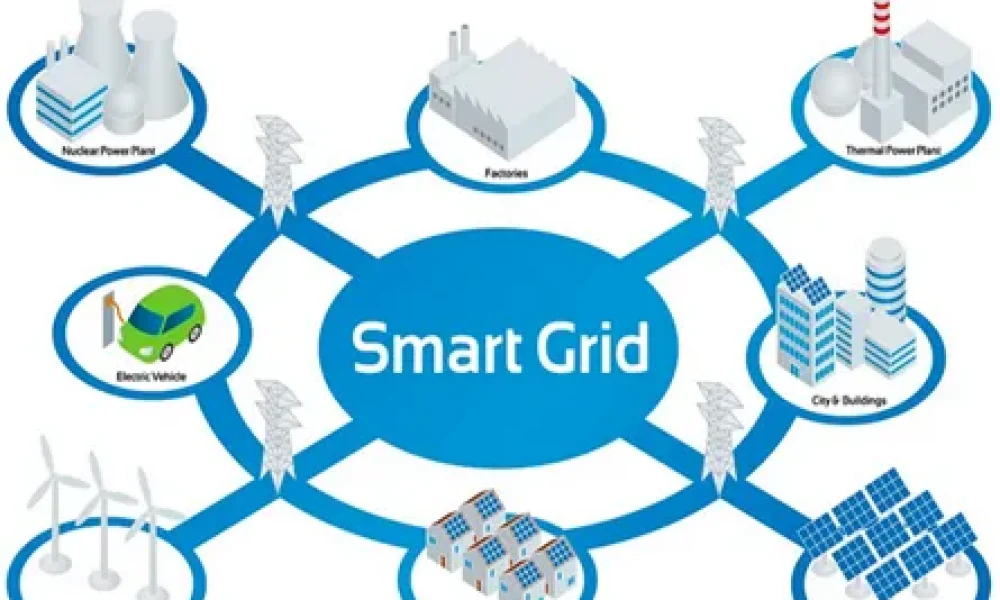
At the heart of this growth is a fundamental shift: homeowners and utility providers are no longer viewing energy as a one-way supply but as a dynamic, managed resource. Smart Grid HAN systems allow households to monitor, automate, and optimize energy use in real time. From connected appliances to rooftop solar panels and electric vehicles, HANs provide the digital nervous system linking consumers to the broader grid.
“Energy management has entered the home in ways we never imagined a decade ago,” said a senior analyst from the study. “Smart HAN solutions are no longer just about saving on bills—they’re about building resilience, enabling sustainability, and empowering consumers to take control of their energy future.”
Get Ahead with Our Report: Request Your Sample Now!
https://www.futuremarketinsights.com/reports/sample/rep-gb-1865
Hardware Leads the Way
By 2025, hardware solutions are expected to account for 54.6% of the market. This dominance comes from the growing deployment of physical components such as smart meters, sensors, in-home displays, and gateways, all of which enable secure, real-time communication between homes and utility providers.
These devices form the foundation of smart homes, driving adoption by making energy monitoring intuitive and actionable. With global rollouts of smart meters accelerating and “plug-and-play” devices simplifying integration, hardware is expected to remain the backbone of HAN development.
Regional Outlook: North America Leads, Asia-Pacific and Europe Rising Fast
North America is expected to maintain its lead in 2025, driven by advanced utility infrastructures, strong consumer adoption, and government-backed smart city initiatives.
Asia-Pacific and Eastern Europe are set to be the most lucrative growth regions during the forecast period. Government investments in smart cities, electrification projects, and renewable energy integration are rapidly expanding HAN opportunities.
Europe, particularly Western Europe, continues to prioritize sustainability goals and carbon neutrality, further driving HAN adoption across residential sectors.
While Latin America, the Middle East, and Africa remain emerging markets, rising energy costs and increased consumer awareness are expected to gradually accelerate adoption.
Established Leaders Driving Large-Scale Adoption
The competitive landscape is marked by established leaders who have already cemented their presence through innovation and scale:
Cisco Systems and GE Energy are pioneering in integrating HAN solutions with grid-wide systems, ensuring stability and scalability.
Honeywell International, Inc. continues to roll out smart thermostats and control solutions that connect seamlessly with HAN infrastructures.
Control4 and Silver Spring Networks are focusing on automation-driven consumer engagement, helping households translate data into real-time savings.
Tendril Networks and Energate Inc. are innovating in consumer-facing platforms that combine user-friendly interfaces with powerful energy analytics.
These industry giants are increasingly collaborating with governments, utilities, and technology providers to expand their solutions into both mature and emerging markets.
New Entrants Shaping the Future with Fresh Ideas
While global heavyweights expand their reach, newer players and startups are redefining what HAN technology can do. Companies such as Calico Energy Services and Onzo Ltd. are bringing agility and niche solutions to the market—ranging from advanced data analytics to consumer engagement tools.
These emerging players are targeting interoperability, AI-driven energy insights, and modular hardware to capture untapped market opportunities. Their innovations are especially vital in regions where legacy infrastructure presents challenges, making flexibility and adaptability key differentiators.
Key Growth Drivers
Several factors are propelling the rapid rise of the Smart Grid HAN market:
Global push toward energy efficiency and carbon neutrality.
Government initiatives supporting smart city development and smart meter deployment.
Integration of renewable energy sources such as solar and wind into household grids.
Growing adoption of connected home technologies and consumer demand for automation.
Advances in IoT, cloud computing, and wireless communication enabling seamless connectivity.
As electricity costs rise and consumers become more environmentally conscious, HAN solutions provide a practical and sustainable path to smarter living.
Challenges Along the Way
Despite its promising trajectory, the market faces hurdles:
Integration complexities with existing metering systems.
Interoperability issues across products from different manufacturers.
Privacy and data security concerns around consumer energy usage.
Limited awareness in developing regions, slowing adoption.
Industry leaders and policymakers are already addressing these challenges through standardization efforts, stronger cybersecurity frameworks, and consumer education campaigns.
Catapult Your Strategy: Secure Key Insights with Our Report Checkout!
https://www.futuremarketinsights.com/checkout/1865
Industry Collaboration and Recent Developments
Innovation in this space is being driven by both strategic partnerships and R&D investments:
Vendors are collaborating with microelectronics firms to create next-generation smart chips and hybrid workflows that enhance HAN efficiency.
Mergers and acquisitions are helping companies broaden their reach into new geographic markets.
New product launches, such as IoT-enabled smart displays, AI-powered gateways, and low-latency communication protocols, are reshaping what’s possible in residential energy management.
For example, Honeywell and Cisco have been working on next-gen smart controllers that combine energy savings with advanced automation features, while Onzo Ltd. is gaining traction with its predictive analytics solutions, helping consumers forecast and reduce energy costs.
Looking Ahead
The next decade will see the Smart Grid Home Area Network evolve from a “nice-to-have” feature into a cornerstone of modern living. Homes will increasingly serve as both consumers and producers of energy, with HANs ensuring smooth coordination between appliances, renewable resources, and the broader grid.
With established leaders expanding their footprints and startups bringing in disruptive technologies, the HAN market is set to redefine how households interact with energy—making it smarter, more efficient, and deeply connected.



