
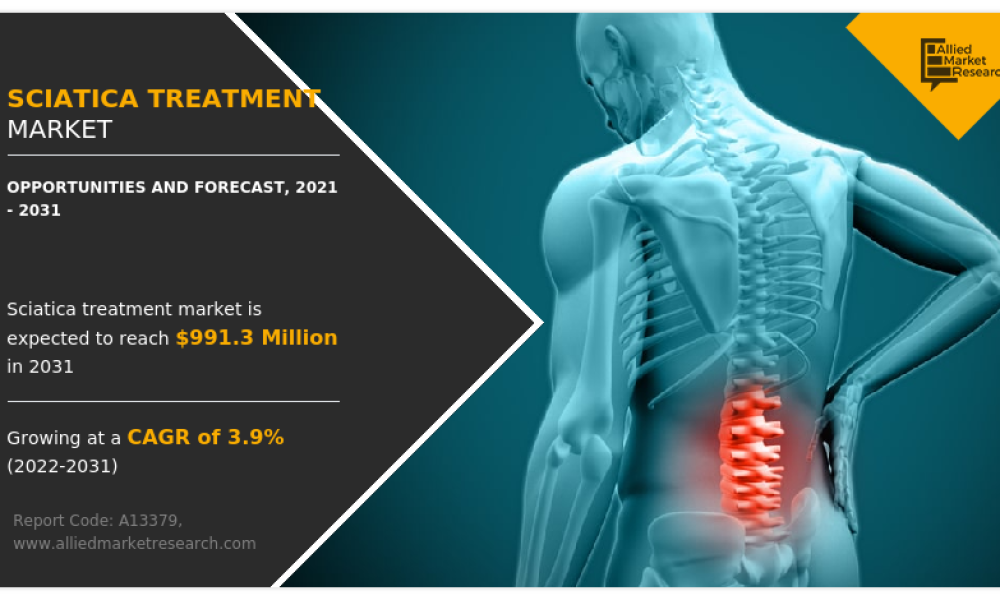
The global sciatica treatment market is on a path of consistent growth, projected to rise from $678 million in 2021 to $991.3 million by 2031, reflecting a CAGR of 3.9%. This expansion is driven by the increasing burden of spinal disorders, a rapidly aging global population, and continuous innovations in both pharmacological and non-invasive therapies.
🔍 Key Market Insights
1. Market Segmentation Breakdown
By Type
Chronic sciatica held the dominant share in 2021 due to its persistent nature and higher incidence among older adults.
Acute sciatica remains widespread but often resolves without intensive intervention.
By Drug Class
NSAIDs (Non-Steroidal Anti-inflammatory Drugs) are the frontline choice for managing pain and inflammation.
Corticosteroids are reserved for severe cases, though long-term use is cautioned due to potential adverse effects.
By Distribution Channel
Retail & specialty pharmacies led in market share in 2021.
Online pharmacies are gaining momentum with the surge in telemedicine and digital health platforms.
2. Regional Landscape
North America: Leads globally, thanks to advanced healthcare systems and high awareness.
Asia-Pacific: Fastest-growing region due to urbanization, an aging population, and increased health expenditure.
Europe: Stable growth backed by strong public healthcare infrastructure.
Get a Sample Copy of this Report: https://www.alliedmarketresearch.com/request-sample/A13379
🚀 Growth Drivers Pushing the Market Forward
Rising Incidence of Sciatica
Prolonged sitting, poor posture, and sedentary work environments contribute to spinal degeneration.
Common underlying conditions include herniated discs, spinal stenosis, and osteoarthritis.
Aging Global Population
By 2030, 1 in 6 people globally will be over 60, increasing the demand for age-related spine care.
Therapeutic Advancements
Non-invasive therapies such as physiotherapy and chiropractic treatments are gaining traction.
Emerging regenerative treatments, including stem cell therapy, show potential for long-term relief.
Rising Healthcare Investment
Pharmaceutical firms are investing in new active pharmaceutical ingredients (APIs) and advanced drug formulations.
Increased collaboration with Contract Research Organizations (CROs) is accelerating innovation in pain management.
⚖️ Challenges and Market Opportunities
🔴 Challenges
High treatment costs hinder accessibility in low-income regions.
Side effects from prolonged NSAID and steroid use.
Alternative therapies (acupuncture, yoga, etc.) reduce dependency on conventional treatments.
🟢 Opportunities
Emerging markets like India, Brazil, and China are ripe for expansion due to growing healthcare awareness.
Personalized treatment models integrating medication, physical therapy, and digital support systems.
Telehealth and digital diagnostics to broaden access and reduce treatment gaps.
🔮 Future Outlook (2024–2031)
Non-surgical options will dominate as patient preference shifts to minimally invasive care.
Digital health platforms and e-pharmacies will be key channels for drug delivery and patient engagement.
Asia-Pacific will rise as a global hub for affordable, high-quality sciatica treatments, supported by medical tourism and domestic manufacturing.
🧬 Competitive Landscape Snapshot
Major players include:
Johnson & Johnson
Teva Pharmaceuticals
Sun Pharma
Abbott Laboratories
These companies are focusing on:
Innovative drug development
Strategic alliances with CROs
Geographic expansion into high-growth territories
📌 Key Takeaways
✅ Market Growth: Expected to reach $991.3M by 2031 at a CAGR of 3.9%
✅ Top Segments: Dominated by chronic sciatica and NSAID treatments
✅ Fastest Growing Region: Asia-Pacific driven by aging demographics and healthcare investments
✅ Primary Drivers: Sedentary lifestyle, aging population, and pharmaceutical R&D
✅ Challenges: High costs, side effects, and rise of alternative therapies
✅ Future Focus: Non-invasive solutions, telemedicine, and regenerative therapies




